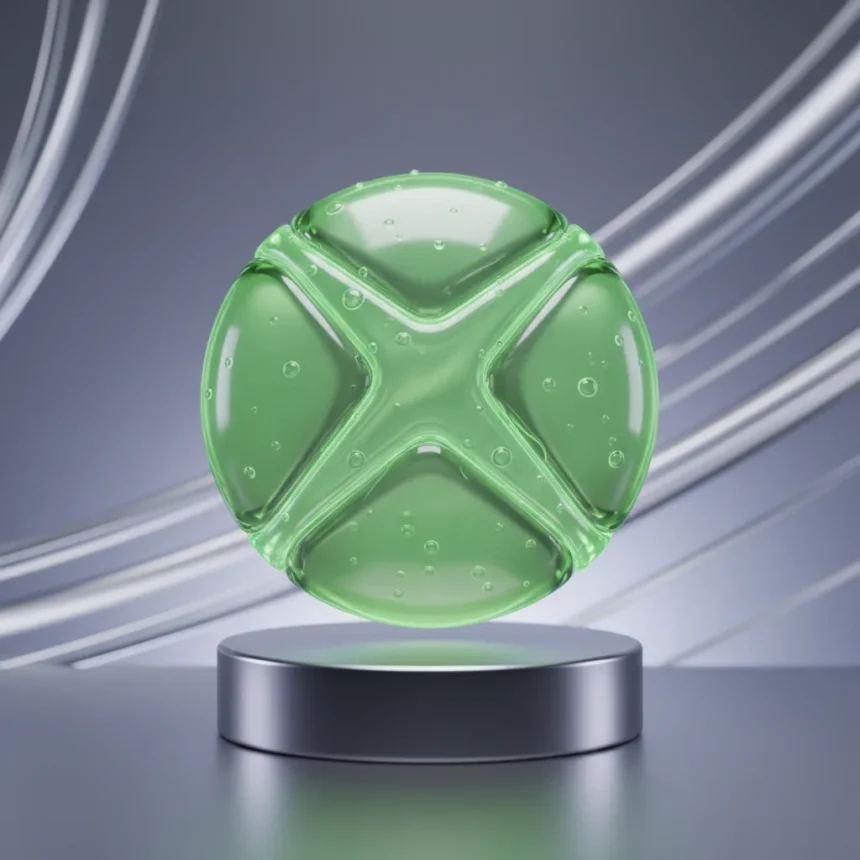
Xbox’s new logo design marks a deliberate shift toward the brand’s past, reviving the skeumorphic 3D sphere aesthetic from the mid-2000s original Xbox era. The refreshed visual identity features an ‘X’ carved into a glossy, glowing orb—a choice that has sparked immediate speculation about Apple’s influence on the redesign. While Microsoft has not officially confirmed any connection to Apple’s design language, the visual similarities between Xbox’s new glowy finish and Apple’s controversial Liquid Glass software aesthetic are undeniable, raising questions about whether tech giants are converging on the same retro-futuristic visual trends.
Key Takeaways
- Xbox unveiled a skeumorphic 3D sphere logo with a glowing appearance, marking a departure from recent flat design trends.
- The new Xbox logo design draws unexpected visual parallels to Apple’s Liquid Glass aesthetic, though no official connection has been confirmed.
- Fans describe the logo as instantly nostalgic, channeling mid-2000s design language despite being a completely fresh visual never seen before.
- The logo first appeared on wallpapers replacing older Xbox generation designs, signaling a broader brand era shift.
- The glassy, glowing finish on the Xbox logo has become the focal point of design discourse around potential Apple influence.
The Xbox New Logo Design Embraces Skeumorphism
The Xbox new logo design represents a deliberate embrace of skeumorphism—the design philosophy of making digital objects appear three-dimensional and tactile. Rather than following the minimalist flat design trend that has dominated tech branding for the past decade, Xbox chose a refined take on the classic 3D sphere motif with an ‘X’ carved inside it. This choice connects directly to the original Xbox era, when glossy, dimensional logos dominated gaming hardware packaging and marketing materials. The decision feels intentional: by reaching back to the mid-2000s, Xbox signals confidence in its heritage while simultaneously refreshing the aesthetic for modern audiences.
What makes this approach noteworthy is its timing. As flat design begins to feel dated, brands across the industry are experimenting with renewed dimensionality. The Xbox new logo design positions the company at the forefront of this shift, offering fans something that feels both familiar and surprising. Early Xbox enthusiasts have responded positively, describing the logo as having subtle old-school vibes that trigger instant nostalgia despite being a design never previously released.
Does Apple’s Liquid Glass Aesthetic Influence Xbox’s Logo?
The visual comparison between Xbox’s new glowy appearance and Apple’s Liquid Glass software design is immediate and unavoidable. Both feature glossy, luminous surfaces that evoke glass or liquid materials—a stark contrast to the flat, matte finishes that have defined tech design for years. However, this similarity raises a critical question: is the Xbox new logo design directly inspired by Apple’s work, or are both companies independently converging on the same nostalgic visual language? The research brief provides no official statement from Microsoft or Xbox confirming Apple influence, making any definitive claim speculative at this stage.


What is verifiable is that Apple’s Liquid Glass design has proven controversial, with mixed reception among users and designers. The Xbox new logo design, by contrast, has generated predominantly positive responses from gaming communities. This suggests that while the aesthetic similarities are genuine, the execution and reception differ significantly. The glowing sphere approach may simply represent a broader industry trend toward reintroducing tactile, dimensional design elements—a shift that multiple companies are exploring simultaneously rather than one brand directly copying another.
Why Nostalgia Matters in Gaming Brand Identity
Gaming audiences have a unique relationship with brand nostalgia. Unlike many industries, where retro design can feel gimmicky or dated, gaming culture actively celebrates and seeks out references to earlier eras. The Xbox new logo design taps into this by explicitly channeling the mid-2000s original Xbox aesthetic, a period many fans view as the golden age of console gaming. By reintroducing skeumorphic design elements, Xbox signals that it values its history and understands what resonates with its core audience.


The timing of the logo’s debut—first spotted on wallpapers replacing older Xbox generation designs—reinforces the sense of a deliberate brand era transition. This is not a minor refresh of an existing design; it is a statement about where Xbox believes the brand should go next. For longtime fans, the instantly nostalgic quality of the logo validates their attachment to the brand’s past while positioning them as stakeholders in its future direction. Whether or not Apple inspired the Xbox new logo design, the emotional resonance with gaming audiences is clear.
Is the new Xbox logo a design success?
The new Xbox logo design has generated overwhelmingly positive responses from early Xbox fans, who describe it as instantly nostalgic and refreshingly different from the flat design trends of recent years. Its skeumorphic approach and glowing aesthetic appeal to audiences fatigued by minimalism, making it a design success on those terms. However, broader reception among non-gaming audiences remains unclear, and the long-term impact of the logo on Xbox’s brand perception will depend on how consistently it is deployed across products, marketing, and experiences.
Did Microsoft confirm Apple inspired the Xbox logo?
No official statement from Microsoft or Xbox confirms that Apple’s Liquid Glass design inspired the new Xbox logo. The visual similarities between the glowing, glossy finishes are undeniable, but the comparison remains speculative based on aesthetic parallels rather than documented influence. Without direct confirmation from the company, the Apple connection remains a fan and design community observation rather than verified fact.
When will the new Xbox logo appear on hardware?
The research brief does not specify when the new Xbox logo design will debut on actual gaming hardware, packaging, or retail products. Its initial appearance on wallpapers suggests a rollout strategy, but concrete timelines for broader deployment have not been announced. Fans and industry observers will likely see the logo integrated across Xbox’s ecosystem gradually as the brand transitions into its new era.


The Xbox new logo design represents a calculated bet that gaming audiences are ready for skeumorphism to return. Whether that bet pays off depends less on whether Apple inspired the refresh and more on how effectively Xbox uses the logo to signal a cohesive brand direction. For now, the glowing sphere stands as a reminder that even in tech, nostalgia can feel genuinely innovative when executed with intention and confidence.
Edited by the All Things Geek team.
Source: Creativebloq