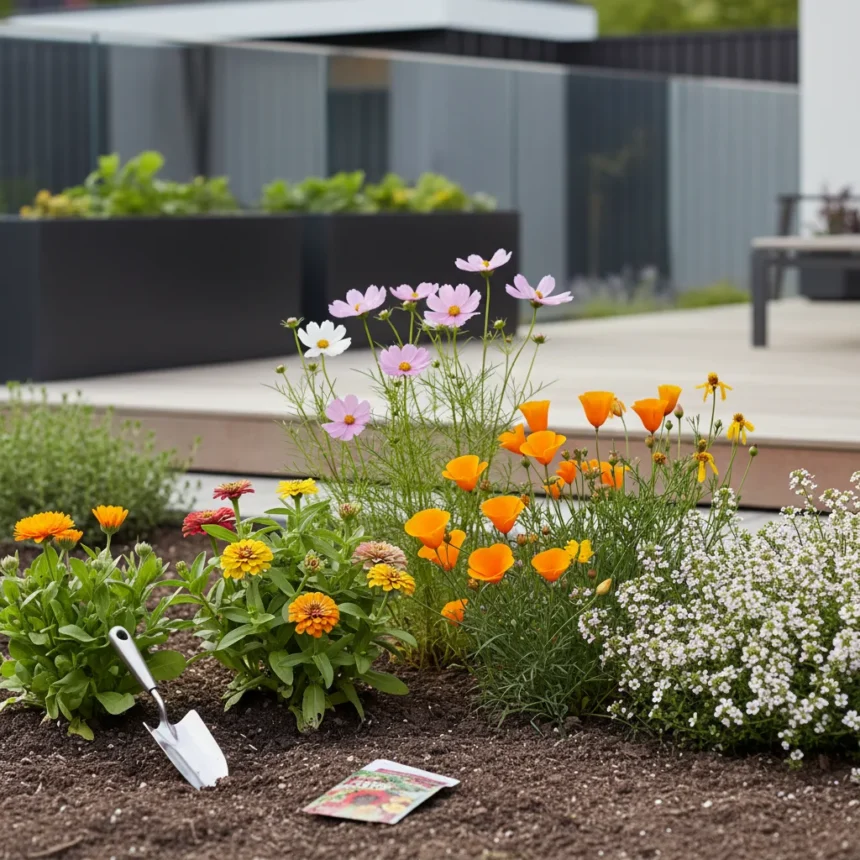
Fast-growing flowers to sow in May deliver vibrant color to gardens in just weeks rather than months. May is the optimal window in temperate regions for direct sowing annuals that will produce full summer blooms before autumn frost arrives. For gardeners who want immediate visual impact without waiting through a long growing season, this timing is crucial.
Key Takeaways
- Marigolds germinate in 4-14 days in warm soil and produce vibrant orange and yellow blooms.
- Zinnias grow in 50-90 days and thrive when sown directly outdoors in May.
- Cosmos flowers bloom mid-summer through fall with daisy-like blooms in white, pink, red, and orange.
- Nasturtiums flower in full sun or partial shade and prefer well-draining soil.
- Nutrient-rich, well-draining soil and full sun maximize germination and growth speed.
Why May Is the Perfect Planting Month
May offers warm soil temperatures that trigger rapid seed germination, especially for heat-loving annuals. Soil that has warmed to at least 60°F (ideally 70°F or higher) accelerates sprouting and root development. Seeds sown in May have the entire summer ahead to mature and flower before the first frost, eliminating the wait that spring-sown seeds in cooler months require.
Direct sowing outdoors in May also avoids the indoor seed-starting equipment and hardening-off process that earlier sowings demand. Gardeners can simply prepare beds, scatter seeds, and watch them grow. This approach works especially well for fast-maturing varieties that reach flowering stage within 50-90 days.
Fast-Growing Flowers to Sow in May
Marigolds are among the fastest bloomers available. They germinate in just 4-14 days in warm soil and can be sown directly into garden beds or containers. These flowers produce vibrant orange and yellow tones and offer a practical benefit: according to Andrew White, resident gardening expert at Rhino Greenhouses, they pair wonderfully with vegetable gardens because they deter pests such as nematodes and whitefly. The leaves are also edible, making them dual-purpose plants.


Zinnias require weed-free, fertile soil and consistent watering but reward attention with abundant blooms. They can be sown directly outside in May and typically reach flowering stage in 50-90 days. Available in multiple colors, zinnias work in borders, beds, and containers. Their rapid growth makes them ideal for gardeners who sowed too late for slower perennials.
Cosmos flowers are sun-loving annuals that produce daisy-like blooms in white, pink, red, and orange. They bloom from mid-summer through fall, extending the color window well into autumn. Their feathery foliage adds texture to gardens and borders. Cosmos work well in vases, planters, and containers, offering flexibility in garden design.



Nasturtiums perform best in full sun but will flower in partial shade, though with reduced flowering in shadier spots. They prefer well-draining soil and germinate quickly in warm conditions. Their bright blooms and distinctive round leaves add character to cottage gardens and mixed borders.
Soil Preparation and Sowing Technique
Success with fast-growing flowers starts with soil preparation. Plant seeds in nutrient-rich, well-draining soil in full sun for best results. Soil that drains poorly causes seed rot before germination occurs. Amending beds with compost before sowing improves both drainage and fertility, giving seeds the nutrients they need to establish quickly.
Direct sowing is straightforward: scatter seeds according to packet depth instructions, water gently, and keep soil consistently moist until germination. Once seedlings emerge and develop true leaves, thin crowded plants to prevent competition. This simple process requires no special equipment or indoor space, making May sowing accessible to all skill levels.
Maximizing Blooms Through Deadheading
Deadheading spent flowers encourages additional blooms throughout the growing season. When plants produce seeds, they stop flowering. Removing faded blooms signals the plant to redirect energy into more flowers rather than seed production. Regular deadheading extends the color window from mid-summer through fall frost, multiplying the visual impact of your May sowing investment.



Does May planting work in all climates?
May sowing works best in temperate regions where the last frost date has passed and soil has warmed. In cooler climates with short growing seasons, May sowing still works but requires varieties with shorter maturity windows (50-70 days rather than 80-90 days). Gardeners in very cold regions may need to start seeds indoors earlier or choose only the fastest-maturing varieties.
Can you sow fast-growing flowers to sow in May in containers?
Yes. Marigolds, zinnias, cosmos, and nasturtiums all thrive in pots and containers. Use nutrient-rich potting soil rather than garden soil, water consistently (containers dry faster than ground beds), and ensure pots have drainage holes. Container growing offers the advantage of moving plants to optimal sun exposure if needed.
What’s the difference between direct sowing and starting seeds indoors?
Direct sowing in May places seeds straight into garden soil, eliminating transplanting shock and indoor equipment needs. Indoor starting (typically done in March or April) gives seeds a head start but requires grow lights, careful watering, and hardening off before transplanting outdoors. For May sowing, direct sowing is simpler and equally effective for fast-maturing annuals.
May is your window to transform bare garden beds into color-filled landscapes without waiting months for results. By choosing fast-growing varieties, preparing soil properly, and maintaining consistent moisture, you’ll have blooming flowers by mid-summer that last until frost. The speed and simplicity of May sowing make it an ideal strategy for instant garden impact.
Where to Buy
17% OFFFelco F2 Pruning Shears$71$86shop now | Amazing StuffGarden Gloves$9.99shop now | 15% OFFGiftsfaloy2 Gallon Watering Can$22.98$27.05shop now
Edited by the All Things Geek team.
Source: Tom's Guide