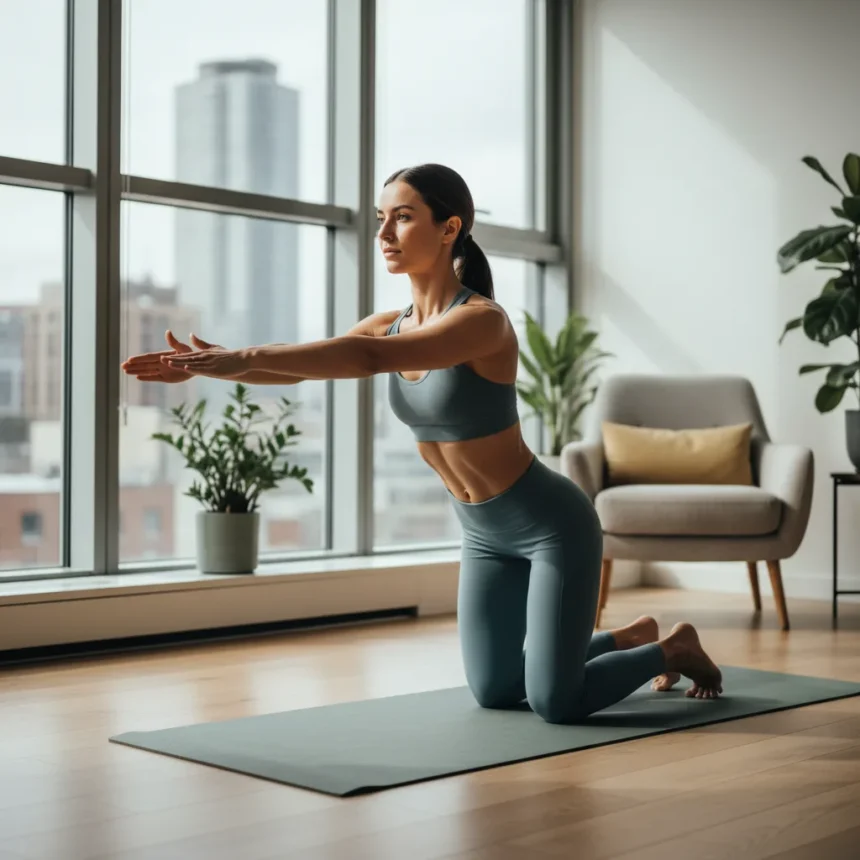
A 15-minute Pilates flow targets abs and upper body strength using only your bodyweight, making it an accessible alternative for people without gym access or time for lengthy workouts. This format—controlled, flowing movements strung together in a single sequence—builds core stability and muscular endurance in a fraction of the time traditional gym sessions demand.
Key Takeaways
- 15-minute Pilates flow requires zero equipment and works anywhere—home, hotel, or office.
- Targets core, abs, and upper body simultaneously through controlled bodyweight movements.
- Suitable for beginners and experienced practitioners; emphasis is on movement quality over speed.
- No mat required, though one is recommended for comfort on hard floors.
- Builds core strength, stability, and muscular endurance without high-impact stress on joints.
What Makes a 15-minute Pilates Flow Different From Regular Pilates
A 15-minute Pilates flow differs from traditional Pilates classes in pacing and structure. Instead of holding static poses or repeating single exercises, a flow chains movements together with minimal rest, creating cardiovascular demand alongside strength work. The routine emphasizes controlled, deliberate motion—each rep performed with precision rather than speed. This approach builds foundational strength, stability, and control while keeping heart rate elevated.
Pilates itself traces back to Joseph Pilates, who developed the method in the early 1900s for injury recovery, with core strength and postural awareness at its foundation. A modern flow-style adaptation condenses that philosophy into a time-efficient package, making it practical for people juggling busy schedules.
Core Exercises in a 15-minute Pilates Flow Routine
A typical 15-minute Pilates flow includes exercises targeting the abs, upper body, and stabilizer muscles. Common movements include planks with alternating leg lifts, tricep push-ups, bird dog variations, forearm plank sequences, fire hydrant lifts, oblique crunches, glute bridges, and the Pilates Hundred—a classic core exercise involving rapid arm pulses while holding a lifted torso. Each exercise flows into the next with minimal rest, maintaining tension throughout the entire 15 minutes.

The key principle is control. Rather than rushing through reps, practitioners move slowly and deliberately, focusing on the mind-muscle connection. This approach maximizes core engagement and reduces reliance on momentum, which is why beginners and advanced athletes alike benefit from the same routine—they simply adjust their intensity and range of motion.
A typical sequence might alternate between upper-body work (push-ups, tricep moves, shoulder stabilizers) and core-focused movements (crunches, leg lifts, planks), ensuring no single muscle group fatigues before the session ends. The flow format means you’re constantly moving, so the cumulative effect builds both strength and endurance.



Who Should Do a 15-minute Pilates Flow
A 15-minute Pilates flow works for nearly everyone. Beginners benefit from the low-impact nature and emphasis on form over speed, while experienced athletes use the same routine to refine control and build stability. The workout requires no prior fitness level and scales naturally—someone new to exercise can move through the sequence at their own pace, while a seasoned athlete can deepen their range of motion and increase intensity.
This format is especially practical for travelers, busy professionals, and anyone without gym access. You need only a clear floor space and, ideally, a mat for cushioning on hard surfaces. The 15-minute duration fits into almost any schedule, removing the common excuse that strength training demands hours of commitment.
How to Get Started With a 15-minute Pilates Flow
Follow a guided video from a certified Pilates instructor to learn proper form and pacing. The instructor will demonstrate each movement and cue you through transitions, eliminating guesswork. Focus on moving with control rather than rushing through repetitions—this is where Pilates differs fundamentally from high-intensity interval training. Slow, deliberate movement with full range of motion yields better results than speed.
Start with a beginner-level routine if you’re new to Pilates. These flows emphasize foundational movements and form cues, building the strength and awareness you need before progressing to more advanced variations. As you gain confidence, you can increase your range of motion, reduce rest between movements, or add optional ankle or wrist weights for extra resistance.



Does a 15-minute Pilates Flow Build Real Strength?
Yes. A 15-minute Pilates flow builds core strength, muscular endurance, and stability through sustained tension and controlled resistance. The routine helps build core strength as well as muscular endurance and definition, especially in the abs and upper body. The key is consistency—performing the routine regularly, not as a one-time experiment, yields measurable improvements in posture, core control, and functional strength over weeks.
Pilates emphasizes quality over quantity. A single slow, controlled tricep push-up with proper form generates more strength-building stimulus than five rushed repetitions. This is why the method remains popular among dancers, athletes, and rehabilitation professionals.
FAQ
Can beginners do a 15-minute Pilates flow?
Yes. Beginner-specific flows exist with modifications for every movement, and the low-impact nature suits people new to exercise. Pilates does not require prior fitness—what matters is moving with control and listening to your body.
Do I need a mat for a 15-minute Pilates flow?
A mat is recommended for comfort on hard floors, but not strictly required. If you have carpet or a padded surface, you can perform the routine without one, though a mat reduces strain on your wrists and spine during planks and floor work.
How often should I do a 15-minute Pilates flow?
Performing the routine 3–5 times per week builds noticeable strength and stability improvements within 4–6 weeks. You can do it daily if you choose, but rest days allow your muscles to recover and adapt, which is when actual strength gains occur.
A 15-minute Pilates flow proves that effective strength training does not demand expensive equipment, long gym sessions, or specialized facilities. For busy people seeking to strengthen their core and upper body at home, this format delivers real results in minimal time—no excuses required.
Edited by the All Things Geek team.
Source: Tom's Guide