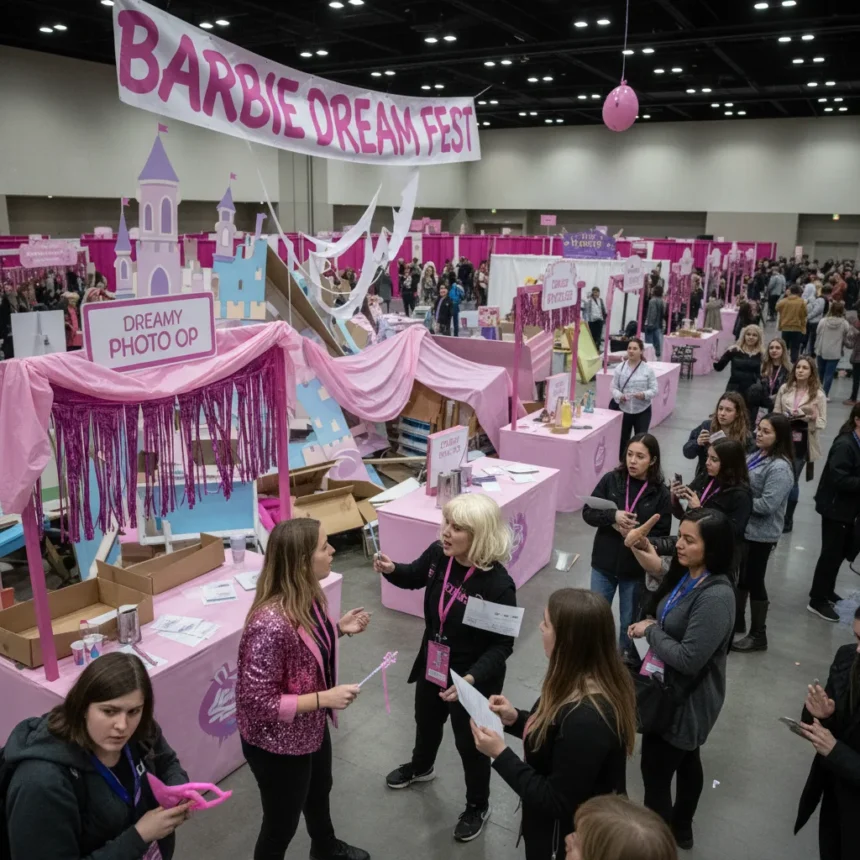
Barbie Dream Fest, billed as the first official Barbie fan convention, turned into a cautionary tale of hype versus reality when it opened in Fort Lauderdale, Florida, on March 27, 2026. Attendees who paid thousands of dollars expecting an immersive, glittery weekend were instead greeted with flimsy setups, chaotic organization, and attractions so underwhelming that guest services confirmed the disappointment with a resigned “Yes, we’ve gotten that question a lot.”
Key Takeaways
- Barbie Dream Fest, the first official Barbie fan convention, ran March 27-29, 2026, in Fort Lauderdale, Florida.
- Attendees reported lackluster setups including a sad-looking roller disco rink and basic bicycle course with cones.
- Vendors numbered only about 10 total, with just 4 Barbie-related; others sold jewelry and soaps.
- Full refunds were offered after attendees demanded their money back.
- The event drew comparisons to the 2024 Glasgow Willy Wonka Experience and other high-profile event failures like Fyre Festival.
How Barbie Dream Fest Became an Event Disaster
The gap between marketing promises and on-the-ground reality defines Barbie Dream Fest’s collapse. Promotional materials promised “fun-filled, glittery weekend full of immersive attractions and themed installations,” but attendees found a convention center with minimal décor, loosely organized stalls, and attractions that looked hastily assembled. The roller disco rink was described as “sad-looking,” while the interactive Dream House boiled down to a simple pink façade sitting on an empty concrete floor. A basic bicycle course made of cones and a handful of sparse themed installations completed the inventory.
Vendor representation was shockingly thin. Of approximately 10 vendors present, only 4 actually sold Barbie merchandise; the rest peddled jewelry and soaps with no connection to the brand. Guest speakers billed as “Amazing Women” had minimal connection to Barbie itself. Entry was chaotic, signage was unclear, and scheduled events were canceled or moved without notice, leaving attendees confused and frustrated.
The Wonka Experience Parallel Everyone’s Talking About
The comparison to the 2024 Glasgow Willy Wonka Experience is not hyperbolic—it is the defining reference point for understanding what went catastrophically wrong. Both events promised immersive, Instagram-worthy experiences backed by major intellectual property; both delivered bare-bones approximations that felt like bait-and-switch operations. The Wonka Experience became a case study in how not to execute a themed event. Barbie Dream Fest simply repeated the same mistakes at scale.

The similarities extend beyond poor execution to the emotional impact on attendees. People spent close to $1,000 when factoring in travel costs, with some paying thousands of dollars total. They arrived expecting a premium, curated experience tied to a beloved cultural phenomenon. Instead, they got a convention center that looked like it was assembled the night before. The refunds came only after public outcry, not because organizers anticipated disappointment.
Why High-Profile Event Failures Keep Happening
Barbie Dream Fest joins a growing list of catastrophic fan conventions and branded experiences: Dash Con, Fyre Festival, and now the Wonka Experience. These failures share a common pattern—massive marketing hype, significant ticket prices, minimal actual infrastructure, and organizers caught off guard by their own success (or lack thereof). The difference with Barbie Dream Fest is that Mattel’s involvement lent false credibility to promises that the event itself could not deliver.



The economics are revealing. High ticket prices attract attendees who expect premium experiences. When the event itself is underfunded or poorly planned, the mismatch becomes instantly obvious. There is no hiding a sad roller disco rink or a pink cardboard house when attendees are paying thousands of dollars and traveling across the country. Social media amplifies disappointment in real time, turning a local event failure into a viral disaster within hours.
What Happens to Attendees Now?
Full refunds were offered to attendees after the event’s failure became public. However, refunds do not recover travel costs, time off work, or the emotional letdown of a canceled experience. For Barbie fans who had been waiting for an official convention, the disappointment runs deeper than money—it is a broken promise from the brand itself.
Could Barbie Dream Fest Have Been Salvaged?
Yes, but only with fundamental changes to scope and execution. The event needed fewer promises and more delivery: a smaller, genuinely curated experience with actual Barbie-focused vendors, professional décor, and clear scheduling. Instead, organizers attempted to create a large-scale convention on what appears to have been a shoestring budget, resulting in an event that looked unfinished and felt hastily thrown together.
Will This Kill Future Barbie Fan Events?
Barbie Dream Fest will not be the last attempt to capitalize on fan enthusiasm for the brand, but it has set a cautionary precedent. Future organizers will face skepticism and higher scrutiny. The Wonka Experience taught the market a hard lesson about overpromising; Barbie Dream Fest has reinforced it. Brands and event organizers must now compete not just against attendee expectations but against memories of high-profile failures that define the category.



The real takeaway is simple: a themed event’s success depends entirely on execution, not on the strength of the IP behind it. Barbie is one of the world’s most recognizable brands, yet that brand equity could not save an event that failed to deliver on its basic promises. For future fan conventions, the lesson is clear—under-promise and over-deliver, or risk becoming the next cautionary tale.
Edited by the All Things Geek team.
Source: Creativebloq