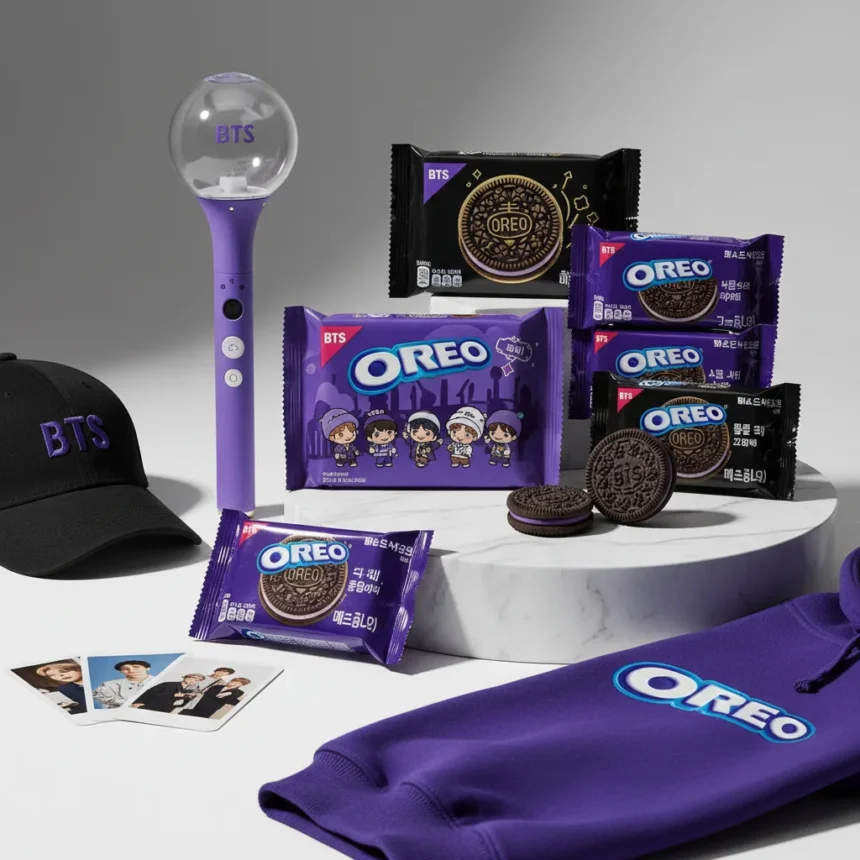
The BTS Oreo collaboration could reshape how major brands think about celebrity partnerships. By combining one of the world’s most recognizable cookie brands with one of the biggest music groups on the planet, the deal demonstrates a fundamental shift in how consumer companies approach global marketing strategy.
Key Takeaways
- The BTS Oreo collaboration merges K-pop’s global fanbase with a legacy consumer brand
- This partnership signals how brands are prioritizing direct celebrity-fanbase connections over traditional advertising
- The deal represents a new scale of celebrity-brand alignment in the modern marketing era
- Cross-category partnerships between entertainment and food brands are becoming more strategic and data-driven
- The collaboration’s cultural reach extends far beyond typical product endorsements
Why the BTS Oreo collaboration matters now
Celebrity brand partnerships have existed for decades, but the BTS Oreo collaboration operates at a different scale entirely. Traditional endorsements positioned a celebrity as a spokesperson for an existing product. This partnership, by contrast, creates a product specifically designed around the band’s cultural moment and fanbase. The timing matters because BTS operates at the intersection of multiple massive markets—South Korea, North America, Latin America, and Southeast Asia—each with distinct purchasing power and brand loyalty patterns. Oreo, owned by Mondelēz International, gains direct access to one of the most engaged global fanbases in entertainment history. The band’s ARMY fanbase is known for coordinated purchasing behavior and social media amplification, making them an invaluable marketing asset that traditional advertising cannot replicate.
The scale of this collaboration distinguishes it from previous celebrity-brand deals. Where past partnerships might have featured a celebrity in a 30-second commercial or as a limited-time spokesperson, the BTS Oreo collaboration suggests a deeper integration—one that treats the band’s cultural identity as inseparable from the product itself. This approach reduces the risk of the partnership feeling forced or inauthentic, which has plagued many celebrity endorsements in the past.
How celebrity partnerships are evolving in the streaming era
The entertainment landscape has fundamentally changed how brands approach celebrity deals. Twenty years ago, celebrity endorsements relied on television exposure, magazine covers, and press junkets. Today, BTS reaches millions directly through YouTube, TikTok, Spotify, and Instagram, bypassing traditional media gatekeepers entirely. This shift has made celebrity partnerships more valuable to brands because they come with built-in distribution channels and engaged audiences that respond to algorithmic amplification. The BTS Oreo collaboration capitalizes on this reality by treating the band’s existing fanbase as a primary marketing channel rather than a secondary benefit.

The economics have shifted as well. Brands no longer need to spend massive sums on television placement when a single social media post from BTS can reach hundreds of millions of people organically. This efficiency makes celebrity partnerships more attractive to companies, even when the upfront licensing fees are substantial. The BTS Oreo deal likely represents a significant investment, but the return on that investment—measured in earned media, social engagement, and direct sales—could dwarf traditional advertising campaigns.
What sets this partnership apart from previous brand collisions
Past celebrity-brand partnerships have often felt transactional: a company pays a celebrity to appear in an advertisement, both parties benefit from the exposure, and the relationship ends when the contract expires. The BTS Oreo collaboration suggests a different model—one where the product itself becomes part of the band’s cultural narrative. Fans don’t just see BTS promoting Oreos; they see a limited-edition product that feels like a genuine extension of the band’s brand identity. This distinction matters enormously for consumer psychology and long-term brand loyalty.



The product design, packaging, and distribution strategy all play roles in whether this partnership succeeds or fails. If the BTS Oreo collaboration simply repackages existing cookies with the band’s image, it risks feeling like a cynical cash grab. If instead it introduces novel flavors, special packaging, or exclusive distribution channels that align with BTS’s brand identity and fanbase preferences, it becomes a cultural moment rather than a mere product placement. The difference between these outcomes determines whether the collaboration genuinely reshapes brand partnerships or simply becomes another celebrity endorsement that fades after a few months.
The global implications of mega-partnerships
What makes the BTS Oreo collaboration potentially historic is its global scope. BTS is not a regional phenomenon—the band commands genuine commercial and cultural relevance across North America, Europe, Latin America, and Asia simultaneously. Few entertainment acts achieve this level of truly worldwide penetration. When a brand partners with such a globally dominant figure, the implications extend far beyond a single market or region. Mondelēz International, as a global company with operations in over 150 countries, can leverage this partnership across multiple markets in ways that regional brands cannot. The collaboration has the potential to drive sales and brand awareness in markets where Oreo is already established and in markets where the brand is still building presence. This multiplier effect is what distinguishes a typical celebrity partnership from a potentially transformative one.
The BTS Oreo collaboration also signals to other major brands that K-pop represents a legitimate and valuable marketing channel. For years, Western consumer companies treated K-pop as a niche interest. This partnership suggests that view has shifted dramatically. Future brand collaborations will likely increasingly target K-pop and K-pop adjacent audiences, recognizing them as sophisticated, globally distributed consumers with substantial purchasing power.
Could this collaboration reshape how brands think about celebrity deals?
The BTS Oreo collaboration may establish a new template for how major brands approach celebrity partnerships. Rather than treating celebrity endorsements as advertising add-ons, brands might increasingly view them as core product strategy. This shift would require deeper collaboration between entertainment management, brand strategy, and product development teams. It would also require brands to think longer-term about partnerships, viewing them as potential multi-year initiatives rather than one-off campaigns. If the BTS Oreo collaboration succeeds commercially and culturally, expect competitors to pursue similar mega-partnerships with globally dominant entertainment figures.



What does this deal reveal about consumer brand loyalty?
The BTS Oreo collaboration exists because modern consumers, particularly younger demographics, are willing to purchase products based on emotional connection to celebrities and cultural movements. This represents a significant shift from previous generations, where product quality and price were the primary drivers of purchasing decisions. Today, the story behind a product—who endorses it, what it represents culturally, how it aligns with a consumer’s identity—often matters as much as the product itself. The BTS fanbase exemplifies this tendency. ARMY members are not primarily motivated to buy Oreos because the cookies are objectively superior to competitors; they buy them because owning the product deepens their connection to the band and signals their membership in a global community. This psychological driver is far more powerful than traditional advertising and explains why the BTS Oreo collaboration could achieve unprecedented commercial success.
Is the BTS Oreo collaboration actually happening?
The reported BTS Oreo collaboration has generated significant buzz in design and branding circles, with industry observers positioning it as potentially one of the largest celebrity-brand partnerships ever attempted. However, the specifics of the deal—including exact launch dates, product specifications, regional availability, and commercial terms—remain limited in publicly available information. Consumers interested in the collaboration should monitor official channels from both Oreo and BTS’s management for confirmed details about product availability and release timing.
How do K-pop collaborations compare to traditional celebrity endorsements?
K-pop collaborations differ fundamentally from traditional celebrity endorsements because they leverage fanbases with exceptional engagement levels and cross-platform presence. While a traditional endorsement might feature a celebrity in isolated advertisements, K-pop partnerships benefit from organic social media amplification, fan-created content, and coordinated purchasing behavior. The BTS Oreo collaboration gains additional power from the band’s proven ability to drive commercial success across music, merchandise, and other product categories. This track record makes K-pop partnerships attractive to brands seeking measurable returns on investment.
The BTS Oreo collaboration represents a defining moment in how major brands approach celebrity partnerships. By merging one of the world’s most dominant entertainment acts with an iconic consumer brand, the deal demonstrates that the future of brand marketing belongs to partnerships that feel authentic, culturally relevant, and genuinely integrated into the celebrity’s identity. Whether this collaboration ultimately becomes the biggest brand partnership the world has seen depends on execution, but the strategy itself signals where the industry is heading.
Edited by the All Things Geek team.
Source: Creativebloq