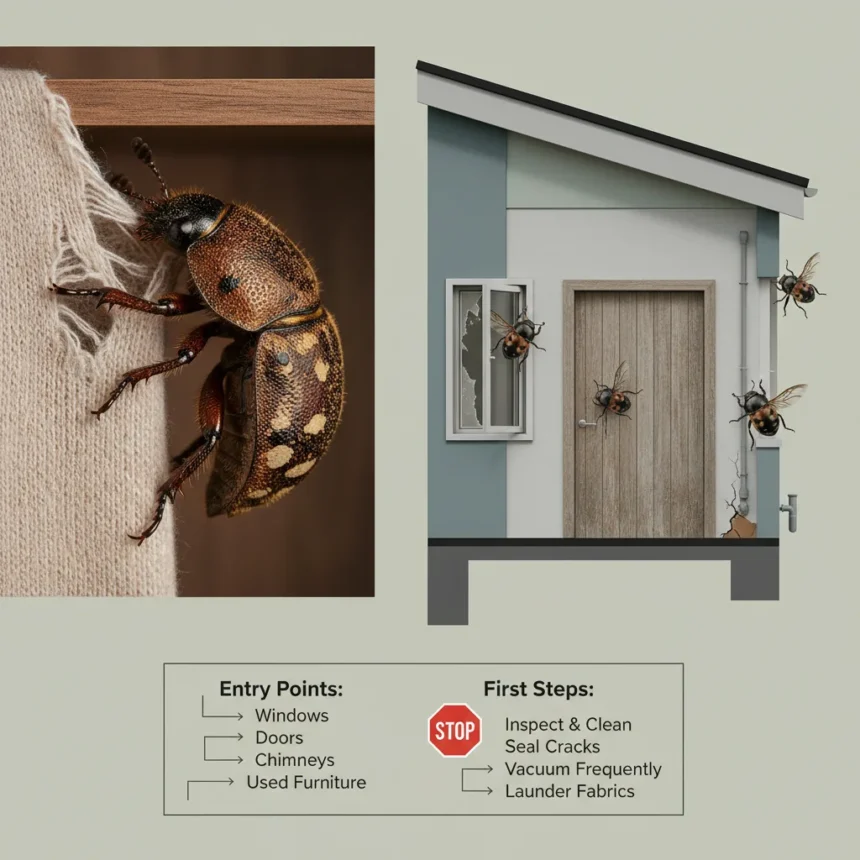
Carpet beetles entry prevention starts with understanding how these pests actually get inside your home—and it’s rarely through the carpet itself. Adult carpet beetles can fly through open windows and doors, crawl in alongside pets and clothing, hitchhike on cut flowers, or even squeeze through electrical outlets. The real damage comes later, when larvae feed on natural fabrics like wool, silk, and cotton. Most homeowners only notice the problem after clothes are already ruined, making early detection and prevention critical.
Key Takeaways
- Carpet beetle larvae, not adults, damage clothing and carpets by feeding on natural fibers.
- Adults enter homes through windows, doors, pets, flowers, secondhand furniture, and electrical outlets.
- Vacuuming with a crevice tool and steam cleaning can eliminate beetles and eggs before infestation spreads.
- Hair, debris, and soiled clothes attract larvae to carpets and baseboards.
- Professional pest control may be necessary if infestation is severe or DIY methods fail.
Where Carpet Beetles Really Come From
Carpet beetles are outdoor insects that become household pests when they find their way inside. Unlike some household insects that breed indoors as their primary entry route, carpet beetles originate outside and enter homes seeking shelter and food sources. The entry points are more varied than most people realize. Windows and doors are obvious routes, but adult beetles also travel on clothing, pet fur, and cut flowers brought into the home. Secondhand furniture and rugs can harbor both adults and larvae, making thrift purchases and hand-me-downs potential vectors. Even electrical outlets provide gaps large enough for beetles to squeeze through.
The distinction between adult beetles and larvae is crucial for understanding the problem. Adult carpet beetles feed on pollen and are primarily a nuisance; they do not damage fabrics. Larvae, however, are the destructive stage. Once larvae hatch indoors, they feed on natural fibers found in clothing, rugs, upholstery, and other soft furnishings, leaving holes and bare patches. This delayed damage is why early intervention matters—by the time visible destruction appears, the infestation may already be advanced.
How to Spot Entry Points and Early Warning Signs
Carpet beetles often concentrate around windows and doorways, where they enter and where light attracts them. Inspect window sills, door frames, and the areas surrounding electrical outlets for adult beetles. They are small—typically between 2 and 5 millimeters—and may appear as tiny beetles with mottled or patterned shells. Larvae are harder to spot; they resemble small fuzzy caterpillars and are often found in carpet fibers, under furniture, and along baseboards where they feed on accumulated hair, dust, and debris.

The presence of adults does not automatically mean fabric damage is occurring, but it signals that larvae may already be developing indoors. Look for small holes in wool sweaters, blankets, or upholstered furniture—these are the first visible signs of a larvae-driven infestation. Check dark, undisturbed areas like closets, under beds, and beneath furniture, where larvae prefer to feed undisturbed.
Stopping Carpet Beetles Entry Prevention Before Infestation Spreads
The most effective approach is removing the food sources that attract and sustain carpet beetle larvae. Start by vacuuming thoroughly. Use a vacuum with a crevice tool attachment to reach along baseboards, under furniture, and along window sills where hair and debris accumulate. Pay special attention to areas where pets sleep or spend time, as shed fur is a primary food source. After vacuuming, dispose of the dust bag immediately rather than leaving it in the home.



Wash soiled clothing immediately—sweat and body oils on fabric attract larvae. Store pantry items and dry goods in airtight containers, as some carpet beetle species feed on stored foods. This step eliminates a secondary food source that can sustain an infestation even if fabric damage is minimal.
Steam cleaning carpets after vacuuming can kill remaining beetles and eggs on contact. Move furniture out of the room before steaming and work in sections to ensure thorough coverage. Allow the room to dry for at least 24 hours before returning furniture or occupants, even if the carpet feels dry sooner. Open windows and doors to ventilate the space, and use a dehumidifier if the room remains damp. This multi-step approach—remove food, vacuum, steam clean, dry thoroughly—addresses both adult beetles and developing larvae.
When to Call Professional Pest Control
If the infestation is severe, covers a large area, or persists after DIY treatment, professional pest control is the most reliable option. Pest control companies have access to stronger treatments and the expertise to identify hidden infestation sites that homeowners might miss. Chemical foggers are available for DIY use, but they require careful preparation: keep children and pets away from the treated area, turn off ignition sources and airflow systems before fogging, and follow all label directions precisely. For many homeowners, the cost and peace of mind of professional treatment justify the expense, especially when fabric damage has already occurred.
Can carpet beetles damage items in storage?
Yes. Carpet beetle larvae feed on stored clothing and textiles if those items are in dark, undisturbed spaces. Seal clothing in airtight containers or vacuum-sealed bags before long-term storage to prevent larvae from accessing fabrics. This is especially important for wool, silk, and other natural fibers that are preferred food sources.



How quickly do carpet beetles cause damage?
Damage depends on larval population size and food availability. A small infestation may take weeks or months to produce visible holes, while a large population can damage multiple garments in a short period. Early detection and removal of food sources can stop the process before significant loss occurs.
Are carpet beetles attracted to clean homes?
No. Carpet beetle larvae are attracted to hair, dust, debris, and soiled fabrics. Homes with poor vacuuming habits, accumulated pet hair, or piles of unwashed clothing provide ideal breeding grounds. Regular vacuuming, immediate laundering of soiled clothes, and decluttering reduce infestation risk substantially.
Carpet beetles entry prevention is ultimately simpler than treating an established infestation. Seal entry points where possible, maintain regular vacuuming schedules, and inspect secondhand items before bringing them into your home. By understanding how these pests enter and what attracts them, you can stop the problem before larvae ever damage your wardrobe or furniture.
Edited by the All Things Geek team.
Source: Tom's Guide