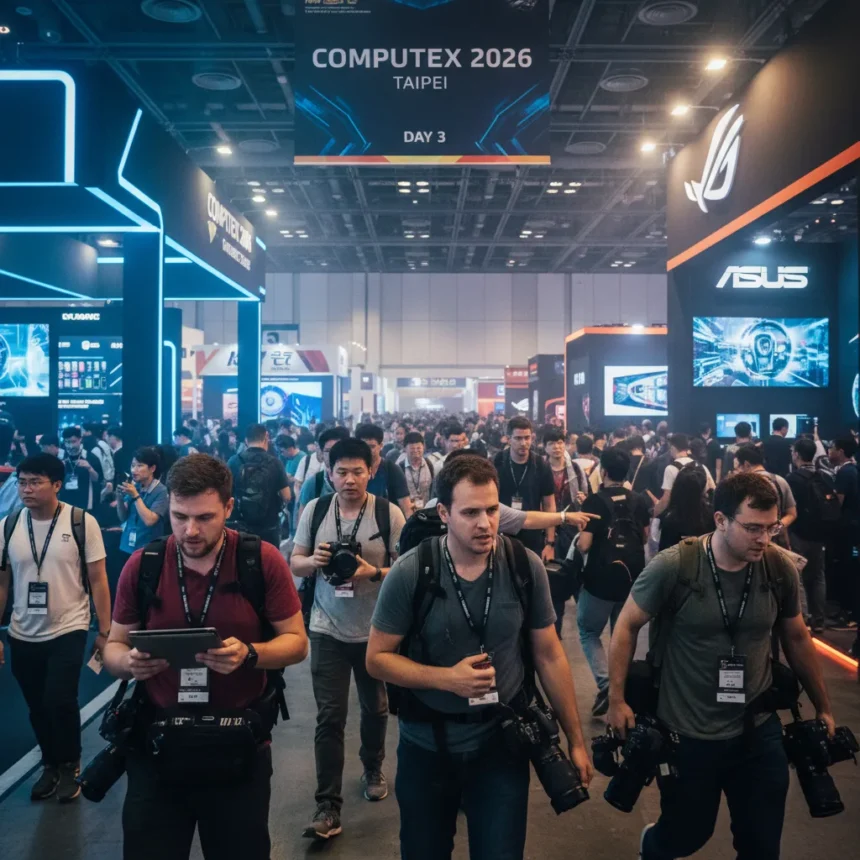
Computex 2026 coverage from the ground in Taipei reveals why day three of the world’s largest computer trade show tests even seasoned tech journalists. The event has grown busier than ever before, with crowds and schedules that demand constant movement across the sprawling convention center and surrounding venues.
Key Takeaways
- Computex 2026 is busier than any previous year, according to on-site reporting
- Taipei heat adds physical strain to an already demanding coverage schedule
- Tom’s Hardware’s Unfiltered series documents real-time reporting challenges at major tech events
- Day three coverage follows packed day one and day two dispatches from the same event
- Live event reporting requires rapid booth visits, interviews, and deadline management across multiple time zones
Why Computex 2026 Coverage Demands Constant Movement
Trade show reporting at Computex 2026 is fundamentally different from traditional tech journalism because the story breaks across dozens of simultaneous announcements, booth demonstrations, and exclusive previews. The scale of the event means a single reporter cannot cover every announcement, forcing editorial teams to divide coverage by product category, company, and booth location. This fragmentation requires constant coordination and rapid movement between venues.
The physical demands are real. Taipei’s heat during June intensifies the challenge of covering an event where standing, walking, and conducting interviews in crowded booths becomes the default work environment. Unlike reviewing products in a controlled lab or interviewing executives in an air-conditioned office, Computex coverage happens in real-time chaos. Reporters must maintain accuracy and deadline discipline while managing fatigue, dehydration, and information overload.
Tom’s Hardware’s decision to publish day-by-day Unfiltered dispatches reflects the editorial reality of modern trade show coverage. Rather than waiting to synthesize findings into polished retrospectives, the publication documents the pressure and pace of covering Computex 2026 as it unfolds. This approach sacrifices some editorial refinement for immediacy and authenticity.

How Computex 2026 Compares to Previous Years
The research brief indicates that Computex 2026 is busier than ever before, suggesting the event has grown in scale, attendance, or announcement density compared to previous iterations. This growth creates a compounding challenge: more companies launching products, more journalists competing for interview slots, and more booth traffic means fewer opportunities for deep conversations or thorough product evaluation on-site.
Historically, trade shows have served as the primary venue for hardware announcements and industry announcements. Computex 2026 maintains that role but with increased intensity. The fact that Tom’s Hardware is publishing separate day-one, day-two, and day-three Unfiltered dispatches, alongside a live coverage feed, underscores how much content the event generates. A single daily summary would have been standard a decade ago; now, the event demands multiple reporting angles and real-time updates.



The comparison point is not another conference but rather the expectations placed on modern tech journalism itself. Readers expect live updates, social media commentary, and immediate analysis—not a week-long wait for a comprehensive review. Computex 2026 coverage pushes journalists to deliver faster, more frequently, and under more difficult physical conditions.
The Reality of Real-Time Computex 2026 Coverage
One critical insight from Tom’s Hardware’s Unfiltered series is that trade show reporting is not a curated, controlled process. Journalists do not have the luxury of testing products thoroughly, comparing specifications in isolation, or fact-checking claims in a quiet environment. Instead, they gather information amid noise, crowds, and time pressure. A vendor’s demo might be compelling but misleading; a specification sheet might omit critical details; a conversation with a product manager might be cut short by the next appointment.
This reality matters because it shapes how readers should interpret trade show coverage. The Computex 2026 coverage from Tom’s Hardware documents what journalists actually observe and experience on-site, not what independent testing would later reveal. Some announcements will prove significant; others will fade into obscurity. Some products shown at Computex will never ship; others will become category-defining devices.
The heat, the crowds, and the relentless schedule are not incidental details—they are fundamental to understanding how technology news gets reported. When a journalist files a story from a trade show floor, they are working under constraints that lab reviewers and feature writers do not face. Recognizing this context helps readers interpret the coverage more fairly and understand why follow-up coverage, testing, and analysis matter.



What Computex 2026 Coverage Reveals About the Tech Industry
The fact that Computex 2026 is busier than previous years suggests the hardware industry remains robust and innovation-focused. Companies continue to invest in trade show presence, product launches, and press engagement. This stands in contrast to some predictions that trade shows would diminish in importance as companies move toward digital announcements and virtual events.
The sustained intensity of Computex also reflects the competitive pressure in semiconductors, graphics cards, processors, and related hardware markets. When a company skips the event or downsizes its booth, it signals reduced market confidence or strategic pivot. Conversely, expanded presence and major announcements indicate confidence in the product roadmap and market opportunity.
For readers following Computex 2026 coverage, the volume and pace of reporting from Tom’s Hardware and other outlets serve as a real-time barometer of industry health and innovation velocity. A slow, quiet Computex would signal stagnation; a hectic, crowded event suggests the opposite.
How Should Readers Consume Computex 2026 Coverage?
Tom’s Hardware’s Unfiltered approach—publishing raw, day-by-day dispatches—is valuable precisely because it does not pretend to offer final verdicts. These reports capture impressions, observations, and breaking news. They are not comprehensive product reviews or definitive analyses. Readers who want to understand Computex 2026 should consume both the real-time coverage and the follow-up deep dives that emerge once journalists have time to synthesize, compare, and contextualize.
The heat and chaos documented in day-three coverage is not a bug in tech journalism; it is a feature of how the industry communicates. Major announcements happen at trade shows because vendors want the concentrated media attention and industry audience that these events provide. Reading Computex 2026 coverage means accepting that journalists are working under difficult conditions and that their immediate reports are snapshots, not final analyses.
Is Computex 2026 the most important tech event of the year?
Computex 2026 is certainly one of the largest and most concentrated tech industry events, but importance depends on your interests. For hardware enthusiasts, semiconductor engineers, and component manufacturers, Computex is essential. For software developers, app creators, and consumer-focused tech companies, other events like developer conferences or consumer electronics shows may matter more. The busier-than-ever schedule reflects strong hardware industry participation.
Why do tech journalists cover trade shows in real-time instead of waiting for product reviews?
Real-time Computex 2026 coverage serves readers who want immediate information about announcements and industry trends. Waiting weeks for comprehensive reviews would miss the news cycle and leave readers behind competitors. Trade show coverage and product reviews serve different purposes: one captures what companies announced and what the industry is discussing right now; the other evaluates whether those announcements deliver on their promises.
What makes Computex 2026 different from virtual tech announcements?
Trade shows like Computex concentrate hundreds of companies, thousands of journalists, and tens of thousands of industry professionals in one place at one time. This density creates news momentum and enables unexpected connections and conversations. Virtual announcements, by contrast, are controlled, isolated events. Computex 2026 coverage captures the energy and chaos of in-person industry gathering in a way that digital events cannot replicate.
The heat biting, the crowds pushing, and the schedule relentlessly advancing—these are not obstacles to understanding Computex 2026. They are the story itself. Tom’s Hardware’s Unfiltered coverage documents what it actually means to report on the world’s largest computer trade show, delivering readers the real-time pulse of the hardware industry as it unfolds in Taipei.
Edited by the All Things Geek team.
Source: Tom's Hardware