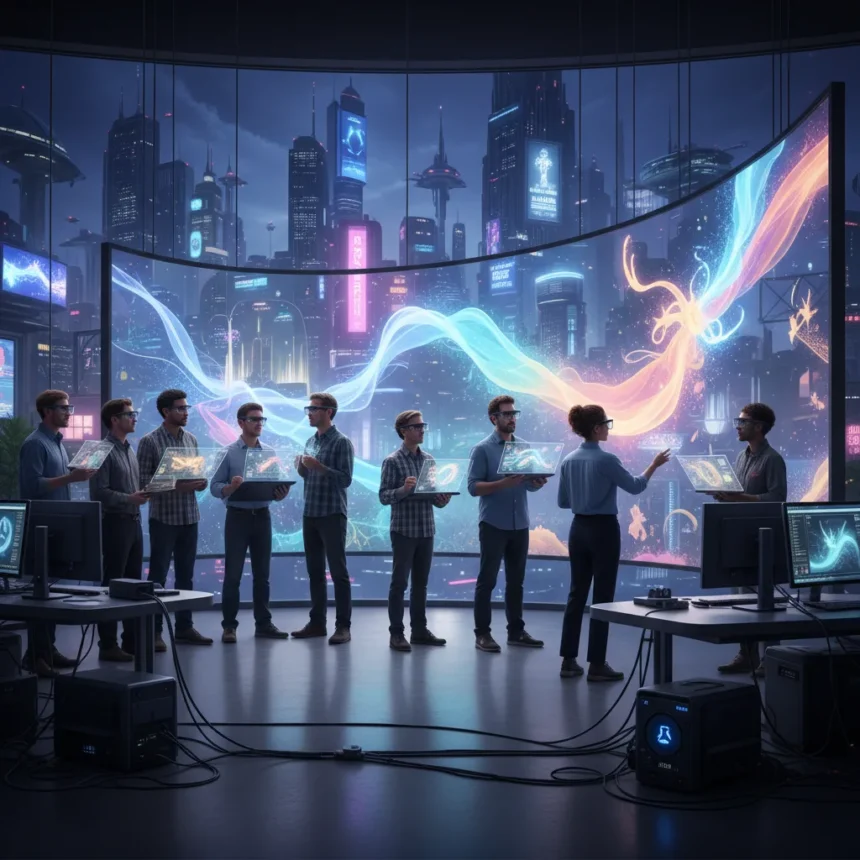
Disney’s animation challenge represents the studio’s most ambitious technical and creative undertaking to date. The project demands innovations that stretch both the capabilities of animation software and the stamina of the artists wielding it, marking a significant inflection point in how the studio approaches character movement, visual storytelling, and production timelines.
Key Takeaways
- Disney animators describe this project as their most difficult creative challenge ever attempted.
- The animation challenge requires pushing beyond existing software capabilities and established production workflows.
- Technical constraints and artistic vision are forcing the studio to develop new approaches to character animation.
- The project tests both the limits of current animation technology and the resilience of creative teams.
What Makes This Disney Animation Challenge Different
This Disney animation challenge differs fundamentally from previous projects in scope and technical demand. The studio is not simply refining existing techniques—it is reimagining core animation processes from the ground up. Animators working on the project have described the experience as grueling, with one noting it represents the most difficult thing they have ever done.
The challenge stems from a combination of factors: character complexity that exceeds previous standards, movement requirements that push animation software to its breaking point, and creative ambitions that cannot be achieved through conventional workflows. Unlike standard feature animation, which builds on proven pipelines and established best practices, this Disney animation challenge forces teams to solve problems that have no existing solutions within the industry.
The technical barriers are not the only hurdle. The project demands a rethinking of how animators approach their craft—from the initial rigging phase through final polish. Every stage of the pipeline faces pressure to innovate, creating a cascading effect where breakthroughs in one department unlock possibilities in another.

The Human Cost of Innovation
Behind every technical breakthrough lies the reality of creative teams working at the edge of their capabilities. This Disney animation challenge has become a test of artistic resilience as much as technical skill. Animators are experimenting with new tools, learning unfamiliar software pipelines, and adapting their instincts to systems that do not yet have established best practices.
The psychological weight of this Disney animation challenge should not be underestimated. Working on a project explicitly designed to break new ground means accepting failure as part of the process. There is no playbook. Teams cannot simply consult previous productions for guidance when the technical requirements have never been attempted before.



Yet this pressure has also created unexpected moments of discovery. The constraints imposed by this Disney animation challenge have forced animators to think differently about movement, expression, and visual storytelling. Some of the most innovative solutions have emerged precisely because the conventional approaches were inadequate.
What This Means for Animation’s Future
Success on this Disney animation challenge would reshape how the entire industry approaches character animation. If Disney solves the technical problems embedded in this project, those solutions become available to competitors and smaller studios. The tools, workflows, and insights developed here will likely influence animation production for years to come.
The broader implication is clear: animation is entering a new era where artistic ambition outpaces existing technology. This Disney animation challenge is not an anomaly—it is a preview of what happens when studios push beyond incremental improvements and demand genuinely transformative breakthroughs. Other major animation studios will eventually face similar pressure to innovate or risk falling behind in visual sophistication and creative possibility.
Is this Disney animation challenge worth the effort?
From a purely business perspective, the investment in solving these technical problems only makes sense if the resulting film justifies the development cost and extended timeline. Disney is betting that audiences will perceive the visual and storytelling innovations as significant enough to warrant the premium production expense. The studio is also banking on the long-term value of the tools and techniques developed during this process.



How does this Disney animation challenge compare to previous studio innovations?
Previous Disney animation breakthroughs—from the introduction of computer animation in Toy Story to the motion-capture innovations in later films—built on existing technology and adapted it for new purposes. This Disney animation challenge is fundamentally different because it demands the creation of entirely new technical approaches rather than the refinement of established ones. The scale of innovation is larger, the timeline is more uncertain, and the risk of failure is higher.
Will other studios attempt similar animation challenges?
Competing animation studios will certainly watch this Disney animation challenge closely. If it succeeds, the pressure to match or exceed those innovations will be immediate. However, not every studio has the financial resources or technical infrastructure to pursue such ambitious projects. This Disney animation challenge may become a defining differentiator for studios with the scale and capital to invest in genuine innovation rather than iterative improvement.
The Disney animation challenge ultimately reveals a fundamental truth about creative industries: genuine progress requires accepting discomfort, embracing failure, and pushing past the boundaries of what is known to be possible. For animators working on this project, the difficulty is not a bug—it is the entire point. The most meaningful artistic achievements emerge from the willingness to attempt what others consider impossible.
Edited by the All Things Geek team.
Source: TechRadar