





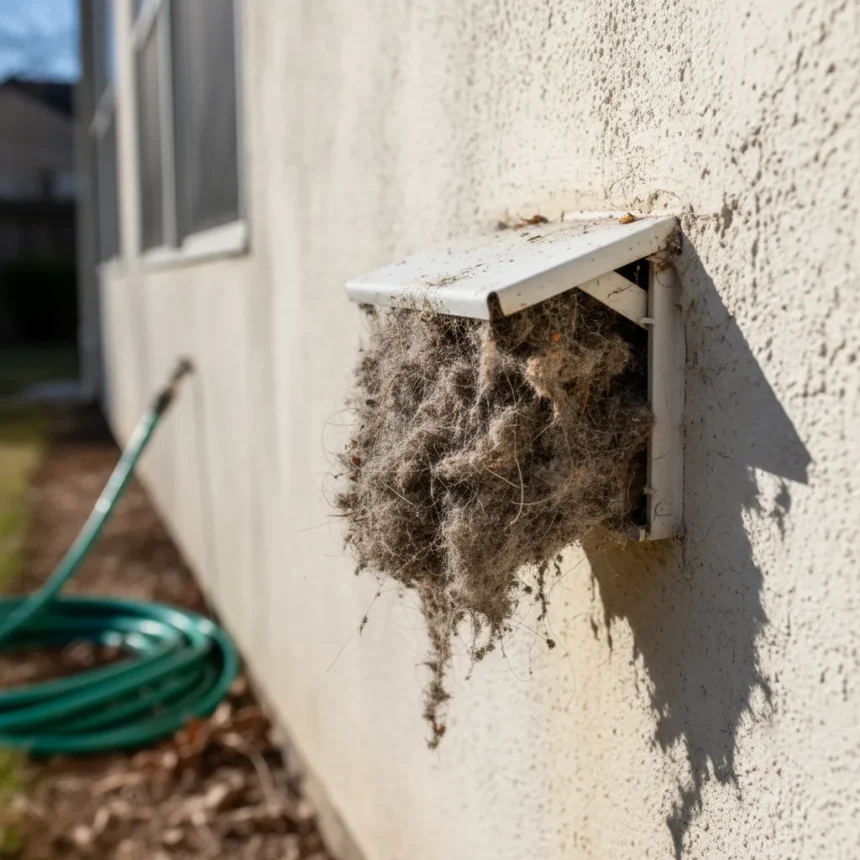
Your dryer vent fire hazard might be hiding right now, undetected in the laundry room. According to the U.S. Fire Administration, 34% of dryer fires are caused by failure to clean the vent system. The good news: this is almost entirely preventable. The bad news: most homeowners don’t check until smoke fills the room.
Key Takeaways
- Check your exterior vent flap now—if it doesn’t open fully when the dryer runs, airflow is blocked and fire risk is high.
- Lint buildup is highly flammable; clean the lint trap after every load and inspect vents at least quarterly.
- The U.S. Fire Administration attributes 34% of dryer fires to uncleaned vent systems.
- Replace flexible plastic or foil ducts with rigid metal vents; plastic ducts trap lint and violate fire codes.
- Never leave a dryer running unattended, especially while sleeping or away from home.
The One Sign You Need to Check Right Now
A stuck or non-opening exterior vent flap is the single fastest indicator of a dryer vent fire hazard. When you run your dryer, step outside and watch the flap on the vent exit. It should open fully and allow air to flow freely. If it stays closed, opens only partially, or moves sluggishly, lint and moisture are accumulating inside the duct. That blockage is a fire waiting to happen. This check takes 30 seconds and could save your home.
Restricted airflow forces hot air and lint to recirculate inside the dryer and ductwork. Lint is highly flammable—it ignites easily from heat or sparks generated by friction inside the drum. When airflow is blocked, temperatures rise rapidly, and the risk of spontaneous ignition climbs. A functioning exterior flap should snap open the moment warm air reaches it and close completely when the dryer stops. Anything less means action is needed immediately.
Other Warning Signs Your Dryer Vent Needs Attention
Beyond the exterior flap, several other symptoms indicate a dryer vent fire hazard. Clothes taking longer than one full cycle to dry, or coming out still damp, is a red flag—it means heat and moisture aren’t escaping. A burning smell during or after a drying cycle is a critical warning; do not ignore it. If your dryer or the clothes feel excessively hot to the touch, or if you notice visible lint buildup around the vent opening or inside the lint trap, these are all signs of restricted airflow.

A laundry room that feels unusually warm or humid after running the dryer, or a dryer that cycles on and off frequently due to overheating, also indicates a potential dryer vent fire hazard. Some dryers have built-in thermal shutoffs that kick in when temperatures spike—frequent cycling is the appliance trying to protect itself. Pay attention. These aren’t cosmetic issues; they’re your home’s early warning system.
How to Prevent a Dryer Vent Fire Hazard
Prevention starts with routine maintenance. Clean the lint trap before or after every load—this is non-negotiable. A full lint trap blocks airflow and traps heat. Next, inspect and clean your vents at least quarterly, or more frequently if you do heavy laundry. Use a dryer vent brush kit for basic cleaning, or hire a professional for deep blockages, especially if your vent runs a long distance or travels through multiple stories.



The type of ductwork you use matters enormously. Flexible plastic, foil, vinyl, or accordion-style ducts are fire hazards—they trap lint, sag over time, and violate building codes. Replace them with rigid or semi-rigid metal vents made of aluminum or steel. Metal ducts allow lint to slide through and don’t accumulate debris the way flexible plastic does. Ensure your vent exhausts directly outside, not into an attic, wall cavity, or crawlspace. Heat and moisture trapped inside walls create mold and structural damage on top of fire risk.
Schedule a professional inspection and cleaning annually, especially if you have a long vent run or multi-story home. Professionals have industrial-grade equipment and can spot problems you might miss. They can also verify that your vent is properly sealed and that no lint is escaping into hidden cavities. Keep the area around your dryer clear of flammable materials—no boxes, rags, cleaning supplies, or clothing stacked nearby.
What to Do If You Smell Burning from Your Dryer
If you detect a burning smell during a drying cycle, take immediate action. Turn off the dryer right away and unplug it if you can do so safely. Do not open the dryer door—opening it feeds oxygen to any potential fire and risks burns. Let the appliance cool completely before investigating. Once it’s cool, check and clean the lint trap and vent thoroughly. If you see flames or heavy smoke, evacuate the building and call 911; use a fire extinguisher only if you are trained and the fire is small and contained.
After addressing the immediate hazard, have a professional inspect the dryer before using it again. A burning smell often indicates lint ignition or a motor problem—either way, the appliance needs expert evaluation. Do not attempt to troubleshoot electrical or mechanical issues yourself. If the dryer has already experienced a fire event, replacement is safer than repair.



Never Leave Your Dryer Running Unattended
A critical habit to break: running your dryer while you sleep or while you’re away from home. If a fire starts, you won’t be there to smell it, see smoke, or act. Dryer fires can spread rapidly, especially in older homes with wood-frame walls. Always stay home while the dryer is running, and never start a load right before bed or before leaving the house. This single rule eliminates the window during which a fire could grow undetected.
Additionally, avoid drying foam, rubber, plastic, or oily items in your dryer. These materials can ignite at lower temperatures or release flammable vapors. Stick to standard fabrics—cotton, synthetics, and blends designed for machine drying. Do not overload the dryer; clothes need room to tumble and heat to circulate evenly. An overloaded dryer runs hotter and longer, straining the motor and increasing lint accumulation.
Comparing DIY Maintenance to Professional Cleaning
Homeowners often debate whether to clean their dryer vents themselves or hire a professional. DIY brush kits are affordable and work well for basic lint removal from accessible sections of the vent. However, if your vent is long, runs through walls, or has multiple bends, a brush kit won’t reach deep blockages. Professional services use industrial-grade equipment, high-powered air systems, and specialized cameras to inspect the entire vent run and identify hidden lint or damage. For long vents or multi-story homes, professional cleaning is worth the cost because it catches problems a brush kit would miss.
Think of it this way: a brush kit maintains a clean vent between professional visits. A professional cleaning removes systemic blockages and provides peace of mind. If your vent is short and straight, quarterly DIY cleaning may suffice. If it’s long or complex, annual professional cleaning is the safer choice.
Is my dryer vent fire hazard covered by homeowner’s insurance?
Most homeowner’s insurance policies cover fire damage to the home itself, but many exclude or limit coverage if the fire resulted from negligence—such as failure to maintain the dryer vent. If an inspector finds that you ignored a known dryer vent fire hazard and a fire occurs, your claim could be denied or reduced. Maintain your vents diligently and keep records of professional cleanings. This protects both your home and your insurance coverage.
How often should I have my dryer vent professionally cleaned?
Annual professional inspection and cleaning is the standard recommendation, especially for homes with heavy laundry loads or long vent runs. If you notice warning signs—longer drying times, burning smells, or a stuck exterior flap—have it cleaned immediately, regardless of when the last cleaning was done. Quarterly DIY cleaning with a brush kit between professional visits keeps lint from accumulating to dangerous levels.
Can I use a flexible dryer vent hose instead of rigid metal?
No. Flexible plastic, foil, and accordion-style ducts are fire hazards and violate building codes in most jurisdictions. They trap lint, sag over time, and create hot spots where lint can ignite. Rigid or semi-rigid metal vents (aluminum or steel) are the only safe choice. If your dryer currently has a flexible duct, replace it with metal as soon as possible. The cost of replacement is far less than the cost of a house fire.
A dryer vent fire hazard is silent and invisible until it ignites. Check your exterior vent flap today—right now, before you finish reading this. If it doesn’t open fully, clean your vents immediately and replace any flexible ducting. Maintain your lint trap, schedule annual professional inspections, and never leave your dryer running unattended. These steps take minutes and could save your home and life. Dryer fires are preventable. Make prevention your habit, not your regret.
Where to Buy
$14 at Amazon. | Smart SheepSmart Sheep Wool Dryer Balls – 6-Pack$19.95shop now | Amazon BasicsAmazon Basics Dryer Sheets$5.83shop now | 12% OFFCofimkateCofimkate 6pcs Small Dryer Balls$4.97$5.67shop now
Edited by the All Things Geek team.
Source: Tom's Guide




