





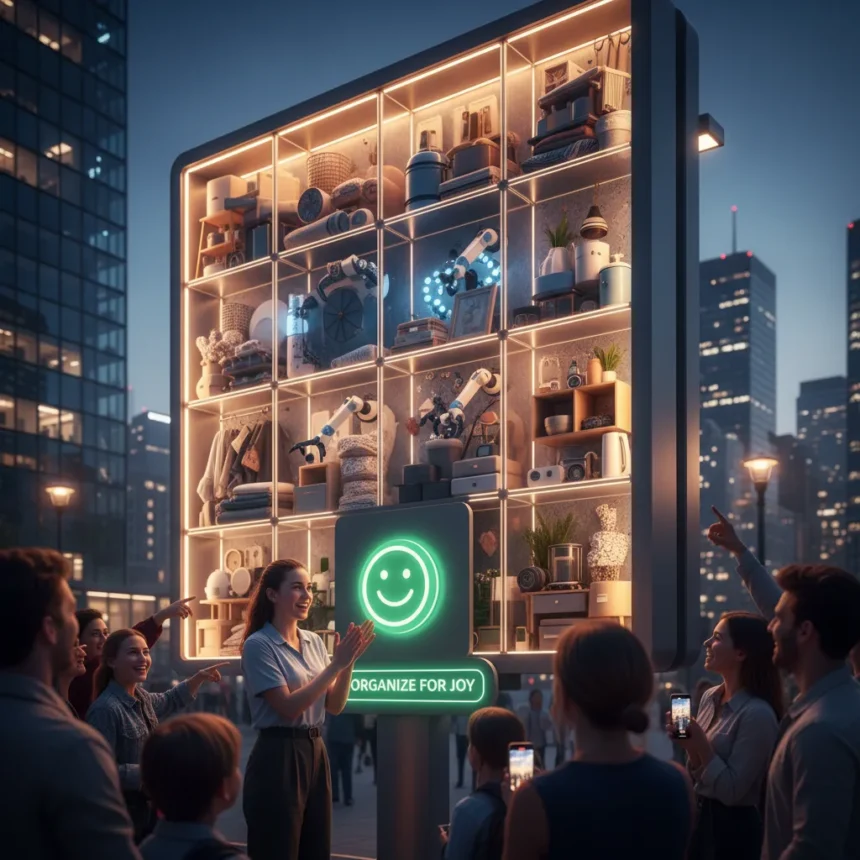
Ikea’s billboard advertising has become a masterclass in emotional branding, tapping into the current cultural obsession with organizational joy and the satisfaction that comes from a perfectly arranged space. The campaign transforms what could be a forgettable transit ad into an interactive experience that triggers the same joy people feel when they finally organize their homes. This shift represents a broader trend in how brands are moving beyond passive messaging toward experiences that create genuine emotional connections with audiences.
Key Takeaways
- Ikea’s billboard advertising uses visual design to evoke the satisfaction of organization and tidying.
- The campaign draws inspiration from Marie Kondo’s “spark joy” philosophy and tidying methodology.
- The ad positions Ikea as understanding the emotional reward of storage and home organization.
- Interactive billboard design is part of a larger trend in brand experience innovation.
- The approach mirrors successful rebrands that capture post-task satisfaction and emotional fulfillment.
Why Ikea’s Billboard Advertising Resonates Now
The timing of Ikea’s billboard advertising campaign is no accident. We’re living in a moment where tidying and organization have become cultural phenomena, driven partly by Marie Kondo’s influence on how people think about their belongings. The billboard doesn’t just sell furniture—it sells the feeling of accomplishment and calm that comes from having everything in its place. This emotional angle is far more powerful than traditional product-focused advertising because it speaks to something people actually want: the satisfaction of a well-organized life.
What makes this billboard advertising approach particularly clever is its recognition that satisfaction is inherently visual. When you watch someone organize a cluttered closet or arrange items on a shelf, there’s something deeply gratifying about the transformation. Ikea’s billboard captures that moment of visual satisfaction, making viewers feel the joy of organization without needing to purchase anything in that exact second. The ad works because it taps into an existing emotional desire rather than trying to manufacture one.
Ikea Billboard Advertising vs. Traditional Storage Marketing
Most furniture retailers market storage products by listing features: dimensions, materials, assembly time, price. Ikea’s billboard advertising takes a radically different approach by focusing entirely on the emotional payoff. Rather than showing a bookshelf and its specifications, the campaign shows you how it makes you feel to use it. This distinction matters because it positions Ikea not as a furniture seller but as an enabler of life satisfaction.


The comparison to other successful rebrands in adjacent spaces is instructive. When cleaning brands like Fabulosa rebranded, they shifted focus from the product itself to the smug satisfaction and joy of having a clean space. Ikea’s billboard advertising follows this same playbook: it’s not about the shelf, it’s about the feeling of having organized your life. This represents a maturation in how brands understand consumer psychology—the product is merely the vehicle for delivering an emotional experience.
The Broader Trend in Brand Experience and Billboard Advertising
Ikea’s billboard advertising sits within a larger movement toward what designers call brand experience—the idea that every touchpoint with a brand should create an emotional connection rather than simply convey information. Billboards, traditionally one-way communication channels, are increasingly becoming interactive or emotionally provocative experiences. Ikea recognized that a billboard could do more than announce a sale; it could trigger the same satisfaction response that actually buying and using the product would create.



This trend reflects a fundamental shift in advertising philosophy. Younger audiences, particularly those influenced by social media and the Marie Kondo effect, are skeptical of hard-sell messaging. They respond to brands that understand their desires and emotions. By creating a billboard that literally makes viewers feel organized and satisfied, Ikea is speaking a language that resonates far more deeply than traditional product advertising ever could. The billboard becomes shareable, memorable, and worth talking about—which is precisely what modern advertising needs to achieve.
Does Ikea’s billboard advertising approach work for all products?
Not necessarily. Storage and organization products benefit from this emotional approach because they directly address a pain point—clutter and chaos—that most people experience. Products that solve emotional problems (tidiness, calm, order) are better suited to satisfaction-focused advertising than, say, kitchen appliances or lighting fixtures. However, the principle applies broadly: effective brand experience advertising identifies the emotional outcome the customer wants, not just the functional benefit of the product.
How does Marie Kondo’s influence shape modern advertising?
Marie Kondo’s global impact on tidying and organization has fundamentally changed how brands think about home and lifestyle products. Her philosophy of keeping only items that “spark joy” has become cultural shorthand for intentional living. Advertisers now understand that people don’t just want storage solutions—they want to feel the joy and calm that comes from having an organized space. Ikea’s billboard advertising taps directly into this shift, making the emotional outcome of organization the centerpiece of the campaign.
What makes billboard advertising effective in 2025?
Static billboards are increasingly challenged by digital advertising and social media, so the ones that succeed are those that create a memorable emotional experience or spark conversation. Ikea’s approach—focusing on the satisfaction and joy of organization—turns the billboard into something worth noticing and discussing. It works because it doesn’t rely on flashy animation or clever wordplay; instead, it delivers a genuine emotional resonance that viewers can feel and relate to immediately. In a crowded advertising landscape, emotional authenticity beats novelty every time.


Ikea’s billboard advertising campaign demonstrates that the most effective modern advertising doesn’t try to convince you to buy something—it makes you feel something. By tapping into the widespread cultural obsession with organization and the satisfaction it brings, Ikea has created a campaign that works as both marketing and emotional experience. It’s a blueprint for how brands can move beyond traditional selling and into the realm of genuine human connection, one billboard at a time.
This article was written with AI assistance and editorially reviewed.
Source: Creativebloq