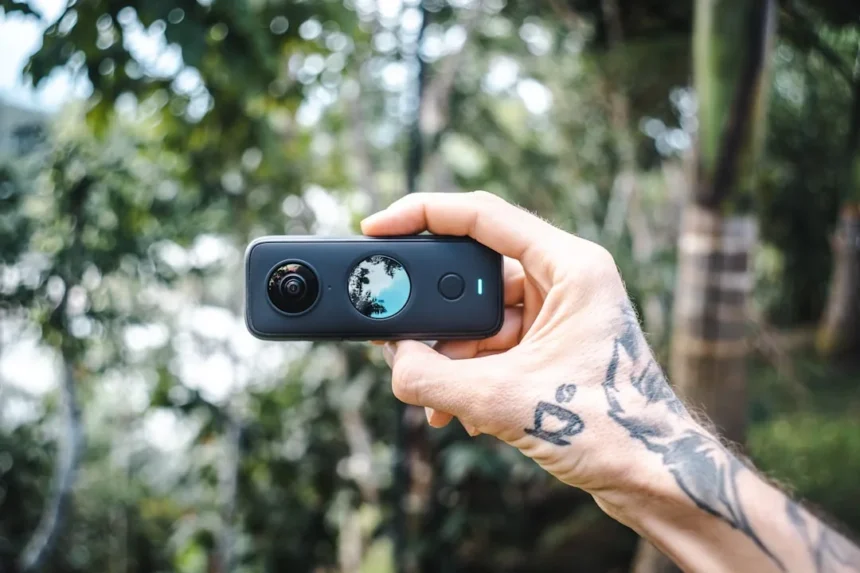
The Insta360 Go 3S action camera has earned attention as one of the smallest, lightest cameras for capturing first-person footage. But what happens when you strap this compact device to a cat and let it roam freely? Tom’s Guide tested exactly that scenario, mounting the Insta360 Go 3S action camera on a cat to see what unique perspectives emerge from a feline’s daily adventures.
Key Takeaways
- The Insta360 Go 3S action camera is compact and lightweight enough to mount on a moving cat without obvious burden.
- Cat-mounted footage reveals unexpected details of indoor and outdoor environments from ground level.
- The camera captures the animal’s natural behavior without requiring staged conditions or heavy equipment.
- This approach demonstrates creative uses for compact action cameras beyond traditional sports and travel applications.
- Pet-mounted footage offers a novel perspective for content creators and pet owners interested in unusual video formats.
Why Mount a Camera on Your Cat?
The premise sounds absurd, but it taps into genuine curiosity: what does the world look like from a cat’s eye level? Most pet owners see their cats’ daily routines through human perspective—sitting on couches, watching from windows, investigating household objects. A camera mounted at cat height, moving at cat speed, captures something fundamentally different. The Insta360 Go 3S action camera is small enough to attach without significantly altering a cat’s movement or comfort, making it an ideal tool for this experiment.
Compact action cameras have traditionally served extreme sports enthusiasts and travel vloggers. Mounting one on a pet is unconventional but logical—it answers a question many pet owners have silently wondered about. The resulting footage becomes a genuine window into how cats navigate their environment, what catches their attention, and how they interact with spaces humans rarely observe from ground level.
What the Insta360 Go 3S Captures at Cat Level
The footage reveals that cat-level perspective differs dramatically from human observation. Grass appears taller. Doorways become architectural features rather than simple passages. Shadows, light angles, and ground textures dominate the visual landscape in ways that human-height footage ignores completely. The Insta360 Go 3S action camera’s compact form factor means it moves with the cat, capturing the animal’s natural gait and exploration patterns without the stabilization artifacts that would appear in footage from a bulkier device.

One striking element of cat-mounted footage is how much time cats spend investigating small spaces and ground-level details. A leaf, a pebble, or a crack in pavement becomes a point of extended focus. The camera documents these micro-moments of curiosity that owners typically miss because they are focused on the cat’s overall location rather than its moment-to-moment attention. This creates footage that feels intimate and revealing—less a curated tour and more an honest documentation of how cats actually spend their time.
Practical Considerations for Pet-Mounted Cameras
Attaching any device to a cat requires careful consideration of weight, comfort, and safety. The Insta360 Go 3S action camera’s lightweight design makes it feasible, but mounting method matters significantly. The camera must be secured firmly enough to avoid bouncing or shifting during movement, yet loosely enough that the cat does not experience discomfort or restriction. A harness or collar-mounted solution works better than adhesive attachment, which risks damaging fur or skin.



Battery life becomes a practical limitation for extended cat explorations. A full roaming session might last longer than the camera’s battery capacity, requiring multiple charges or shorter filming windows. Wind noise, water exposure, and dust are additional factors when a camera travels close to ground level. The Insta360 Go 3S action camera’s durability in these conditions matters more when mounted on a moving pet than when held in a human’s hand, where the operator can shield or protect the device.
How Insta360 Go 3S Compares to Other Compact Cameras
The Insta360 Go 3S action camera occupies a specific niche—extremely compact form factor combined with reasonable video quality. Other action cameras like GoPro models tend to be larger and heavier, making them less suitable for pet mounting. The trade-off is that compact cameras often sacrifice some stabilization features or low-light performance compared to their larger counterparts. For pet footage specifically, the Insta360 Go 3S’s small size outweighs these compromises because the primary goal is capturing novel perspective, not professional-grade cinematography.
The camera’s compatibility with various mounting accessories also matters. A device with flexible attachment options adapts better to unconventional mounting scenarios—like securing it to a cat collar or harness—than a camera designed exclusively for wrist or helmet mounting. This versatility makes the Insta360 Go 3S action camera particularly suited for creative experiments beyond its intended use cases.
Is Pet-Mounted Camera Footage Worth Creating?
For content creators, pet-mounted footage offers novelty value. Audiences respond to unusual perspectives, and cat-level video is uncommon enough to stand out in algorithm-driven platforms. For pet owners without content creation goals, the exercise becomes an entertaining experiment—a way to satisfy curiosity about how their cat experiences the home and neighborhood. The footage itself becomes a keepsake, a unique record of the cat’s daily environment from the cat’s point of view.



The main limitation is that cat-mounted footage works best in short clips rather than long-form content. Viewers enjoy the novelty of the perspective for five to ten minutes, but extended footage of a cat walking, sniffing, and occasionally sitting becomes repetitive. Editing and curation are essential—selecting the most interesting moments rather than publishing raw footage.
Can you attach a camera to any cat?
Not every cat tolerates a mounted camera. Cats with high stress levels, sensory sensitivities, or aggressive temperaments may resist the attachment or behave abnormally while wearing it. Cats accustomed to harnesses or collars adapt more easily. The process requires patience—introducing the camera gradually, allowing the cat to investigate it, and monitoring behavior for signs of distress. A cat that removes the camera repeatedly or shows stress behaviors should not be forced to wear it.
What makes the Insta360 Go 3S action camera suitable for this experiment?
The Insta360 Go 3S action camera’s primary advantage is its minimal weight and size. It does not significantly burden a cat or alter movement patterns. The camera’s durability also matters—pet-mounted footage involves close contact with ground, dust, and potential moisture. A camera designed to withstand impact and environmental exposure is essential for pet mounting. Additionally, the Insta360 Go 3S action camera’s compact design allows for flexible mounting solutions that would be impossible with larger devices.
What does cat-level footage reveal about home environments?
Cat-level perspective exposes details humans typically overlook—dust patterns on baseboards, gaps under furniture, the texture of flooring, and the scale of household objects relative to ground level. Outdoor footage shows how grass, gravel, and landscaping appear from a lower vantage point. These details transform familiar spaces into visually rich environments full of texture and dimension that human-height perspective compresses or ignores entirely. For pet owners, this footage often reveals which areas of the home and yard their cats spend the most time exploring.
The Insta360 Go 3S action camera experiment demonstrates that compact cameras enable creative documentation beyond their original intended use. Pet-mounted footage is niche, but it satisfies genuine curiosity about animal perspective and produces genuinely novel content. For anyone considering this experiment, the key is choosing a camera small and light enough to attach safely, a cat with a calm temperament, and realistic expectations about what the footage will show—honest, ground-level exploration rather than dramatic action sequences. The result is a unique record of how cats navigate their world, seen through their eyes rather than ours.
Edited by the All Things Geek team.
Source: Tom's Guide