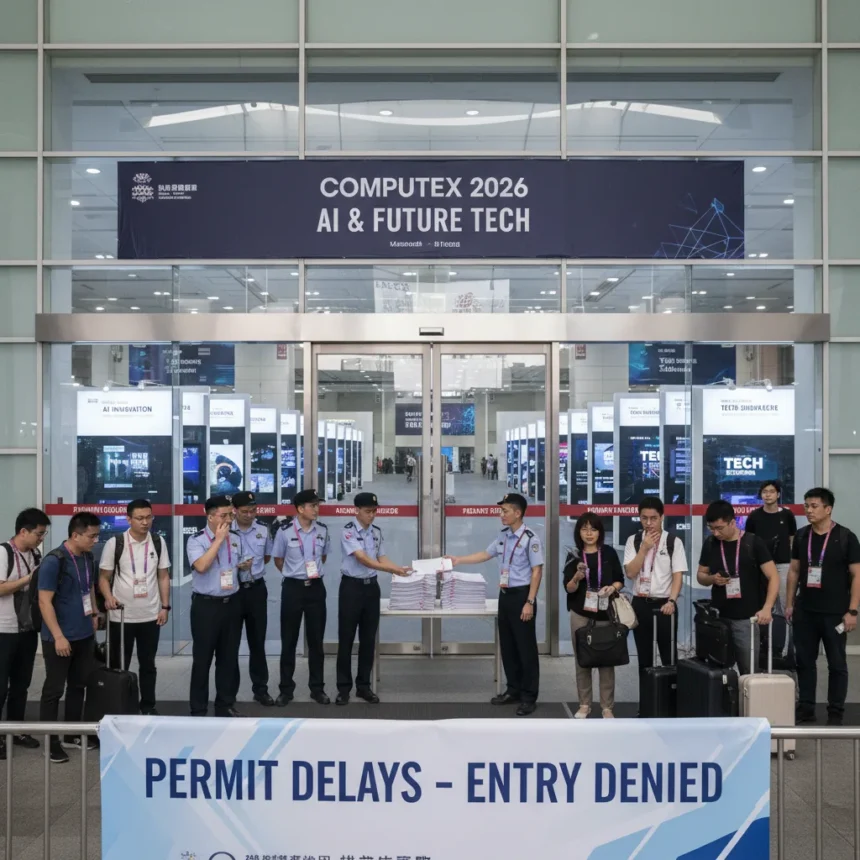
Computex 2026 permit delays have reportedly prevented mainland Chinese exhibitors from attending the Taipei-based technology trade show, marking a significant disruption to one of Asia’s largest semiconductor and AI industry events. The four-day event, held at Taipei Nangang Exhibition Center, Hall 1 (TaiNEX 1), attracted 1,500 exhibitors and 6,000 booths positioned around a global AI benchmark theme. Yet among the 219 mainland Chinese companies listed as exhibitors, none reportedly obtained the entry permits required to send personnel to the show.
Key Takeaways
- 219 mainland Chinese exhibitors listed for Computex 2026 could not attend due to Taiwan entry permit delays.
- Applications were either left pending indefinitely or hit with last-minute documentation requests that were difficult to fulfill.
- Two travel agencies reported none of their mainland clients received permit approvals for the event.
- A similar visa freeze affected mainland exhibitors at Taipei AMPA in April 2026.
- The Computex organizer disclaims responsibility for visa and entry permit issues in its application guidelines.
How Computex 2026 Permit Delays Unfolded
The Computex 2026 permit delays were not straightforward rejections. Instead, mainland exhibitors faced a bureaucratic stall. Two travel agencies specializing in cross-strait travel told the South China Morning Post that none of their clients had received entry-permit approvals. Two mainland Chinese employees working for companies among the 219 listed exhibitors confirmed that nobody on their teams obtained entry permits from Taiwanese authorities. A third mainland citizen employed by a multinational corporation reported that while colleagues from other regions received travel documents, his own application stalled without explanation.
The pattern was consistent: no official rejections arrived. Instead, applicants received requests for additional documentation that proved difficult to provide on short notice, or applications simply remained pending indefinitely. These delays effectively ended the chance to attend the event, which had already begun. The timing was critical—by the time clarification came, if it came at all, the four-day show had already passed.
Cross-Strait Tensions and Broader Pattern
This is not an isolated incident. A similar visa freeze occurred in April 2026 at Taipei AMPA, another major industry event, where many mainland exhibitors were unable to send personnel. The pattern suggests a systematic challenge for mainland companies seeking to participate in Taiwan-based trade shows. These events are crucial for networking, product launches, and maintaining presence in the Asian technology ecosystem, making the permit delays operationally significant.

The Computex 2026 application kit explicitly states that the organizer is not in a position to sponsor exhibitors for government subsidy applications, entry visas, and related issues, and is not liable if applications fail. This disclaimer shifts responsibility entirely to exhibitors and the Taiwanese government, leaving companies caught between conflicting systems with no recourse through the show organizers.
What This Means for Mainland Tech Companies
For mainland Chinese exhibitors, Computex represents a critical platform to demonstrate AI innovations, semiconductor advances, and computing solutions to a global audience. The 2026 edition positioned itself as a global AI benchmark, attracting the industry’s largest players. Losing access to this visibility has real consequences for market positioning and international business development.



The permit delays raise questions about cross-strait relations and their impact on commerce. While the brief does not provide official statements from Taiwanese authorities explaining the delays, the consistent pattern across multiple exhibitors and travel agencies suggests a systemic issue rather than isolated administrative hiccups. Companies planning to exhibit at future Taiwan-based trade shows now face uncertainty about whether their personnel will be able to attend, regardless of their official status as registered exhibitors.
Does Computex provide visa sponsorship for exhibitors?
No. The Computex 2026 application kit explicitly states that the organizer is not in a position to sponsor exhibitors for government subsidy applications, entry visas, and related issues, and disclaims liability if applications fail. Exhibitors must handle all visa and entry permit matters independently.
What happened at other Taiwan trade shows in 2026?
A similar visa freeze affected mainland exhibitors at Taipei AMPA in April 2026, leaving many unable to send personnel to the event. This suggests the Computex 2026 permit delays are part of a broader pattern affecting mainland participation in Taiwan-based industry events.
How many mainland Chinese companies were registered for Computex 2026?
219 mainland Chinese exhibitors were listed for Computex 2026, but reportedly none obtained the Taiwan entry permits required to send personnel to the show. The event itself attracted 1,500 total exhibitors and 6,000 booths across all regions.



The Computex 2026 permit delays underscore the vulnerability of cross-strait business relationships to geopolitical friction. For mainland tech companies, the lesson is clear: registration and booth placement are not guarantees of attendance. Permit delays can strike without warning, with no official explanation and no recourse through show organizers. As Taiwan-based trade shows remain critical to the global tech industry, this disruption signals that companies from across the strait face real operational risks when planning their participation.
Edited by the All Things Geek team.
Source: Tom's Hardware