The multi-platform crisis is suffocating hybrid work. Companies deploy Zoom here, Teams there, Google Meet somewhere else—and nothing talks to anything. The result? Wasted time, frustrated employees, and IT departments drowning in support tickets. But 2026 promises a turning point: the convergence of AI orchestration, next-generation wireless standards, and open-protocol meeting rooms that finally eliminate the friction.
Key Takeaways
- 58% of IT leaders cite multi-platform integration as their top challenge in hybrid setups.
- Current meeting setup averages 12 minutes due to compatibility issues across fragmented tools.
- Platform-agnostic meeting rooms enable any device to connect without reconfiguration or vendor lock-in.
- 74% of companies plan permanent hybrid models by 2026, intensifying demand for seamless solutions.
- Frictionless flexibility delivers 30% productivity gains and 25% fewer IT support tickets.
Why the Multi-Platform Crisis Exists Today
The multi-platform crisis stems from a simple problem: companies did not plan for hybrid work—it happened to them. Zoom became the pandemic standard. Then Microsoft Teams arrived with enterprise muscle. Google Meet followed with free accessibility. Suddenly, organizations owned three incompatible ecosystems, each with its own UI, authentication, scheduling quirks, and hardware requirements. Employees waste time troubleshooting connections. IT leaders spend their days writing workarounds. Meetings start late. Trust erodes.
The numbers tell the story. According to recent research, 58% of IT leaders report multi-platform integration as their top challenge, and the average meeting setup time stretches to 12 minutes due to compatibility friction. That is not a minor inconvenience—it is a structural productivity drain. When a company runs 100 meetings a week across three platforms, 20 hours of setup time vanishes into the void.
Proprietary platforms like Microsoft Teams Rooms and Zoom Rooms promised to solve this. Instead, they locked users deeper into their respective ecosystems. A company invested in Teams infrastructure cannot easily pivot to Zoom without ripping out hardware and retraining staff. Vendor lock-in became the price of simplicity.

Platform-Agnostic Meeting Rooms: The 2026 Solution
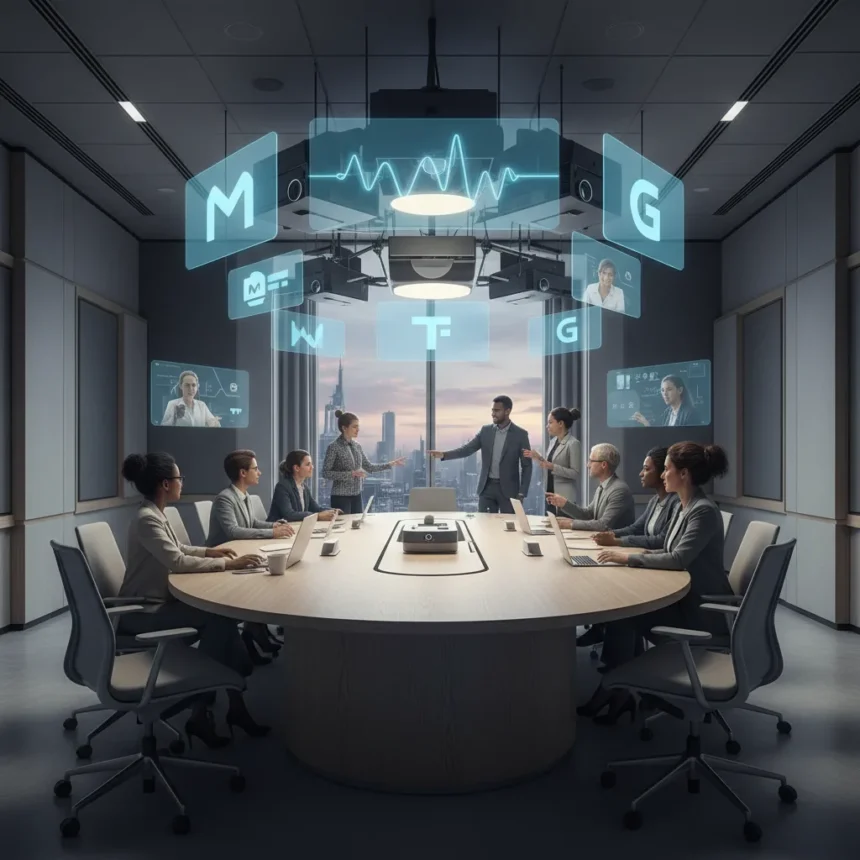
Platform-agnostic meeting rooms represent a philosophical shift: the room itself becomes neutral territory. Instead of choosing a platform and building the room around it, companies choose a room and connect whatever platform they need. A Crestron Flex system, a Logitech Rally Bar, or a Yealink MVC Series device supports multi-app interoperability via USB-C and HDMI bridges, allowing any employee to walk in and join their preferred meeting app without reconfiguration.
This approach aligns with bring-your-own-device (BYOD) policies that employees now expect. A worker using Google Meet on their laptop should join smoothly from the conference room speaker system. Another employee on a Teams call should experience identical ease. The technology handles the translation layer—not the human.



Entry-level platform-agnostic kits like the Logitech MeetUp range from $800–$1,200 USD and are widely available through retailers globally. Enterprise solutions like Crestron Flex systems cost $5,000–$15,000 USD per room and have been available since 2023 across US, EU, and APAC markets. The price reflects the value: eliminate the multi-platform crisis, and the ROI appears immediately.
The 2026 Convergence: AI, 5G, and Open Standards
Why 2026 specifically? Three forces align. First, AI orchestration reaches maturity—systems will auto-join meetings, adjust room settings, and route participants to optimal connection paths without human intervention. Second, 5G and Wi-Fi 7 infrastructure becomes pervasive, eliminating the bandwidth bottlenecks that currently plague multi-platform setups. Third, WebRTC 2.0 and open UC standards mature, making it technically feasible for any hardware vendor to support any software platform.
The result is zero-touch meetings. An employee walks into a room, their calendar syncs automatically, the system detects their preferred meeting app, and the connection establishes without a single click. No configuration. No delays. No support call. That is the promise of 2026.
Meanwhile, 74% of companies plan permanent hybrid models by 2026, according to Gartner research. This is not a temporary shift—it is structural. The demand for frictionless flexibility will be acute. Organizations that have not solved the multi-platform crisis by then will face a retention and productivity crisis as employees vote with their feet.



Comparing Proprietary vs. Open Approaches
The philosophical divide is stark. Proprietary platforms—Teams Rooms, Zoom Rooms—optimize for their own ecosystem. They work beautifully if your entire organization uses that platform. But hybrid work rarely operates that way. Contractors use different tools. Clients bring their own systems. Mergers introduce competing platforms. Proprietary systems break under real-world complexity.
Platform-agnostic alternatives embrace reality. They assume heterogeneity and build for it. A Crestron or Logitech system does not care if you use Zoom, Teams, Meet, or WebEx. It routes the connection, optimizes the audio and video, and gets out of the way. This flexibility costs more upfront but eliminates the hidden costs of vendor lock-in—the retraining, the migration expenses, the perpetual incompatibilities.
The Productivity and Support Impact
When friction disappears, productivity rises. Organizations implementing platform-agnostic meeting rooms report 30% productivity gains and 25% reduction in IT support tickets. That second number matters more than it sounds. IT teams spend roughly 40% of their time on meeting-room issues today. Redirect that labor toward strategic work, and the entire organization accelerates.
The multi-platform crisis is not a technical problem—it is a trust problem. Employees lose faith in systems that fail them repeatedly. IT leaders lose credibility when they cannot solve basic connectivity. Executives lose patience with the cost of chaos. Platform-agnostic flexibility rebuilds trust by making the technology invisible.
What About the Companies Betting on Proprietary Ecosystems?
Microsoft, Google, and Zoom will not disappear in 2026. But their power will shift. Instead of controlling the room hardware, they will compete on software quality and user experience. A company might standardize on Teams for its core workforce while accepting that the conference room runs platform-agnostic hardware. The software layer becomes the differentiator, not the hardware lock-in.
This transition threatens the hardware revenue streams that these companies have built. But it also creates opportunity—the company whose software works best across any platform will win adoption at scale. The multi-platform crisis, paradoxically, is solved not by a single platform but by the triumph of open standards.
Is 2026 realistic, or just hype?
The prediction that 2026 will be the year of flexibility without friction rests on three assumptions: AI reaches production maturity, 5G/Wi-Fi 7 infrastructure deploys at scale, and open standards gain regulatory and market support. The first two are tracking on schedule. The third is less certain—vendor incentives still favor lock-in. However, employee expectations and competitive pressure are shifting faster than vendor resistance. By 2026, the companies that have not solved the multi-platform crisis will be visibly disadvantaged in talent acquisition and retention.
What should organizations do now?
The multi-platform crisis will not vanish overnight. But the trajectory is clear. Organizations should audit their current meeting-room infrastructure and ask: Does it support BYOD? Can employees join from any platform? How much time does setup actually consume? If the answers are no, maybe, and 10+ minutes, then a migration to platform-agnostic hardware should be on the 2025 roadmap. The cost of waiting until 2026 is higher than the cost of upgrading now.
Will platform-agnostic rooms actually work for large enterprises?
Yes, with caveats. Large enterprises have legacy systems, security requirements, and governance structures that demand customization. A platform-agnostic room is not a plug-and-play solution for a Fortune 500 company with 500 conference rooms. But modular systems like Crestron Flex and enterprise-grade Logitech solutions are designed for exactly this scale. The multi-platform crisis is not solved by a single product—it is solved by architecture and standards.
When will AI auto-join and zero-touch meetings arrive?
The technology exists in prototype form today. Full deployment depends on calendar integration, security standardization, and vendor cooperation. Expect the first wave of zero-touch pilots in late 2025, with broader adoption in 2026 as standards mature and IT teams gain confidence. The multi-platform crisis will not vanish in a single day, but the trajectory toward frictionless flexibility is already visible.
The multi-platform crisis is not a permanent feature of hybrid work—it is a symptom of transition. Organizations that recognize this and invest in platform-agnostic infrastructure now will emerge in 2026 with a competitive advantage: employees who trust their tools, IT teams who control costs, and executives who see the productivity gains they promised investors. The future of hybrid work belongs to the companies that stopped choosing platforms and started choosing flexibility.
Edited by the All Things Geek team.
Source: TechRadar