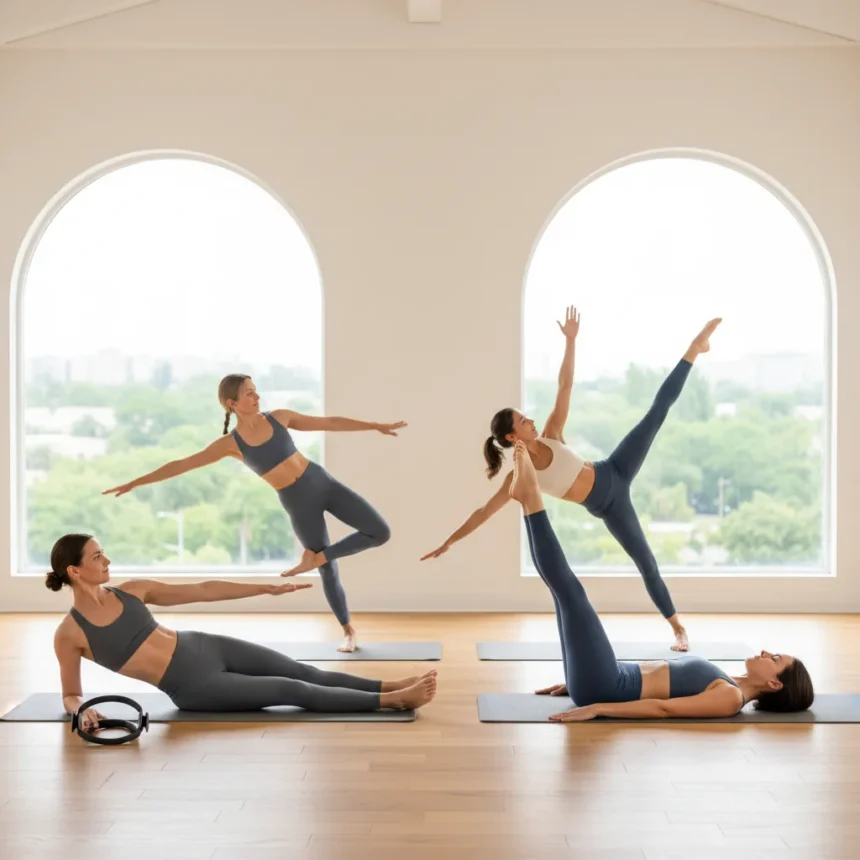
Pilates core exercises offer a smarter approach to building a strong, stable midsection than the endless planks and crunches most people default to. Rather than chasing high reps or static holds, Pilates core exercises target the deep transverse abdominis and stabilizing muscles that protect your spine and control your movement. A Pilates instructor recommends four specific moves that deliver measurable strength gains without the joint stress of traditional ab work.
Key Takeaways
- Pilates core exercises target deep stabilizers, not just surface abs.
- Four recommended moves: pikes, seated toe taps, side-lying leg lifts, and alternating heel taps.
- Controlled movement beats high-rep crunches for functional core strength.
- Proper form prevents hip flexors from dominating the work.
- These exercises work on reformers or with bodyweight alone.
Why Pilates Core Exercises Beat Planks and Crunches
Planks and crunches are popular, but they miss the point. Crunches target the rectus abdominis—the superficial six-pack muscle—while leaving deeper stabilizers largely untouched. Planks, meanwhile, demand sustained tension but often fail to engage the transverse abdominis, the deepest core layer responsible for spine stability and posture control. Pilates core exercises reverse this logic: they prioritize controlled, purposeful movement that recruits the muscles your body actually needs for stability and functional strength.
The philosophy behind Pilates core exercises is deceptively simple. According to Pilates teaching principles, movement should reconnect the body to its center through intelligent, deliberate work rather than brute repetition. This approach builds not just strength but also control—the ability to move with precision and coordinate your core with your limbs. That coordination matters far more in real life than how many reps you can grind out.
The Four Pilates Core Exercises You Should Master
These four Pilates core exercises form a complete foundation for deep core strength. Each targets different layers and angles of the abdominals and stabilizers, ensuring balanced development and functional control.

Pikes are a powerhouse. Position yourself face-down on a Pilates reformer carriage or in a plank position, then slowly draw your feet toward your hands while sending your hips high. The key is relying on core tension, not leg strength—your shoulders stay over your wrists throughout. Pikes demand transverse abdominis engagement while also working the obliques, shoulders, and arms. This single move integrates multiple muscle groups and builds the kind of core stability that transfers to real-world movement.
Seated toe taps isolate the transverse abdominis with surprising intensity. Sit upright, lean back slightly, and tap one or both feet on the floor in a controlled rhythm. Tapping both feet simultaneously increases the demand on your deep core, forcing your abdominals to stabilize your torso as your legs move. The trap: letting your hip flexors take over. To avoid this, focus on drawing your navel inward and maintaining a neutral spine. If tapping feels too easy, lean further back to increase the challenge.



Side-lying leg lifts target the obliques and outer glutes, muscles that planks largely ignore. Lie on your side, stay light on the balls of your feet, and lift your top leg in controlled pulses. Hold each side for 45 seconds, then switch. This move builds lateral core strength and hip stability—both essential for functional movement and injury prevention.
Alternating heel taps demand deep core engagement from a supine position. Lie on your back with knees at 90 degrees in tabletop position, toes flexed, and arms by your sides. Ground your lower back into the mat and draw your belly in. Inhale as you lower one heel to tap the floor lightly, then exhale and lift, switching sides. This exercise teaches the core to stabilize while your legs move independently—a skill that prevents lower back strain in daily life.
How Pilates Core Exercises Build Functional Strength
The difference between Pilates core exercises and traditional ab work comes down to intent. One-leg circles, for example, introduce the concept of pelvic stability. As one leg moves through controlled circles, your abdominals and deep pelvic stabilizers must work to keep the rest of your body quiet and organized. This develops coordination between your hips and core, building control and balance that translates directly to walking, running, and lifting.
Proper form is non-negotiable. In heel taps and toe taps, keep your lower back pressed to the mat—never arch upward. In pikes, maintain shoulder stability over your wrists rather than letting your hips sag or pike too high. These form cues prevent compensation patterns where larger muscles steal work from the core, which defeats the entire purpose. A single perfectly executed rep builds more strength than ten sloppy ones.



Common Form Mistakes to Avoid
The most frequent error in Pilates core exercises is letting hip flexors dominate. In seated toe taps, many people find their hip flexors working harder than their abs—a sign you are not engaging your core properly. The fix: lean back further and focus on drawing your navel toward your spine before you begin tapping. In heel taps, arching your lower back is an immediate red flag. Your lower back should stay connected to the mat throughout. If you cannot maintain this position, reduce your range of motion or bend your knees slightly rather than sacrificing form.
Another mistake is rushing through the movement. Pilates core exercises demand slow, controlled motion. Speed tempts you to use momentum instead of muscle tension, which reduces the stimulus to your deep core. Spend two to three seconds on each phase of movement—lower, pause, lift—and you will feel the difference immediately.
How Often Should You Do These Pilates Core Exercises?
Consistency beats intensity with Pilates core exercises. A focused session of 15 to 20 minutes, performed three to four times per week, builds measurable strength without overtraining. Pair these moves with other Pilates exercises like the single leg stretch or diamond leg chest lift to round out your routine. Recovery matters—your core needs rest days to adapt and strengthen, just like any other muscle group.
If you are new to Pilates, start with side-lying leg lifts and alternating heel taps, which are more forgiving than pikes. As your control improves, progress to pikes and seated toe taps. Advanced practitioners can increase difficulty by leaning further back in toe taps, adding tempo variations, or extending the duration of holds.
Do Pilates core exercises work better than planks?
Yes, for building deep core stability and functional strength. Pilates core exercises target the transverse abdominis and stabilizing muscles that planks underutilize, while also building coordination and control. Planks create static tension but often fail to engage the deep core meaningfully. Pilates core exercises demand movement and precision, which recruits stabilizers more effectively.
Can you do these Pilates core exercises without a reformer?
Absolutely. Most of these Pilates core exercises work with bodyweight alone. Pikes can be done in a plank position, heel taps and toe taps require only a mat, and side-lying leg lifts need no equipment. A reformer adds resistance and support, but it is not essential to see results.
How long does it take to see results from Pilates core exercises?
You will notice improved control and stability within two to three weeks if you practice consistently. Visible strength gains and muscle definition typically emerge after four to six weeks of regular Pilates core exercises combined with a balanced diet. The real payoff is functional—better posture, less lower back pain, and improved movement quality.
Pilates core exercises prove that building a strong core does not require planks, crunches, or grinding through hundreds of reps. Four intelligent moves, performed with precision and consistency, deliver the stability and strength your body actually needs. Start with the basics, nail your form, and progress gradually. Your spine will thank you.
Where to Buy
KEEPKeep Pilates Ball Small$19.99shop now | Bala BanglesWrist and Ankle Weights$55shop now | AmazonBasics Yoga Mat$21shop now | 20% OFFYETI Water BottleYETI Water Bottle$32$40shop now
Edited by the All Things Geek team.
Source: Tom's Guide