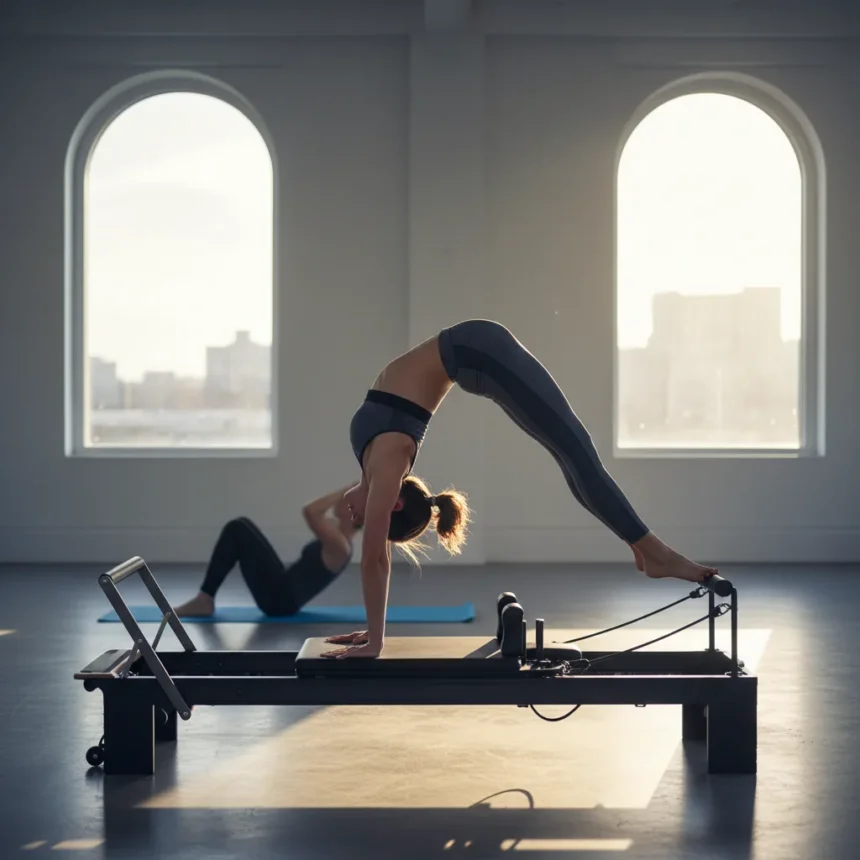
Pilates pikes core strength training has emerged as a more effective alternative to traditional crunches and sit-ups for building abdominal and spinal stability. Unlike crunches, which isolate the rectus abdominis through repeated spinal flexion, pilates pikes engage multiple core muscle groups simultaneously while maintaining neutral spine alignment, leading to more functional and sustainable strength gains.
Key Takeaways
- Pilates pikes activate the entire core, including deep stabilizer muscles that crunches miss.
- The exercise requires no equipment and can be performed anywhere at home.
- Performing 70 pilates pikes daily for one week produced measurable core engagement improvements.
- Pilates pikes maintain neutral spine alignment, reducing injury risk compared to flexion-based exercises.
- The movement transfers directly to everyday activities and athletic performance.
Why Pilates Pikes Outperform Crunches
Crunches have dominated core training for decades, but they come with a significant limitation: they only work the superficial rectus abdominis through spinal flexion. This repetitive forward-bending motion can strain the neck and lower back while leaving deep stabilizer muscles underdeveloped. Pilates pikes, by contrast, demand full-body tension and activate the transverse abdominis, obliques, and erector spinae simultaneously.
The mechanics of a pilates pike differ fundamentally from sit-ups. Starting in a plank position, you pike your hips upward while keeping your legs relatively straight, creating a dynamic stretch and contraction across the entire anterior and posterior chain. This movement pattern mimics functional activities like bending, lifting, and maintaining posture throughout the day. A one-week daily protocol of 70 pilates pikes demonstrated measurable improvements in core endurance and control, with participants reporting enhanced stability during everyday movements.
Spinal health is another critical advantage. Crunches and sit-ups compress the intervertebral discs through repeated flexion, potentially contributing to disc degeneration over time. Pilates pikes maintain a neutral spine position, distributing load evenly across the core musculature rather than concentrating stress on the lumbar region.

How to Perform Pilates Pikes Correctly
Begin in a high plank position with your hands directly beneath your shoulders, feet hip-width apart, and your body in a straight line from head to heels. Engage your core by drawing your navel toward your spine. From this position, pike your hips upward in a controlled motion, creating an inverted V-shape with your body. Your head should remain neutral, and your gaze should follow the line of your spine. Lower back to the starting plank with control and repeat.
Proper form is essential for maximizing results and preventing injury. Keep your shoulders packed away from your ears and avoid letting your lower back sag or pike excessively high. If you are new to this exercise, returning from injury, or pregnant or postpartum, consult a qualified fitness professional before beginning. Modifications include performing the movement with bent knees or using an elevated surface like a stability ball under your feet to reduce intensity.



Breathing matters too. Exhale as you pike your hips upward, and inhale as you return to plank. This rhythmic breathing pattern enhances core engagement and prevents breath-holding, which can increase intra-abdominal pressure unnecessarily.
Building a Sustainable Pilates Pike Practice
Unlike the intense 70-daily-reps protocol used in the Tom’s Guide experiment, a sustainable approach integrates pilates pikes into a balanced workout routine. Start with 3 sets of 10 to 15 repetitions, 3 times per week, allowing at least one rest day between sessions for recovery. As your strength improves, you can increase volume or add variations like single-leg pikes or pikes with resistance bands.
Progression is key to long-term results. Once basic pikes feel manageable, challenge yourself by slowing the movement down, adding a 2-second pause at the top, or performing them on an unstable surface like a Bosu ball. These progressions maintain stimulus and prevent plateaus without requiring equipment beyond what most people have at home.
Combining pilates pikes with complementary exercises—like bird dogs, dead bugs, and side planks—creates a well-rounded core program that addresses stability, anti-rotation, and lateral strength. This balanced approach produces better real-world results than any single exercise alone.



Pilates Pikes vs. Other Core Exercises
The fitness world offers many core exercises, but pilates pikes occupy a unique middle ground. Traditional planks build static endurance but lack the dynamic movement component. Leg raises and hanging knee tucks demand significant hip flexor activation, which can pull the lower spine into extension if the core isn’t strong enough. Pilates pikes require no equipment, demand full-body engagement, and carry a lower injury risk than most alternatives.
Sit-ups remain popular in military and athletic training, but research increasingly questions their efficiency and safety. The repetitive spinal flexion required by sit-ups places cumulative stress on the discs and ligaments. Pilates pikes achieve superior core activation through a movement pattern that better reflects how the core actually functions during daily life and sport.
Can pilates pikes replace crunches entirely?
Yes, for most fitness goals. Pilates pikes engage more muscle groups, carry lower injury risk, and produce more functional strength gains. Crunches isolate one muscle and stress the spine; pilates pikes build integrated core stability. If your only goal is superficial abdominal aesthetics, diet matters far more than exercise choice anyway.
How long before seeing results from pilates pikes?
You may notice improved core control and endurance within 1 to 2 weeks of consistent practice. Visible muscle definition depends on diet and body composition; strength gains are typically measurable within 3 to 4 weeks of regular training at appropriate intensity.
Are pilates pikes safe for people with back pain?
Pilates pikes are generally safer than crunches for lower back pain because they maintain neutral spine alignment. However, anyone with existing back issues should consult a healthcare provider or physical therapist before starting any new exercise program to ensure it suits their specific condition.
Pilates pikes core strength training represents a meaningful shift away from outdated core exercise dogma. They demand more from your muscles, protect your spine, and transfer directly to real-world strength and stability. If you have been grinding through crunches and sit-ups without seeing the results you want, switching to pilates pikes could be the breakthrough your core training needs.
Edited by the All Things Geek team.
Source: Tom's Guide