





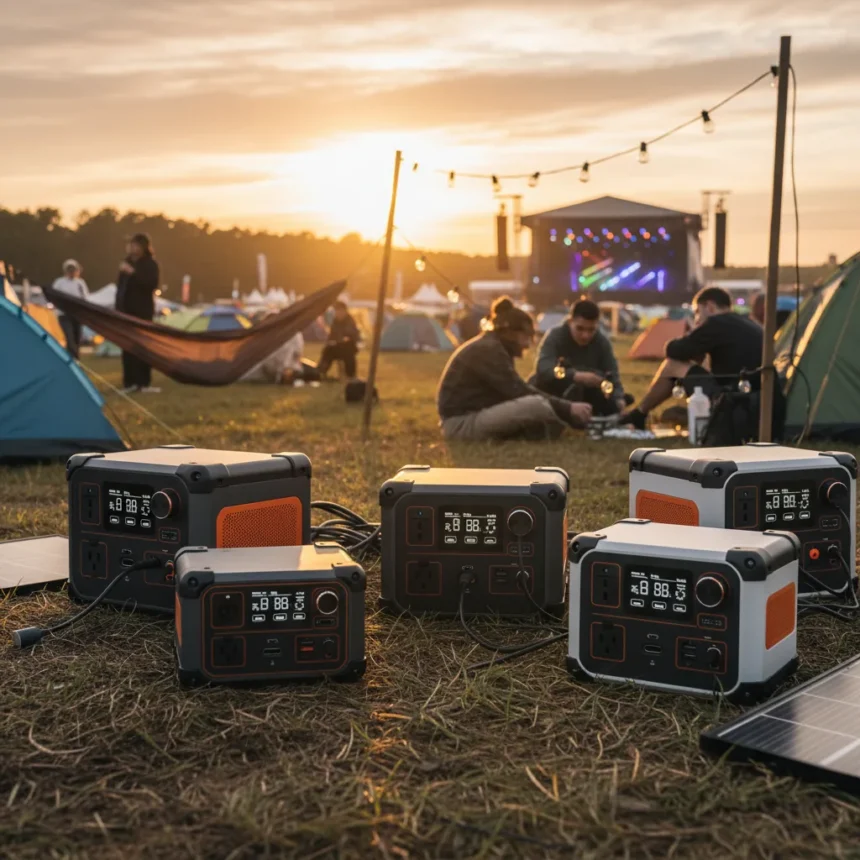
Portable power stations are experiencing a significant price drop ahead of festival season, with major brands including Bluetti, Jackery, EcoFlow, and Anker slashing costs on rugged off-grid power solutions. The timing could not be better for anyone planning to camp, attend festivals, or live off-grid without sacrificing access to charged devices and essential electronics.
Key Takeaways
- Seven portable power station deals are currently available across major brands.
- Bluetti’s off-grid power solution stands out among competing offers this season.
- Festival season timing makes these discounts ideal for outdoor enthusiasts.
- Rugged design enables reliable power in remote camping and festival environments.
- Off-grid living possibilities expand when power stations are more affordable.
Why Portable Power Stations Matter for Festival Season
Portable power stations have become essential gear for anyone venturing beyond grid-connected electricity. These rugged devices eliminate the need to choose between modern convenience and outdoor adventure, powering everything from smartphones and laptops to camping equipment and medical devices. Festival organizers and off-grid enthusiasts now have practical alternatives to generators, which are louder, heavier, and less convenient for temporary camps.
The current discount wave opens up entirely new possibilities for living completely off-grid or semi-off-grid. What once required significant investment now sits within reach for casual campers and serious off-grid dwellers alike. The timing ahead of festival season means potential buyers can test these systems before committing to longer off-grid projects.
Bluetti, Jackery, EcoFlow, and Anker Compete on Price
Four major manufacturers dominate the portable power station market, each bringing different strengths to the table. Bluetti’s offering really stands out among the current deals, though the full specifications and exact discount percentages require checking individual retailer pages. Jackery brings proven reliability to the segment, while EcoFlow emphasizes fast charging and expansion capabilities. Anker rounds out the competition with budget-friendly options that do not sacrifice build quality.

The seven available deals span different capacity tiers and price points, meaning buyers can match their budget to actual power needs rather than overpaying for unnecessary capacity. Someone powering a single laptop and phone requires far less capacity than someone running a festival site or extended off-grid retreat. These discounts make it practical to choose the right-sized system instead of defaulting to the largest available option.
Off-Grid Living Gets More Accessible
Off-grid living has traditionally required either significant upfront investment or accepting limited power availability. Portable power stations change that equation by offering temporary or permanent solutions that do not require installation, permits, or infrastructure changes. Festival attendees can power camp lighting and devices. Remote workers can maintain productivity in wilderness locations. Homeowners can maintain backup power during outages without installing permanent generators.



The rugged construction of these systems means they survive rough handling, weather exposure, and the chaos of festival environments. Portability matters too—these devices move easily between locations, unlike fixed solar installations or permanent generators. For anyone considering off-grid experiments before committing to major lifestyle changes, portable power stations offer a practical testing ground.
How to Choose Between These Portable Power Stations
Capacity matters most. Measured in watt-hours, this number tells you how long a device runs before needing recharge. A 500Wh station might power a laptop for eight hours, while a 2000Wh unit could run multiple devices simultaneously. Festival-goers typically need less capacity than off-grid homeowners, so resist the temptation to overspend on unnecessary power reserves.
Output wattage determines what devices you can run simultaneously. Higher-wattage devices like power tools, space heaters, or air compressors demand more output capacity than phones and laptops. Check your most power-hungry device and verify the portable power station can handle it. Recharge speed matters for festival use—faster charging means less downtime between activities.
What Should You Actually Buy?
The answer depends entirely on your use case. Festival attendees spending three days camping need different specifications than someone living off-grid full-time. Start by listing every device you plan to power and how long you need them running. Add up the wattages. Match that total to an available portable power station, then add 20 percent buffer for safety.



Compare the seven current deals by checking exact specifications, warranty terms, and customer reviews on retailer sites. Bluetti’s standout offer deserves close examination, but the best choice depends on your specific power needs and budget constraints. Do not assume the most expensive option is the best—sometimes a smaller, cheaper system perfectly matches your actual requirements.
Can I really live off-grid with a portable power station?
Yes, but it depends on your definition of off-grid. A portable power station can power essential devices indefinitely if you recharge it regularly via solar panels or generator. For temporary off-grid living like festival camping or weekend getaways, a single portable power station often suffices. For permanent off-grid living, you would typically combine multiple portable stations with solar charging systems to create redundancy and consistent power supply.
How long do portable power stations last before needing replacement?
Quality portable power stations typically last five to ten years with proper care, though battery capacity gradually decreases over time. Most modern units use lithium batteries that retain 80 percent capacity after 500 to 1000 charge cycles. For festival use spanning a few years, expect to replace the unit once or twice before battery degradation becomes problematic. Off-grid users who recharge daily may see faster battery aging.
Are these portable power stations actually rugged enough for rough handling?
Rugged construction is a defining feature of quality portable power stations. These devices survive drops, weather exposure, and rough transport because manufacturers design them for outdoor use. However, ruggedness varies between models—check specific build materials and drop-test ratings before assuming any portable power station can handle extreme abuse. Festival environments and camping trips are well within the design parameters of modern portable power stations.
The current discount wave on portable power stations represents a genuine opportunity for anyone considering off-grid adventures or festival camping. With seven different deals spanning multiple brands and price points, finding the right balance between capacity, portability, and cost is finally practical. Whether you are testing off-grid living for the first time or upgrading existing equipment, these discounts make the jump from grid-dependent to grid-independent power far more accessible than it was even six months ago.
Where to Buy
Bluetti Elite 300 that's now $1099 (was $1499) | Bluetti Elite 300 : | Bluetti Elite 30 V2 : | Jackery Explorer 300: | Anker Solix C1000 Gen 2:
Edited by the All Things Geek team.
Source: TechRadar




