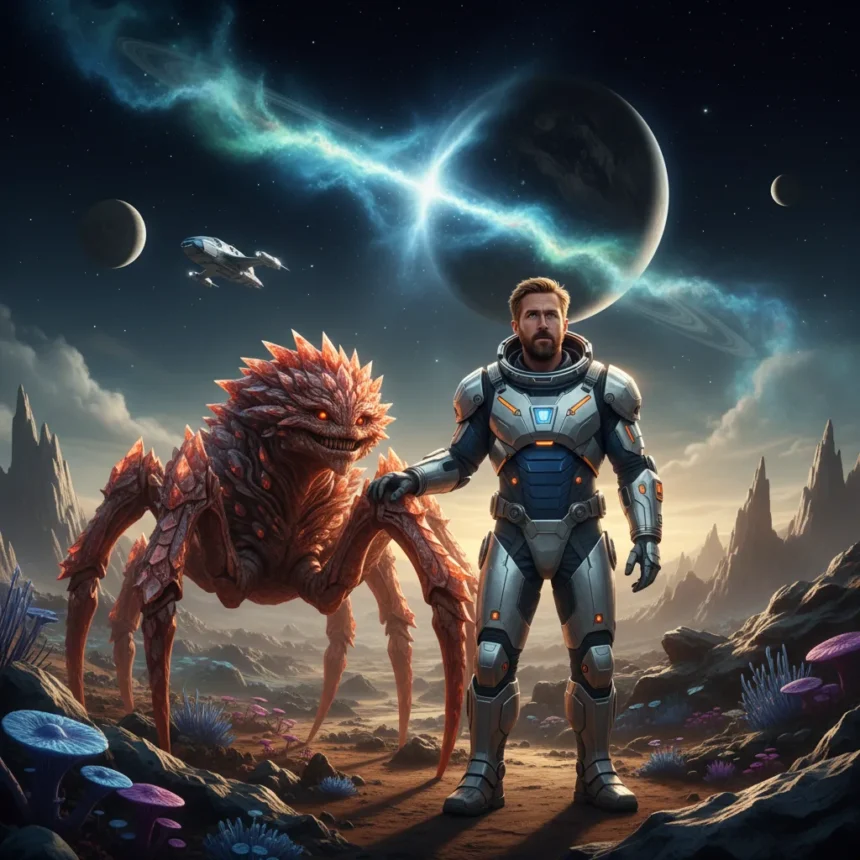
The Project Hail Mary ending hinges on a single, transformative choice: Ryland Grace, the reluctant astronaut played by Ryan Gosling, decides to save his alien friend Rocky and abandon any chance of returning to Earth. This decision reshapes the entire narrative arc from Andy Weir’s 2019 novel, turning a story about forced sacrifice into one about voluntary companionship and redemption.
Key Takeaways
- Grace chooses to rescue Rocky after discovering Taumoeba consumes the xenonite fuel of Rocky’s ship, dooming him.
- Directors Phil Lord and Chris Miller added an explicit choice element absent from Weir’s book to emphasize the friendship’s depth.
- Grace ends the film teaching Eridian children in a luxurious biodome on planet Erid, not stranded but thriving.
- The ending transforms Grace from a cowardly fugitive into a hero who voluntarily sacrifices Earth for alien friendship.
- Andy Weir remains open to a sequel, valuing Grace’s complete character arc from refusal to heroism.
How does Ryland Grace’s mission actually end?
Grace’s journey begins in forced servitude. Dr. Eva Stratt conscripts him for a suicide mission to stop Astrophage, an alien microbe dimming the Sun and threatening Earth. When Grace refuses the assignment, he flees and is violently subdued by authorities, placed into a coma against his will. He wakes aboard the Hail Mary with no memory, a prisoner disguised as a volunteer.
The turning point arrives when Taumoeba, the amoeba predator they bred to consume Astrophage, evolves unexpectedly. The creature breaches its xenonite casings and begins devouring the fuel reserves on Rocky’s ship, a vessel constructed entirely from xenonite. Rocky, the engineer from planet Erid who communicates through musical tones and breathes ammonia, faces certain death without intervention.
Grace records a final message explaining the cure to Astrophage and sends automated probes carrying Taumoeba samples and complete instructions back to Earth for Eva’s team to manufacture into beetle-like probes. Then he makes his choice: he turns the Hail Mary around, reaches Rocky’s crippled ship, rescues the unconscious alien, and returns to Erid. Grace does not return to Earth. He chooses to stay.

What changes from Andy Weir’s book?
The novel’s ending differs significantly in tone and agency. In Weir’s 2019 version, Grace ends his life older and more resigned, living in a humbler enclosure on Erid without the explicit option to return home. The book does not emphasize choice—Grace is simply marooned, accepted his fate, and adapted.
Directors Phil Lord and Chris Miller deliberately altered this dynamic. According to Phil Lord, the filmmakers believed that “if it’s a choice… If he has the chance to go back and he would rather stay, that tells you everything about that relationship.” By adding the Hail Mary’s availability as a return vehicle, the directors transformed Grace’s ending from exile into devotion. He could leave. He chooses not to. The epilogue shows Grace years later in a biodome built by Eridians—not a cramped survival shelter but a luxurious habitat with an Earth-like beach, ocean, and northern California climate. Grace teaches enthusiastic Eridian children science, happy and purposeful.



This reframing completes Grace’s character arc in ways the book merely implied. He begins as a coward who refuses duty, becomes a man forced into heroism, and ends as someone who voluntarily sacrifices his home world for the sake of genuine friendship. The choice makes the transformation credible.
Will there be a Project Hail Mary sequel?
Andy Weir, the author of the original novel, has signaled openness to a sequel. Weir values the completed character arc that the film achieves—Grace’s journey from reluctant refusal to willing sacrifice provides narrative closure while leaving room for new stories on Erid or involving Earth’s recovery from Astrophage.
No sequel has been officially announced, and the film’s ending feels conclusive rather than deliberately setup for continuation. However, the premise of Grace teaching Eridian children and building a multicultural scientific community offers fertile ground for expansion. Whether studios pursue this depends on the film’s commercial performance and audience demand for more of Grace and Rocky’s story.
Does Earth actually survive Astrophage?
The film strongly implies success without showing it directly. The epilogue includes a brief scene of a cargo ship in Earth’s frozen expanse receiving the probes Grace sent. This visual cue suggests that Eva’s team successfully bred Taumoeba into beetle-form probes, deployed them to consume Astrophage, and saved the planet. Grace’s recorded message explained the complete cure, giving Earth everything needed to replicate his solution.



Grace sacrifices his return home with confidence that Earth no longer needs him. The mission succeeds because he solved it before choosing to stay with Rocky. His heroism lies not in dying for Earth but in trusting his work and choosing love over homecoming.
What is Rocky’s role in the ending?
Rocky, the Eridian engineer whose real name is unpronounceable and whom Grace names after musical communication, becomes the emotional anchor of the film’s conclusion. Rocky risks his life early in the story by breaking quarantine and exposing himself to Grace’s oxygen-rich atmosphere—an act that nearly kills him but restores ship gravity to save unconscious Grace.
When Taumoeba consumes Rocky’s fuel, he faces death through no fault of his own. Grace’s decision to rescue him, knowing it means permanent exile from Earth, demonstrates that their friendship has transcended species and circumstance. By the epilogue, Rocky and Grace live together on Erid, a partnership that survived sacrifice and choice. Rocky represents what Grace gains by staying—genuine companionship and purpose beyond survival.
Why does the ending matter for Grace’s character?
Grace’s arc from coward to hero depends entirely on the ending’s choice element. He begins the film as someone who refused a dangerous mission and was forced into service against his will. Throughout the story, he is reactive—responding to Astrophage, to meeting Rocky, to Taumoeba’s evolution. The ending grants him agency.
By choosing to stay on Erid rather than return to Earth on the Hail Mary, Grace transforms from a man who was conscripted into heroism into a man who voluntarily embraces sacrifice. He has solved Earth’s crisis and could claim credit, fame, and homecoming. Instead, he chooses friendship and exile. This choice elevates the entire narrative from a survival story into a meditation on what heroism actually means—not duty forced upon you, but love freely given.
Does Ryan Gosling’s Grace have a different personality than book Grace?
The film emphasizes Grace’s reluctance and humor more than the novel, making him younger and more visibly conflicted about his circumstances. Gosling’s performance captures a man who never wanted to be an astronaut, let alone a savior. This casting choice makes his final choice to stay on Erid feel more earned—he is not a natural hero accepting his role, but a scared teacher who grew into heroism through circumstance and friendship.
Frequently Asked Questions
Does Ryland Grace return to Earth?
No. Grace has the opportunity to use the Hail Mary to return home but chooses to stay on Erid with Rocky. He sends the cure for Astrophage to Earth via automated probes and remains on the alien planet, teaching Eridian children in a biodome built for him by the Eridians.
What happens to Rocky after the ending?
Rocky survives because Grace rescues him after sending the Astrophage cure to Earth. Rocky and Grace live together on Erid, where they continue their friendship and scientific collaboration. The epilogue shows them thriving in the alien world they now share.
Is Project Hail Mary a faithful adaptation of Andy Weir’s book?
The film captures the core plot and characters but changes the ending’s emotional emphasis. The book leaves Grace marooned without explicit choice; the movie adds the option to return, making his decision to stay a deliberate act of love rather than resignation. Both versions conclude with Grace on Erid, but the film’s version carries greater narrative weight.
Project Hail Mary transforms a story about forced sacrifice into one about chosen love. Ryan Gosling’s Grace does not return to Earth because he no longer needs to—he has found home on Erid, in friendship with Rocky, and in purpose teaching an alien species. The ending proves that heroism is not about duty; it is about choosing to stay when you could leave.
Where to Buy
Amazon Prime Video – Free Trial | Amazon Prime – Monthly
Edited by the All Things Geek team.
Source: TechRadar