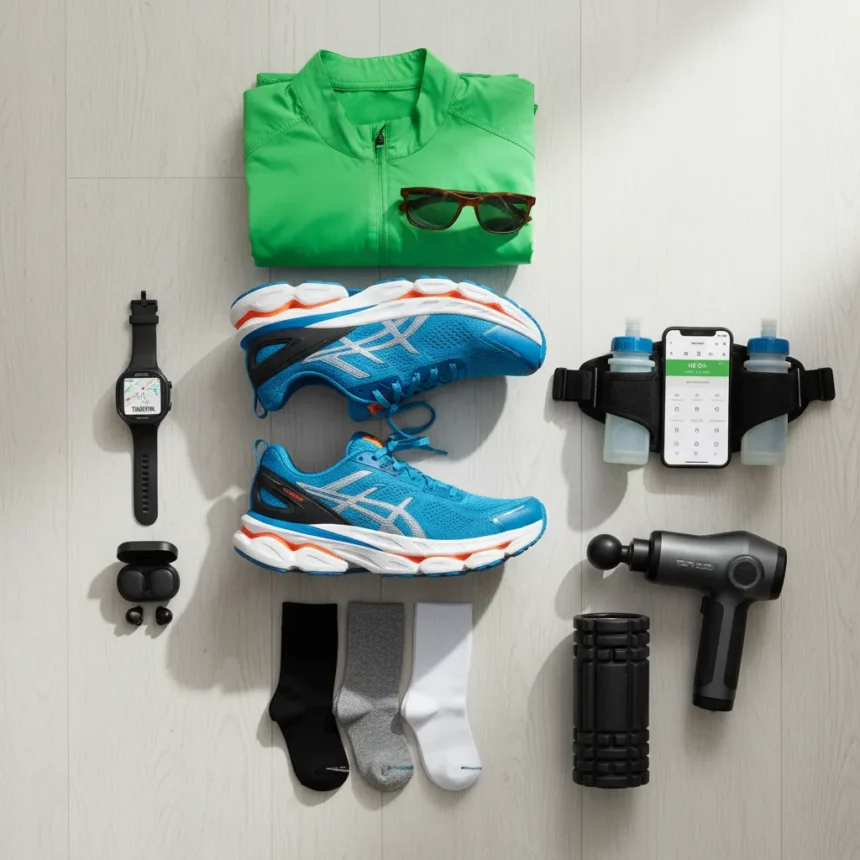
Essential running gear for beginners doesn’t need to be complicated or expensive. After more than 20 years of running, an experienced runner has distilled the equipment that actually matters—cushioned sneakers, wireless headphones, and recovery tools that make the difference between enjoying your runs and abandoning them after week two.
Key Takeaways
- Cushioned running shoes like the Hoka Clifton 10 provide comfort for new runners starting their training journey.
- Wireless headphones keep you motivated during solo runs without tangled cords slowing you down.
- Recovery tools and proper gear prevent injury and burnout in the critical first weeks of running.
- Hoka shoes currently offer 20% discounts, making beginner-friendly gear more affordable than ever.
- A 20-year runner’s tested recommendations beat generic fitness advice every time.
Why cushioned shoes matter more than you think
The Hoka Clifton 10 is the perfect running shoe for beginners and experienced runners alike, offering the cushioning and comfort that new runners desperately need. Most people starting a running routine make the mistake of grabbing whatever shoe is on sale at a big-box store. That’s how you end up with shin splints by week three. The Hoka Clifton 10 is reduced by 20 percent right now, saving over $30, which removes the price excuse entirely.
What makes a cushioned shoe essential for beginners isn’t vanity—it’s injury prevention. Your body hasn’t adapted to the impact of running yet. A shoe with proper cushioning absorbs shock that would otherwise travel straight up your shins and knees. After 20 years of running, the difference between a cheap shoe and a properly cushioned one is the difference between running pain-free and nursing an injury that sidelines you for months. The Hoka Clifton 10 handles mileage the way a beginner needs: forgiving, stable, and consistent.
Essential running gear for beginners: headphones and motivation
Wireless headphones transform running from a solo grind into something you actually want to do. Samsung Galaxy Buds 2 work well for trail running, staying secure even when you’re pushing harder than you expected. A new runner’s biggest enemy isn’t distance—it’s boredom. Three miles feels endless when you’re staring at pavement and counting your breaths. Music makes those miles disappear.

The right headphones should stay in your ears, have decent battery life, and not cost a fortune. You’re not training for the Olympics yet; you need something reliable that won’t fall out when you’re sweating. Bluetooth headphones eliminate the cable-tangling nightmare of wired earbuds, which is a quality-of-life improvement that matters more than you’d think during your first few weeks of running.
Recovery tools that prevent burnout
Beginners often overlook recovery, treating running as pure punishment and rest as laziness. Recovery tools—foam rollers, massage guns, or even basic stretching equipment—separate runners who stick with it from those who quit. After 20 years, an experienced runner knows that what you do after your run matters as much as the run itself. Muscle soreness, tightness, and fatigue are what kill motivation in month two.



A simple foam roller costs almost nothing and addresses the tight calves and quads that make your second run feel worse than your first. Recovery isn’t optional for beginners; it’s the invisible difference between progress and pain. Adding 10 minutes of stretching or foam rolling after each run transforms how your body feels the next day, which transforms whether you actually show up for the next run.
Beyond the basics: wearables and protection
As you progress, a running watch becomes useful, though not essential at the start. Garmin wearables are preferred for running over daily smartwatches, offering dedicated metrics that matter to runners. For summer running, Nike Victory Elite sunglasses provide sun protection, which sounds trivial until you’ve run into the sun for 30 minutes and can’t see the sidewalk.
These aren’t must-haves on day one. A new runner should nail the fundamentals—good shoes, music, and basic recovery—before investing in gadgets. But knowing what experienced runners actually use, rather than what marketing tells you to buy, saves money and prevents the gear-obsession trap that turns running into an expensive hobby before you’ve built the habit.
Why Hoka dominates beginner recommendations
Hoka shoes appear frequently in essential running gear recommendations because they work. Winter sales knock up to 30 percent off running shoes, with deals starting at $24. Free People’s fitness sale offers up to 70 percent off on Hoka, Asics, and Merrell running shoes, making entry-level setups genuinely affordable. When multiple independent sources recommend the same brand for beginners, it’s not marketing—it’s evidence.



The Speedgoat 6 GTX offers Gore-Tex protection for trail running, while the Clifton 10 focuses on pure comfort for road running. A beginner doesn’t need to choose between them yet. What matters is that Hoka builds shoes for people who actually run, not people who buy running gear and never use it.
Is expensive gear necessary for beginners?
No. A $130 pair of cushioned running shoes, a set of $50 wireless headphones, and a $20 foam roller total less than $200. That’s your entire setup. Everything else—watches, sunglasses, fancy compression gear—is optional. After 20 years, an experienced runner knows that beginners don’t fail because they lack gear. They fail because they don’t show up. Gear matters, but consistency matters more.
What’s the best first running shoe for someone who’s never run before?
The Hoka Clifton 10 is ideal for beginners and experienced runners needing comfort. It’s cushioned enough to protect your joints during the impact learning phase, responsive enough that you don’t feel sluggish, and available right now with a 20 percent discount. Start there, not with a $200 racing flat or a minimalist shoe that sounds cool but destroys your feet.
How do I know if I need a running watch?
You don’t, at least not for the first month. Run by feel, use your phone’s timer, or just run until you’re tired. A watch becomes useful once you’re running consistently and want to track progress. Garmin is the choice for dedicated runners, but it’s a luxury purchase for beginners, not a necessity. Build the habit first, buy the watch later.
Starting a running routine doesn’t require a sponsorship deal or a gear sponsorship. It requires shoes that don’t destroy your feet, something to keep you entertained, and the understanding that recovery matters. After 20 years of running, the gear that actually gets used is the gear that solves real problems: impact protection, motivation, and recovery. Everything else is noise. Buy the essentials, show up consistently, and the rest will follow.
Where to Buy
38% OFFAdidasArgentina Jersey$62.44$100shop now | 28% OFFGOREWEARConcurve Running Windbreaker$72$100shop now | 44% OFFSauconyHurricane 24$89.99$160shop now | ASICSGel-Kayano 32$164.95shop now | New BalanceFresh Foam X 1080 V14$164.95shop now
Edited by the All Things Geek team.
Source: Tom's Guide