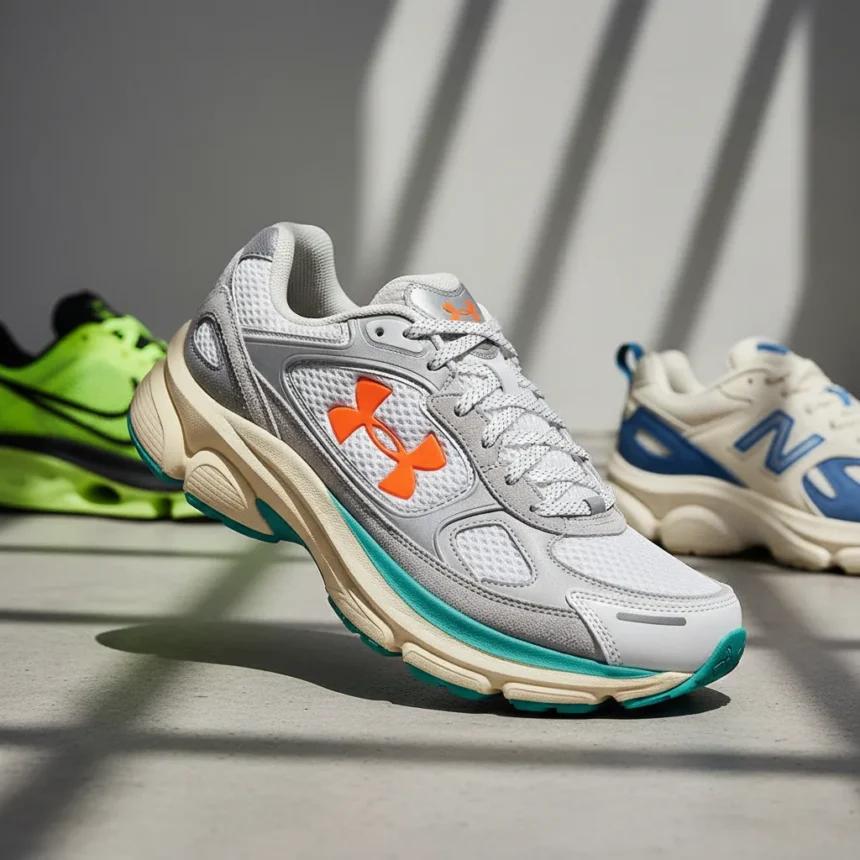
The Under Armour Arc 96 is a lifestyle runner made by Under Armour, designed with 90s-inspired aesthetics and modern comfort technology. It represents the brand’s deliberate push into the competitive sneaker market where Nike and New Balance have long dominated. The question isn’t whether Under Armour can make a decent shoe—it’s whether retro DNA and bold positioning can actually move market share in a category saturated with heritage brands.
Key Takeaways
- Under Armour Arc 96 blends 1990s design language with contemporary cushioning and materials.
- The shoe positions itself as an alternative to established lifestyle runners from Nike and New Balance.
- Retro sneaker revival is a proven commercial trend, but execution matters more than nostalgia alone.
- Under Armour’s logo-led era signals a broader brand repositioning toward lifestyle and heritage aesthetics.
- Pricing and availability across major retailers suggest serious market ambitions beyond niche appeal.
Why Under Armour Arc 96 Matters Right Now
Retro sneaker culture is not a niche anymore—it drives billions in annual revenue across the industry. Nike’s Air Max and New Balance’s 990 series prove that consumers will pay premium prices for shoes rooted in decades-old design language. Under Armour’s Arc 96 enters this conversation at a moment when the brand is actively repositioning itself around heritage and visual identity. The timing is deliberate, not accidental.
What separates this from a generic retro release is Under Armour’s willingness to commit resources to distribution and marketing. The shoe appears across multiple major retailers—Hibbett, DTLR, and Under Armour’s own channels—suggesting this is not a limited experiment but a sustained product line. That breadth of availability signals confidence, though it also raises the stakes. A shoe available everywhere must justify its existence on merit, not scarcity.
Design and Heritage: The 90s Angle Explained
The Arc 96 does not simply slap a swoosh on a vintage silhouette and call it a day. The shoe draws from Under Armour’s archives—specifically the brand’s early performance footwear DNA from the 1990s era when the company was still establishing itself. The design combines chunky proportions, visible cushioning, and a color palette that screams late-90s basketball culture. If you remember Air Jordans from 1996 or New Balance’s 574 in its original form, the Arc 96 will feel familiar.

The execution matters. Retro shoes fail when they feel cheap or when nostalgia overshadows function. Early impressions suggest the Arc 96 does not make that mistake—the materials appear substantial, and the silhouette avoids looking cartoonish or overly exaggerated. That balance between reverence and wearability is where most retro releases stumble. The shoe respects its inspiration without becoming a museum piece.
How the Arc 96 Compares to Nike and New Balance Alternatives
Nike‘s Air Max 90 and New Balance’s 574 are the obvious benchmarks. Both shoes own massive market share, both have proven staying power across decades, and both command loyal audiences. The Arc 96 enters as a challenger, not an incumbent. That means it must offer something—whether visual distinctiveness, better value, or a different cultural narrative—that justifies choosing it over established heritage.



Where the Arc 96 potentially gains ground is positioning. Nike and New Balance are so dominant that they can feel inevitable, almost invisible. A consumer seeking a retro lifestyle runner might not even consider alternatives. Under Armour’s entry forces that conversation. The Arc 96 is not trying to be the best shoe ever made; it is trying to be the most interesting alternative if you are already considering retro runners. That is a winnable strategy, provided execution stays solid and the brand commits to sustained visibility.
The shoe also benefits from Under Armour’s broader brand repositioning. The company is not pitching this as a performance running shoe competing on biomechanics or speed. It is a lifestyle piece, a cultural statement, a design object. That removes the need to outbench Nike’s latest performance platform. It just needs to feel right and look right, which is a lower bar but also a more subjective one.
Availability and Positioning in the Market
The Under Armour Arc 96 is available through Under Armour’s official store, Hibbett, DTLR, and other major footwear retailers. That distribution is crucial. A shoe that only appears on Under Armour’s own site feels like a side project. A shoe in Hibbett and DTLR alongside Nike and New Balance feels like a real competitor. The presence in specialty sneaker channels also matters—it signals that the brand is serious about authenticity and community credibility, not just chasing trend-followers.
Pricing sits in the lifestyle sneaker range, which means it will be compared directly to Air Max 90 and 574 alternatives. Under Armour cannot win on pure heritage—those brands have 30+ years of cultural accumulation that cannot be rushed. It can win on design execution, brand momentum, and the simple fact that some consumers want an alternative to the obvious choice.



Is the Under Armour Arc 96 worth buying?
If you are already in the market for a retro lifestyle runner and you like the design, yes. The Arc 96 appears to be well-made, thoughtfully designed, and backed by real distribution. If you are a die-hard New Balance or Nike loyalist, this shoe probably will not convert you—brand preference runs deep in sneaker culture. But if you are open to alternatives and you appreciate the 90s aesthetic, the Arc 96 gives you a legitimate option that avoids the obviousness of choosing the same shoe everyone else wears.
What makes the Arc 96 different from other Under Armour shoes?
The Arc 96 is part of Under Armour’s deliberate shift toward heritage and lifestyle positioning, rather than pure performance metrics. Most Under Armour footwear has historically focused on running, basketball, or training function. The Arc 96 prioritizes cultural resonance and design language. It is the brand saying: we can compete in the lifestyle space, not just the performance space.
How does the Arc 96 fit compared to other lifestyle runners?
Specific fit details vary by individual, but the chunky 90s silhouette suggests a roomier toe box than sleeker modern shoes. Early reviews suggest the shoe runs true to size, though fit is always personal. If you typically wear Nike or New Balance, trying the Arc 96 on in person before committing is wise—the proportions are distinctive, and that can mean either perfect comfort or awkward clunkiness depending on your foot shape.
Under Armour’s Arc 96 is not going to dethrone Nike or New Balance overnight. But it proves that the retro sneaker market has room for challengers willing to invest in design, distribution, and cultural positioning. The shoe respects its 90s roots without drowning in nostalgia, and it arrives at a moment when consumers are actively seeking alternatives to the dominant players. That is a real opportunity, not just marketing hype.
Edited by the All Things Geek team.
Source: T3