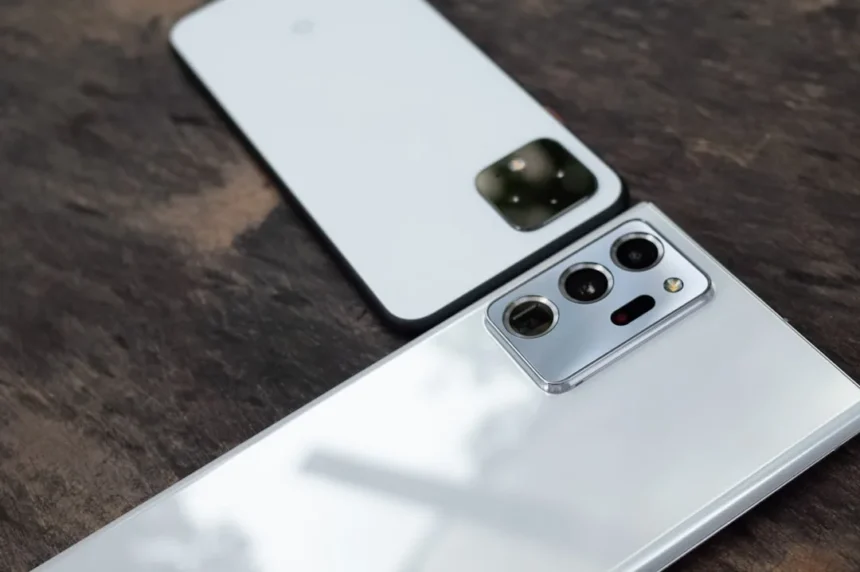
Google Pixel 10 vs Samsung Galaxy S26 is the Android flagship choice that matters right now. Both phones hit record-low prices this week—Pixel 10 at $549 and Galaxy S26 at $740, down from $799 and $899 MSRPs respectively—forcing a direct head-to-head evaluation. Pixel 10 launched August 28, 2025; Galaxy S26 arrived March 11, 2026. The choice hinges on whether you value Google’s ecosystem and accessory ecosystem or Samsung’s processing power and video chops.
Key Takeaways
- Pixel 10 costs $549 at record low, Galaxy S26 $740; both down from MSRP
- Pixel 10 offers 128GB base storage at $549; Galaxy S26 starts 256GB at $740
- Galaxy S26 shoots 8K video; Pixel 10 maxes at 4K 60fps
- Pixel 10 includes Qi2 magnets and accessory ecosystem; Galaxy S26 lacks both
- Galaxy S26 has faster 4.47GHz processor; Pixel 10 runs 3.78GHz octa-core
Google Pixel 10 vs Samsung Galaxy S26: Display and Design
Both phones sport 6.3-inch OLED screens running 120Hz, but the differences reveal their design philosophies. Pixel 10 uses a 2424x1080px OLED panel with 421 PPI and 81.73% screen-to-body ratio; Galaxy S26 packs a Dynamic AMOLED 2340x1080px display with 409 PPI and 91.24% screen-to-body ratio. Galaxy’s taller aspect ratio and larger bezel-to-display ratio make it feel more refined, while Pixel’s wider screen suits content consumption. Both hit 3000 nits peak brightness for outdoor visibility. Color options split the difference: Pixel offers Indigo, Lemongrass, Frost, and Obsidian; Galaxy ships in Cobalt Violet, Sky Blue, Black, and White, with Silver Shadow and Pink Gold exclusive to Samsung’s store. Neither display is objectively superior—it’s whether you prefer a wider canvas or a more immersive bezel experience.
Camera Hardware: Pixel’s Newer Sensors vs Galaxy’s Video Dominance
This is where the generational gap matters most. Pixel 10 packs a 48MP wide with f/1.7 aperture and optical image stabilization, a 10.8MP telephoto with f/3.1 aperture and 5x optical zoom, and a 13MP ultrawide at 120 degrees. Galaxy S26 counters with a 50MP wide at f/1.8, a 10MP telephoto at f/2.4, and a 12MP ultrawide at f/2.2. On paper, Galaxy’s wider aperture on the main sensor sounds better, but Pixel’s newer optical image stabilization on the telephoto gives it an edge in stabilized zoom shots. The real gap emerges in video: Galaxy S26 shoots 8K at 30fps and 4K at 60fps with 1080p at 240fps; Pixel 10 maxes out at 4K 60fps. If video is your priority, Galaxy’s capabilities are substantially ahead. For stills, Pixel’s hardware is fresher, though both phones will produce excellent photos in daylight.
The Pixel 10’s 10.5MP front camera handles HDR, while Galaxy S26’s 12MP selfie sensor also supports HDR. Neither is a standout in the selfie department—both are competent but unremarkable. The real story is rear: Pixel’s newer architecture versus Galaxy’s proven video pipeline.


Performance, Battery, and Storage: Galaxy’s Power vs Pixel’s Efficiency
Galaxy S26 runs a 4.47GHz octa-core processor, outpacing Pixel 10’s 3.78GHz octa-core. On paper, that speed advantage should matter for gaming and multitasking. In practice, Pixel’s Tensor processor and tighter software integration often feel snappier despite lower clock speeds. Battery capacity favors Pixel: 4970mAh versus Galaxy’s 4300mAh. Pixel’s larger battery combined with more efficient processor architecture likely translates to longer real-world endurance, though neither phone has been independently tested in this comparison. Both pack 12GB RAM. Storage diverges sharply: Pixel 10 base model offers 128GB; Galaxy S26 starts at 256GB. For most users, 256GB is the practical minimum in 2026, giving Galaxy an advantage here. Pixel’s 256GB option costs $899 MSRP, matching Galaxy’s base price—a crucial detail for budget shoppers.
Ecosystem and Accessories: Pixel’s Qi2 Advantage
Pixel 10 integrates Qi2 magnets and supports the Pixelsnap accessory ecosystem, enabling a growing library of magnetic attachments and wireless charging stands. Galaxy S26 lacks Qi2 entirely, relying on older magnetic standards. This is a long-term advantage for Pixel: as Qi2 becomes the wireless charging standard, Pixel owners gain access to a broader ecosystem of third-party accessories. Galaxy’s Samsung ecosystem is mature but proprietary—you’re locked into Samsung’s own accessories and partner brands. For users who value flexibility and future-proofing, Pixel’s Qi2 integration is a meaningful differentiator.



Pricing and Carrier Deals
Record-low prices make both phones genuinely compelling. Pixel 10 at $549 is a steal for a flagship; Galaxy S26 at $740 is aggressive but still premium. AT&T adds another layer: Pixel 10 starts at $0/month with trade-in or $10.99/month; Galaxy S26 runs $23.62/month or $25/month with trade-in, with retail prices at $849.99–$899.99. Carrier financing heavily favors Pixel if you have an old phone to trade. For outright purchases, Pixel’s $549 entry point is hard to beat.
Should You Buy Google Pixel 10 or Samsung Galaxy S26?
Choose Pixel 10 if you prioritize value, want a newer camera platform, or care about Qi2 accessories. At $549, it’s the smarter financial choice. Choose Galaxy S26 if 8K video matters, you want a slightly more refined display, or you’re already deep in Samsung‘s ecosystem. The Galaxy’s processing power and video capabilities justify the premium only if you actively use those features. For most buyers in April 2026, Pixel 10’s combination of price, newer hardware, and accessory ecosystem makes it the better buy—but Galaxy S26 isn’t a bad choice if you need 8K video or prefer Samsung’s software polish.
Does Pixel 10 really have better cameras than Galaxy S26?
Pixel 10 has newer camera hardware and optical image stabilization on the telephoto, which matters for zoom shots. Galaxy S26 dominates in video with 8K capability. For still photography, Pixel’s advantage is architectural, not overwhelming—both phones take excellent photos. The choice depends on whether you shoot video or stills.
Is the Galaxy S26 worth the extra $191?
Not for most users. Pixel 10 at $549 offers better value, newer camera hardware, and Qi2 support. Galaxy’s advantages—8K video, faster processor, larger screen-to-body ratio—matter only if you actively use those features. The $191 difference is substantial enough that you should have a specific reason to choose Galaxy.



Which phone has better battery life?
Pixel 10’s 4970mAh battery is larger than Galaxy S26’s 4300mAh, and Pixel’s processor architecture is generally more efficient. Real-world testing would confirm, but Pixel likely edges ahead in endurance. Neither phone has been independently benchmarked in published reviews yet.
At record-low prices, both phones are objectively good buys. Pixel 10 wins on value and forward-looking features; Galaxy S26 wins on processing power and video. For the average user buying this week, Pixel 10’s $549 price and Qi2 ecosystem make it the smarter choice—but Galaxy S26 is the right phone if you’re a content creator or Samsung loyalist willing to pay the premium.
Where to Buy
is just $549 (was $799) at Amazon | Google Pixel 10: | Google Pixel 10 Pro: | check out all of today's deals at Amazon
Edited by the All Things Geek team.
Source: TechRadar