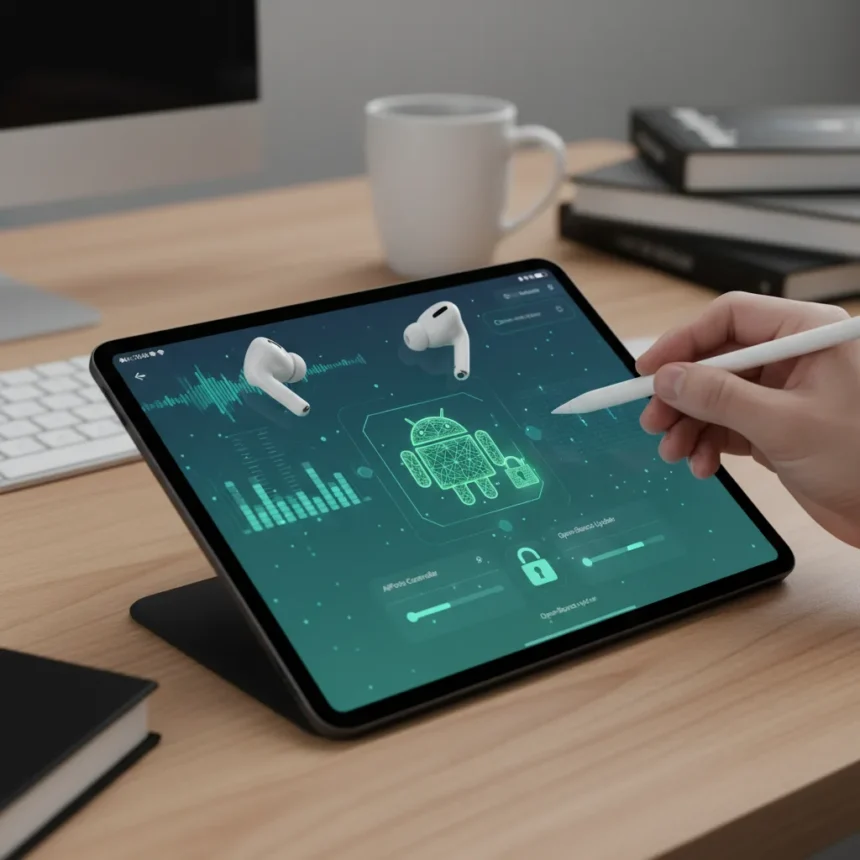
An AirPods Android app just received a significant update that makes using Apple’s earbuds on Android devices far more practical than before. While AirPods can technically connect to Android via standard Bluetooth pairing, Apple deliberately withholds many features from non-iOS devices—Spatial Audio, customizable touch controls, and seamless switching all remain exclusive to iPhone and iPad. This open-source solution bridges that gap.
Key Takeaways
- AirPods connect to Android via Bluetooth but lose most advanced features on non-Apple devices
- An open-source app now restores functionality Apple keeps locked to iOS
- The update arrives as rumors swirl about upcoming AirPods Ultra models
- Android users can finally customize touch controls and access spatial audio workarounds
- This solution highlights Apple’s ecosystem lock-in strategy for premium audio
Why AirPods on Android Have Always Been Limited
Apple deliberately restricts AirPods functionality on Android to push users toward iPhone and iPad. Basic Bluetooth pairing works fine—you can listen to music and take calls—but everything that makes AirPods premium disappears the moment you pair them with an Android device. Spatial Audio, which creates three-dimensional sound for video content, simply doesn’t work. Touch controls revert to basic play/pause and volume, stripping away the customization options iOS users enjoy. This is not a technical limitation. It is a business decision.
The frustration this creates for Android users is real. Someone might own AirPods Pro or AirPods Max but cannot access the features they paid for unless they also own an iPhone. Android users have long relied on workarounds and third-party apps to restore even basic functionality, yet Apple offers no official solution and actively discourages alternatives through its closed ecosystem approach.
What the Updated AirPods Android App Now Does
The newly updated open-source app addresses this gap by restoring several features that Apple reserves for iOS. The app enables customizable touch controls, allowing Android users to reprogram their AirPods’ gestures to suit their preferences. It also implements workarounds for spatial audio, bringing some of that immersive quality to Android devices that would otherwise have no access to it whatsoever.


The update improves the overall user experience by making the pairing process smoother and more intuitive. Rather than navigating buried Bluetooth settings, the app provides a dedicated interface specifically designed for AirPods management on Android. This means Android users can now adjust settings, monitor battery life, and customize controls from a single, purpose-built application instead of piecing together solutions from multiple sources.
The Timing: Rumored AirPods Ultra and Android’s Growing Challenge
This update lands amid rumors about new AirPods Ultra models entering Apple’s lineup. If those rumors prove accurate, the timing is significant. Apple will likely launch these new earbuds with iOS-exclusive features, leaving Android users—even those willing to pay premium prices—unable to access the full feature set. The open-source app community is essentially racing to keep pace with Apple’s feature releases, creating a perpetual catch-up dynamic that favors iPhone owners.


For Android users, this highlights a deeper problem: Apple’s ecosystem lock-in extends beyond hardware into audio accessories. You can buy AirPods Max or AirPods Pro, but their best features remain hostage to owning an iPhone. This strategy works because AirPods are genuinely good earbuds, and many people own them before switching to Android or own them alongside Android devices for work or travel.
AirPods Android App vs. Native Android Alternatives
Android has excellent native earbuds options—Google Pixel Buds, Samsung Galaxy Buds, and others offer full feature parity on Android devices without requiring workarounds. These alternatives include their own spatial audio implementations, seamless switching between devices, and touch control customization built directly into their companion apps. The key difference: they work as intended on Android from day one, without requiring users to install third-party patches to access premium features.
Yet many Android users already own AirPods and prefer not to buy replacement earbuds. For those people, the open-source app solves a real problem. It is not a perfect solution—it cannot replicate every iOS feature due to Android’s architecture—but it restores enough functionality to make AirPods genuinely usable rather than frustratingly limited.
Should You Switch Your AirPods to Android?
If you already own AirPods and use Android, the updated app makes the experience significantly better than before. Download it, try it, and see if the restored features meet your needs. If you are shopping for new earbuds and use Android exclusively, native Android options offer a better overall experience without requiring workarounds or third-party software.


The real question is whether Apple will ever officially support AirPods on Android. The answer is almost certainly no. Apple profits from ecosystem lock-in, and AirPods are a key tool in that strategy. The company has no financial incentive to make AirPods feature-complete on Android, which means users will remain dependent on open-source solutions and community developers playing catch-up with each new iOS release.
Does the AirPods Android app work with all AirPods models?
The app supports most AirPods models, including AirPods Pro and AirPods Max, though compatibility can vary depending on the specific model and the Android device you are using. Check the app’s documentation for your exact AirPods version before downloading.
Can you get spatial audio on Android with this app?
The app implements workarounds that approximate spatial audio functionality, but it cannot fully replicate Apple’s native spatial audio implementation since that technology is deeply integrated into iOS. You will get some benefit, but not the complete experience iPhone users enjoy.
Is the open-source AirPods Android app free?
Yes, the app is open-source and free to download and use. There are no premium tiers or subscription fees, which makes it the most accessible solution for Android users wanting to unlock AirPods features.
The updated AirPods Android app represents a small victory for Android users tired of Apple’s ecosystem gatekeeping, but it also underscores a larger truth: if you want the full AirPods experience, Apple expects you to buy an iPhone. For those committed to Android, this app is the best workaround available—and now it is better than ever.
Where to Buy
Edited by the All Things Geek team.
Source: TechRadar