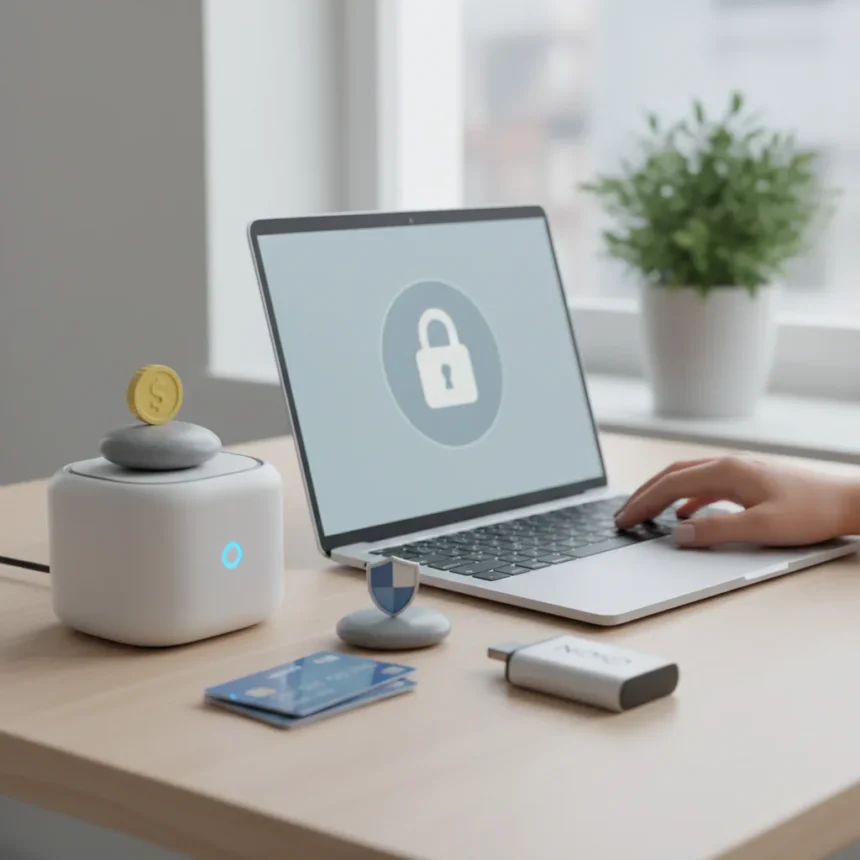
A simple VPN for non-technical users is increasingly hard to find in a market flooded with complex settings, jargon-heavy interfaces, and premium pricing. Most VPN providers assume you understand protocols, encryption standards, and server locations. But what if you just want to protect your banking, secure your online Scrabble games, and keep your browsing private without needing a computer science degree?
Key Takeaways
- Designed for non-technical users who want straightforward privacy without complex settings
- Prioritizes banking security and everyday online activity protection
- Offers better value than NordVPN at current pricing
- Emphasizes simplicity and transparency in its interface and features
- Ideal for casual internet users, not power users seeking advanced configuration
Why simple VPN for non-technical users matters right now
The VPN market has become increasingly fragmented. Enterprise-grade tools with dozens of protocol options, kill switches, and split tunneling controls dominate the conversation. Meanwhile, everyday users—whether retirees managing bank accounts online, casual gamers, or people simply wanting basic privacy—are left overwhelmed. The best simple VPN for non-technical users strips away the noise and focuses on what actually matters: does it work, is it easy to use, and does it protect me?
Banking online exposes you to real risks. Public Wi-Fi networks, which many non-technical users rely on, are prime hunting grounds for packet sniffing and man-in-the-middle attacks. A simple VPN for non-technical users eliminates that vulnerability by encrypting all traffic between your device and the VPN server. You don’t need to understand how encryption works—you just need to know that your banking credentials stay hidden from prying eyes.
What makes a simple VPN for non-technical users actually simple
Simplicity in a VPN means three things: a clear interface that requires zero explanation, one-click activation, and no settings to tinker with. A good simple VPN for non-technical users hides complexity behind sensible defaults. The app should launch, connect, and protect—nothing more. Advanced users might grumble about the lack of options, but that’s precisely the point. For someone who just wants to play online Scrabble without worrying about their IP address being logged, fewer buttons mean fewer ways to mess something up.


The second pillar of simplicity is transparency. Users should understand what the VPN does in plain English, not marketing-speak. Does it log your activity? No—clearly stated. Does it slow your connection? Minimally, if configured properly. Does it cost a fortune? Not if you choose wisely. A simple VPN for non-technical users explains its privacy policy in human language, not legal jargon that requires a lawyer to decode.
Simple VPN for non-technical users vs. NordVPN: the value question
NordVPN has built a strong reputation through aggressive marketing and a feature-rich interface. It offers advanced options like Double VPN, Onion over VPN, and customizable threat protection. These features appeal to security enthusiasts. But for a grandmother protecting her online Scrabble account or a parent securing their banking sessions, NordVPN is overkill—and its pricing reflects that complexity. A simple VPN for non-technical users delivers the same core protection (encryption, IP masking, privacy) at a lower price point, without the features most casual users will never touch. Right now, that value difference is significant enough to matter for budget-conscious households.



The comparison isn’t about which VPN is objectively better. It’s about fit. A simple VPN for non-technical users is built for one job: making privacy accessible to people who don’t want to learn networking concepts. NordVPN is built for flexibility and customization. Choose based on your actual needs, not based on which one has the longest feature list.
Everyday security scenarios where simplicity wins
Consider a typical week for a non-technical user. Monday morning, you check your bank balance on your phone while waiting for coffee. Tuesday, you connect to public Wi-Fi at the library and browse email. Wednesday, you play Scrabble online for an hour. Thursday, you shop for groceries on your laptop. Friday, you video call family. A simple VPN for non-technical users protects all of these moments automatically, without you having to think about server selection, protocol switching, or kill switch activation. You open the app, tap connect, and your privacy is handled.
The alternative—using NordVPN or a similar complex tool—means navigating menus, choosing between servers, and potentially disabling features you don’t understand because they’re slowing your connection. Friction like that causes people to stop using the VPN altogether, which defeats the entire purpose.
What you actually need to know about privacy
Privacy means different things to different people. For a non-technical user, it usually means: nobody can see what I’m doing online, my ISP can’t track my browsing, and my banking data stays encrypted. A simple VPN for non-technical users delivers on all three fronts. It doesn’t need to offer privacy features for journalists working in hostile regimes or security researchers testing zero-day exploits. It needs to protect ordinary people from ordinary threats.



That’s why a simple VPN for non-technical users often outperforms complex alternatives in real-world satisfaction. A user who understands their VPN, trusts it, and actually uses it consistently is more secure than someone with a powerful tool they don’t fully grasp and therefore disable when it inconveniences them.
Is a simple VPN for non-technical users right for you?
If you spend most of your time on routine online tasks—banking, email, social media, casual gaming—and you want privacy without learning new terminology, then a simple VPN for non-technical users is exactly what you need. If you’re a power user who wants to configure DNS leaks, choose between WireGuard and OpenVPN, or set up split tunneling, you’ll find the simplicity frustrating. But that’s not the target audience, and that’s fine.
Can I really trust a simple VPN for non-technical users with my banking?
Yes, as long as you choose one with a solid privacy policy and no-logging practices. Encryption is encryption—a simple VPN for non-technical users uses the same encryption standards as enterprise tools. The difference is in the interface, not the security underneath. Your banking data is protected by the same cryptographic protocols, whether you’re using a complex VPN or a simple one.
Will a simple VPN for non-technical users slow down my internet?
Minimally. Any VPN adds a tiny amount of latency because your traffic travels through an extra server. But a well-built simple VPN for non-technical users is optimized for speed. You won’t notice a difference during normal browsing, email, or casual gaming. Streaming might be slightly slower depending on your connection, but the trade-off—privacy—is worth it for most users.
What if I need help setting up a simple VPN for non-technical users?
Good simple VPNs include straightforward setup guides and responsive customer support. The setup process should take less than five minutes: download, install, create an account, tap connect. If it takes longer than that, it’s not truly simple. Look for providers that offer live chat support and clear documentation written for beginners, not tech experts.
The VPN market has evolved enough that you no longer have to choose between privacy and simplicity. A simple VPN for non-technical users proves that protecting your banking, your Scrabble games, and your everyday online activity doesn’t require complexity—just clarity, reasonable pricing, and a commitment to doing one thing well. That’s the real competitive advantage in a crowded space.
Edited by the All Things Geek team.
Source: TechRadar