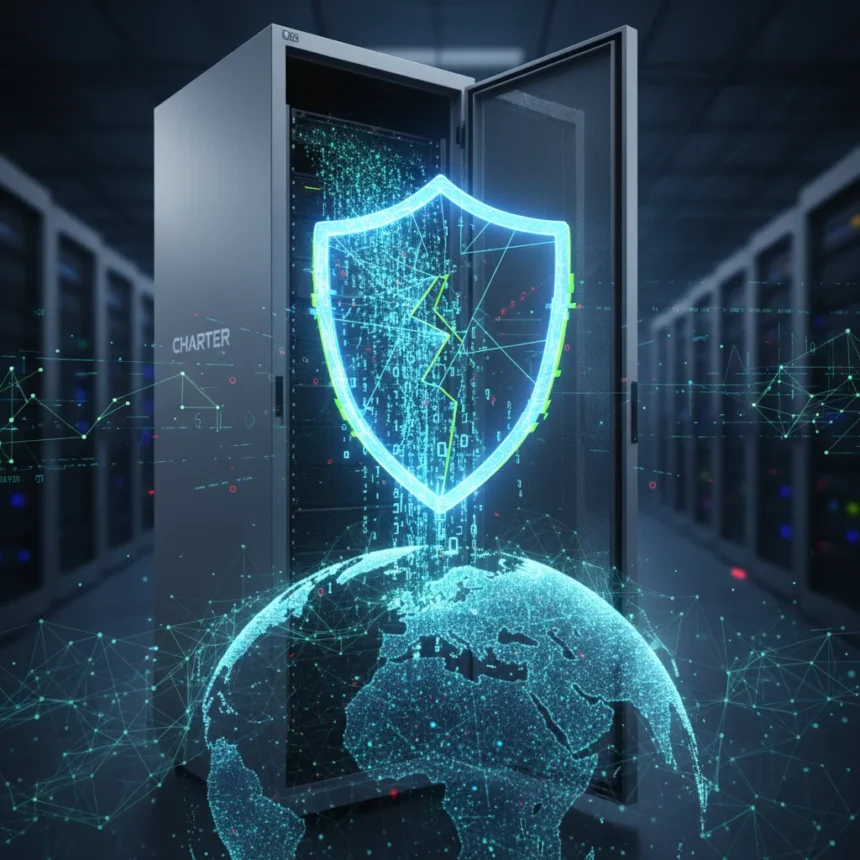
The Charter Communications data breach represents a critical moment for one of America’s largest telecom providers. On May 23, 2026, the ShinyHunters extortion group publicly claimed it had stolen approximately 42 million records from Charter and threatened to leak them unless the company met undisclosed demands by May 27, 2026.
Key Takeaways
- Charter Communications data breach involved alleged theft of 42 million customer records by ShinyHunters.
- Attackers set a May 27, 2026 deadline for negotiations before threatening public disclosure.
- Charter denied exfiltration of sensitive personal information or customer proprietary network information.
- One report suggests attackers exploited a Microsoft Entra account via voice phishing to access Salesforce.
- Charter has not publicly disclosed how many customers were affected or whether notifications will be sent.
Charter Communications Data Breach: What We Know
Charter Communications confirmed it was investigating a cybersecurity incident linked to the ShinyHunters group. The company issued a statement acknowledging the situation while denying the most damaging claims. According to Charter’s response: “We are aware of the situation, following our security protocols, and are in the process of alerting appropriate authorities. No sensitive personal information (PI) or customer proprietary network information (CPNI) data was exfiltrated by the threat actor”.
This denial stands in direct conflict with ShinyHunters’ extortion message, which stated: “Over 42M records containing PII have been compromised. This is a final warning to reach out by 27 May 2026 before we leak along with several annoying (digital) problems that’ll come your way. Make the right decision, don’t be the next headline. Pay or Leak”. The contradiction between the attackers’ claims and Charter’s official position leaves customers and regulators uncertain about what data was actually compromised.
How Attackers Allegedly Breached Charter’s Systems
One cybersecurity report suggests the Charter Communications data breach began with a voice phishing (vishing) attack targeting an employee’s Microsoft Entra account. Voice phishing exploits human psychology rather than technical vulnerabilities—attackers call targets, impersonate trusted entities, and trick them into revealing credentials or access tokens. Once the attackers obtained valid Entra credentials, they allegedly used that access to export customer records from Salesforce, Charter’s customer relationship management platform.


This attack pattern is not new, but it remains devastatingly effective. Cloud identity systems like Microsoft Entra are powerful targets because they grant access to downstream applications and data stores. A single compromised employee account can become a gateway to millions of customer records. The incident reportedly occurred on April 1, 2026, meaning the breach sat undetected for nearly two months before the public extortion threat emerged.
Why Charter’s Denial May Not Reassure Customers
Charter’s statement that no sensitive personal information was exfiltrated raises more questions than it answers. What exactly constitutes “sensitive” personal information in the company’s definition? Customer names, addresses, phone numbers, account numbers, and service history are all personally identifiable information (PII) even if they are not financial records or Social Security numbers. If ShinyHunters stole 42 million records, those records almost certainly contained some form of PII, regardless of Charter’s semantic distinction.



The company has not publicly disclosed how many customers were affected, whether notifications will be sent to impacted individuals, or what steps it is taking to prevent similar incidents. This silence fuels speculation and undermines trust. When a major telecom company confirms a breach but refuses to provide basic details about customer impact, customers and regulators rightfully grow skeptical of reassurances about data sensitivity.
The Broader Telecom Security Problem
The Charter Communications data breach is not an isolated incident—it reflects systemic vulnerabilities in how telecom companies protect customer data. Telecom providers store some of the most sensitive information about millions of people: home addresses, phone numbers, service usage patterns, and billing information. This data is valuable to criminals, identity thieves, and surveillance operations. Yet many telecom companies have treated security as a compliance checkbox rather than a core operational priority.
ShinyHunters, the group behind this extortion threat, has previously targeted other organizations and published stolen data when companies refused to pay. The group’s public approach—posting extortion messages on dark web forums and setting countdown deadlines—is designed to pressure companies into negotiation. Whether Charter paid the May 27, 2026 deadline or negotiated differently remains unclear, but the public nature of the threat suggests the company faced significant reputational and operational pressure.
What Happens to 42 Million Records?
If ShinyHunters genuinely possesses 42 million Charter records, the potential uses for that data are extensive. Criminals can sell it on underground forums, use it for targeted phishing campaigns against Charter customers, or leverage it for identity theft and fraud. Even if the data does not include financial credentials, it provides attackers with enough information to impersonate customers in phone calls to Charter, to other service providers, or to financial institutions. The risk multiplies when stolen records are sold to multiple buyers.


Charter has not publicly confirmed whether the records were leaked after the May 27 deadline or whether negotiations prevented disclosure. This ambiguity is itself a problem—customers cannot assess their actual risk without knowing whether their data is already in criminal hands.
Is my Charter account at risk from this breach?
Charter has not publicly disclosed how many customers were affected or confirmed whether notifications will be sent. If you are a Charter customer, monitor your accounts for suspicious activity, consider placing a fraud alert with credit bureaus, and watch for phishing emails claiming to be from Charter. Do not click links in unsolicited messages—instead, log into your Charter account directly through the official website.
What should customers do if their Charter data was compromised?
If Charter confirms that your data was part of the breach, the company should provide details on what information was exposed and offer credit monitoring or identity theft protection services. Until Charter releases more information, take preventive steps: use unique, strong passwords for your Charter account, enable multi-factor authentication if available, and monitor your credit reports for unauthorized activity through the three major bureaus (Equifax, Experian, TransUnion).
How does this compare to other telecom breaches?
The Charter Communications data breach joins a growing list of major telecom security incidents. Large-scale extortion threats and data theft have become routine in the telecom sector, where companies hold massive repositories of customer information and often operate with legacy security practices. The combination of high-value data and persistent criminal pressure makes telecom companies attractive targets for extortion groups like ShinyHunters.
The Charter incident underscores a critical vulnerability in modern business security: the human element. No firewall or encryption algorithm stops an employee from being socially engineered into revealing their credentials. Until telecom companies invest seriously in security awareness training, incident response protocols, and zero-trust architecture, breaches of this scale will remain inevitable. Charter’s denial of sensitive data loss may technically satisfy regulatory requirements, but it does nothing to restore customer confidence or address the underlying security gaps that allowed ShinyHunters to access millions of records in the first place.
Edited by the All Things Geek team.
Source: TechRadar