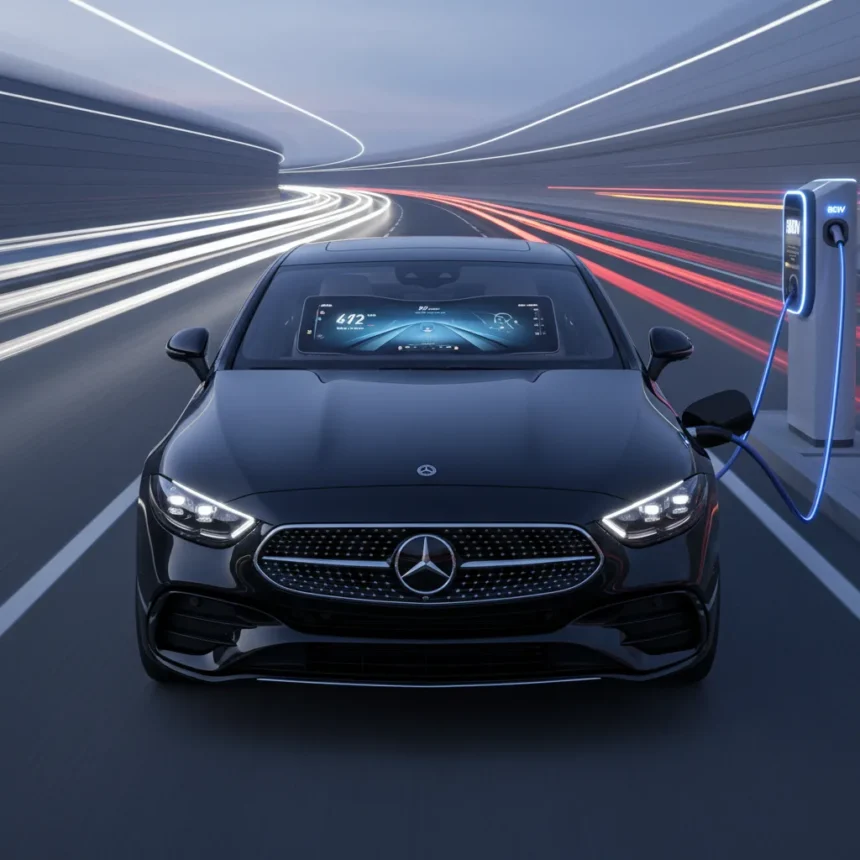
The electric Mercedes C-Class is a premium all-electric sedan built on the dedicated MB.EA platform, arriving in UK showrooms later 2026 and US markets in early 2027, starting around £60,000. With a 472-mile WLTP range, 800V charging architecture, and an optional one-metre-wide Hyperscreen spanning the entire dashboard, Mercedes positions this as the luxury EV sedan that finally makes gas C-Class variants feel outdated.
Key Takeaways
- 472-mile WLTP range on the C 400 4MATIC, though real-world US EPA estimates run 350-400 miles
- 800V architecture delivers 330kW DC fast-charging, adding 199-202 miles in 10 minutes
- Optional 993mm Hyperscreen with 1,000+ LEDs and high-resolution backlighting spans entire dashboard width
- Dual electric motors produce 483-489 bhp, accelerating 0-62 mph in 4.0-4.1 seconds
- 94.5 kWh usable battery capacity with improved 300kW regenerative braking reduces reliance on physical brakes
Electric Mercedes C-Class specs and performance
The launch variant, the C 400 4MATIC, pairs dual electric motors with all-wheel drive to deliver 483-489 bhp and 0-62 mph acceleration in 4.0-4.1 seconds. The 94.5 kWh usable NMC battery sits beneath the floor, powering a two-speed rear transmission that optimises efficiency across highway and city driving. Real performance, though, depends on which range figure you believe. Mercedes quotes 472-473 miles on the WLTP test cycle, a European standard known for optimism. US EPA estimates land closer to reality: 350-400 miles, a meaningful gap that buyers should factor into purchase decisions.
Charging speed is where the electric Mercedes C-Class genuinely stands out. The 800V architecture supports up to 330kW DC fast-charging, adding 199-202 miles of range in just 10 minutes on a 350kW charger. That matches or slightly exceeds most competitors—BMW’s i3 charges at similar speeds, while Tesla Superchargers deliver comparable or marginally better results depending on the model. The regenerative braking system recovers up to 300kW of energy, meaning drivers rarely need to touch the physical brake pedal in normal driving.
The game-changing Hyperscreen and cabin tech
Where the electric Mercedes C-Class truly differentiates itself is the optional MBUX Hyperscreen, a 993mm (39.1-inch) display that spans the entire dashboard width. This isn’t just a wide screen—it’s a high-resolution panel with backlighting and over 1,000 LEDs embedded behind the glass, creating a visual statement that rivals anything from Tesla or Lucid. For buyers who skip the Hyperscreen, three separate screens provide a more traditional, still-premium layout.


The cabin philosophy reflects Mercedes’ determination to make this feel like a luxury sedan first, EV second. Soft-touch materials, ambient lighting, and intuitive controls define the experience rather than gimmicky touchscreens or overcomplicated menus. Storage includes a 101-litre frunk for charging cables or luggage, a practical touch that luxury EV sedans often overlook.
Range reality check and future variants
The 472-mile headline range assumes optimal conditions—highway driving at moderate speeds on the WLTP cycle. Real-world range in mixed city and highway driving typically runs 10-20% lower, putting genuine usable distance closer to 380-420 miles. For US buyers, EPA estimates of 350-400 miles are more realistic and worth using as your planning baseline.



Mercedes is not stopping at the C 400 4MATIC. Future variants will include rear-wheel-drive models with lower power outputs, offering around 500-mile range for buyers prioritising efficiency over acceleration. Additional battery sizes and power options are planned, though specific details remain under wraps.
How does the electric Mercedes C-Class compare to rivals?
The electric Mercedes C-Class enters a crowded segment where Tesla Model 3 and BMW i4 have already staked claims. Against the Model 3, Mercedes offers superior interior materials and a more traditional driving experience, though Tesla’s Supercharger network remains unmatched. The BMW i4 is a closer rival—both are German luxury EVs with similar performance and charging speeds, but the C-Class’s optional Hyperscreen and sleeker aerodynamic design give it visual edge. Neither Tesla nor BMW offers quite the same dashboard theatre, though that theatre comes at a premium price.
When can you actually buy one?
UK customers can order the electric Mercedes C-Class from late 2026, with deliveries following in early 2027. US availability comes later in the first half of 2027, with the C 400 4MATIC launching first. Pricing starts around £60,000 in the UK (roughly €70,000 or $75,000 equivalent), positioning it as a premium alternative to the Tesla Model 3 Performance and BMW i4 M50.
Does the electric Mercedes C-Class deliver on its promises?
Mercedes has engineered a genuinely compelling electric sedan. The 472-mile WLTP range sounds like marketing hype until you realise that real-world range sits comfortably above 350 miles in mixed driving—enough for most daily routines plus weekend trips without constant charging anxiety. The 800V charging architecture is not revolutionary (other EVs use it), but it is executed flawlessly here. And the optional Hyperscreen? It is pure theatre, the kind of visual statement that makes walking into a showroom feel like stepping into the future.



The catch: pricing. At £60,000 and climbing, the electric Mercedes C-Class is not cheap. You are paying for luxury, technology, and a brand name as much as performance and range. If you want raw EV value, cheaper Chinese EVs and Tesla Model 3 offer more bang-for-pound. If you want a premium sedan that happens to be electric—not an electric car that tries to be premium—the C-Class makes a compelling case.
What is the real-world range of the electric Mercedes C-Class?
The 472-mile WLTP figure is optimistic. Real-world range in mixed city and highway driving typically runs 350-420 miles, depending on driving style, weather, and road conditions. US EPA estimates, which are more conservative, suggest 350-400 miles. Plan journeys around 300-350 miles between charges for peace of mind.
How fast does the electric Mercedes C-Class charge?
The 800V architecture supports up to 330kW DC fast-charging, adding 199-202 miles of range in 10 minutes on a 350kW charger. Home charging via a standard 7kW wallbox takes approximately 13-14 hours for a full charge, though exact times depend on your local electricity supply and charger specifications.
Is the Hyperscreen worth the extra cost?
The optional 993mm Hyperscreen is visually stunning and functionally superior to the standard three-screen layout, but it is a significant cost adder. If you value latest cabin design and digital integration, it justifies the premium. For buyers prioritising practicality over spectacle, the standard setup delivers everything you need.
The electric Mercedes C-Class marks a turning point for the brand. It proves that luxury and electrification are not mutually exclusive—that EVs can be desirable not because they are electric, but because they are genuinely excellent cars. It arrives in 2026 not as a curiosity or a compliance play, but as a genuine alternative to gas-powered sedans and a serious rival to Tesla and BMW. That alone makes it worth watching.
Where to Buy
Edited by the All Things Geek team.
Source: T3