





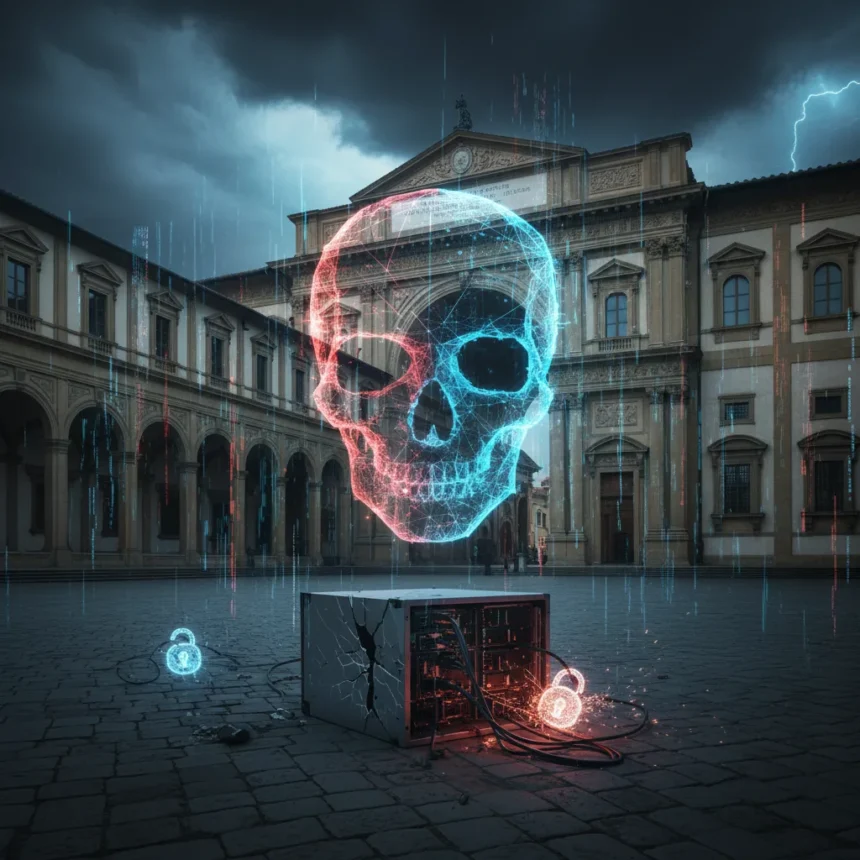
The Uffizi Gallery cyberattack, confirmed in early February 2026, disrupted administrative services at the Florence-based museum without affecting public operations. The attack represents a growing threat to heritage institutions that often lack the cybersecurity resources of corporate enterprises.
Key Takeaways
- Uffizi Gallery in Florence suffered a cyberattack affecting administrative services only in February 2026
- Museum exhibitions and public activities remained fully operational during the incident
- Attackers contacted the museum director by phone demanding payment
- Italy’s National Cybersecurity Agency is investigating the attack’s origin
- Staff were instructed to take precautions to reduce risk of further consequences
How the Uffizi Gallery Cyberattack Unfolded
The Uffizi Gallery cyberattack struck administrative systems rather than visitor-facing infrastructure, a distinction that protected the museum’s core mission. Public exhibitions, activities, and day-to-day visitor operations continued without interruption. This separation between administrative and public systems—common in larger institutions—acted as a firewall, preventing attackers from disrupting the museum’s ability to serve the millions of tourists who visit Florence annually.
What made this incident unusual was the direct contact. Attackers reached out to the Uffizi director via phone demanding payment, a tactic that suggests either confidence in their access or a calculated attempt to pressure leadership into negotiation. This human element distinguishes the attack from automated ransomware campaigns and indicates a more targeted, deliberate operation.
The Investigation and Response
Italy’s Agenzia Nazionale per la Cybersicurezza (National Cybersecurity Agency) immediately launched an investigation into the attack’s origin. The involvement of national authorities signals the seriousness with which Italian officials treat threats to cultural heritage. Staff received instructions to take precautions to reduce risk of further consequences, suggesting either additional vulnerabilities were discovered or the threat landscape remained active.


The museum’s claim that nothing was stolen remains unverified by independent forensic analysis. In ransomware cases, attackers often exfiltrate data before encrypting systems, then use the threat of public release to pressure victims into paying. Without detailed disclosure of what systems were accessed or what data was examined, the full scope of the breach remains unclear.
Why Cultural Institutions Are Vulnerable Targets
Museums and heritage sites occupy a unique position in the cybersecurity landscape. They operate with smaller IT budgets than technology companies, often rely on legacy systems, and face pressure to remain accessible to the public. The Uffizi Gallery, one of Europe’s most visited art museums, must balance security with visitor experience—a tension that attackers exploit.



Unlike financial institutions or government agencies, cultural institutions rarely have dedicated cybersecurity teams or incident response protocols tested through regular drills. When a breach occurs, they often lack the expertise to respond quickly or communicate transparently with stakeholders. The Uffizi’s initial response—confirming the attack but claiming no data theft—reflects this gap between what attackers may have accessed and what the institution can actually verify.
What Comes Next for Heritage Site Security
This incident will likely prompt Italian cultural institutions to reassess their cybersecurity posture. The National Cybersecurity Agency investigation may result in recommendations or mandates for improved security standards across the heritage sector. However, meaningful change requires sustained funding, which museum budgets often cannot accommodate without cutting exhibition or conservation programs.
The Uffizi Gallery cyberattack serves as a reminder that critical infrastructure extends beyond power grids and hospitals. Cultural institutions hold irreplaceable assets and serve essential social functions. Protecting them requires the same rigor applied to other sectors—not because attackers care about art, but because they recognize that heritage sites are soft targets with high-profile impact.
Did the Uffizi Gallery lose any data in the cyberattack?
The museum claims nothing was stolen, but this claim has not been independently verified through forensic analysis. Attackers may have accessed administrative systems without exfiltrating data, or the museum may lack the technical capability to confirm what was taken. The full scope of the breach remains unclear.



How did the cyberattack affect museum visitors and exhibitions?
Public operations, exhibitions, and visitor activities continued normally during the attack. Only administrative services were disrupted, meaning ticket sales, reservations, and internal operations may have been affected, but visitors could still access the galleries.
Is the Uffizi Gallery still investigating the attack?
Yes, Italy’s National Cybersecurity Agency is leading the investigation into the attack’s origin. The museum has instructed staff to take precautions to reduce risk of further consequences, suggesting the investigation is ongoing and potential vulnerabilities may still exist.
The Uffizi Gallery cyberattack exposes a hard truth: even the world’s most celebrated institutions are not immune to cyber threats. Until cultural organizations receive adequate funding and expertise to defend themselves, they will remain attractive targets for attackers seeking ransom, data, or simply to prove a point. The real question is not whether more attacks will come, but whether institutions will act before the next one does.
Edited by the All Things Geek team.
Source: TechRadar




