




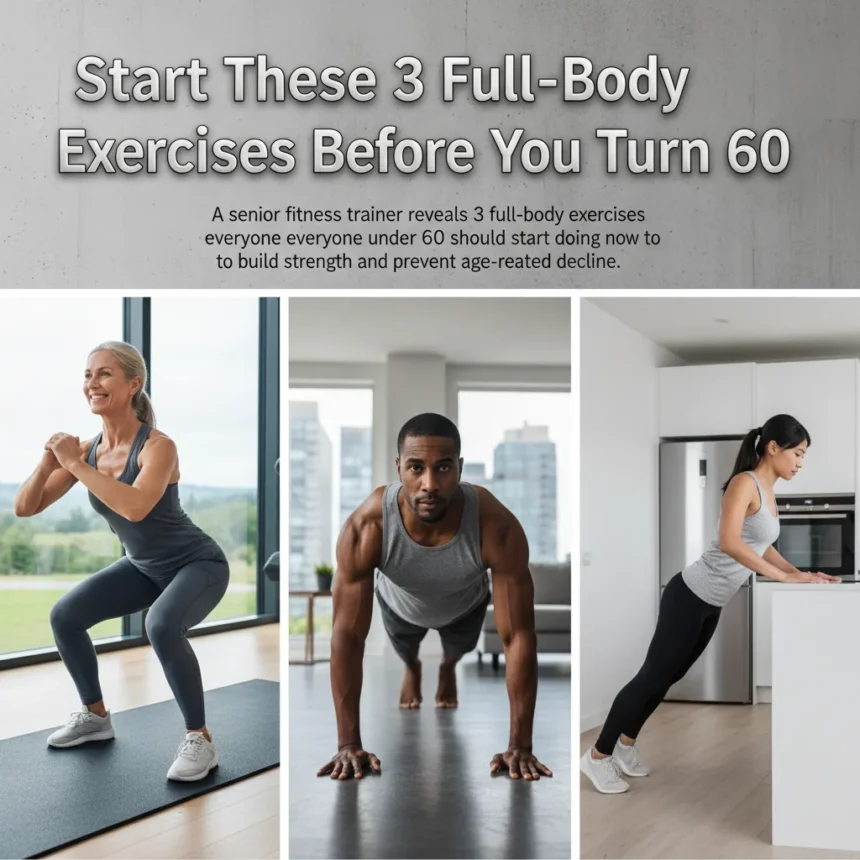
A personal trainer specializing in senior fitness recommends starting full-body exercises now, even if you’re decades away from turning 60. The logic is simple: building strength and functional movement patterns in your 40s and 50s creates a foundation that prevents falls, maintains independence, and keeps daily activities manageable as you age.
Key Takeaways
- Full-body exercises performed in circuits build strength across multiple muscle groups simultaneously.
- You need only a pair of dumbbells (10-25 pounds) and a yoga mat to get started.
- Beginners should master form unweighted before adding load.
- Perform 3 complete rounds; adjust reps, sets, or time based on your fitness level.
- Consult a doctor before starting and a certified trainer for form checks, especially if you’re new to exercise.
Why Full-Body Exercises Matter Before 60
Starting full-body exercises in your 40s and 50s isn’t vanity—it’s injury prevention. A trainer who works with seniors sees firsthand how strength and movement quality decline without intentional work. By establishing these patterns now, you’re building a buffer against future falls, weakness, and functional decline. The exercises target multiple muscle groups at once, making them time-efficient and realistic for busy schedules.
The emphasis on full-body exercises over isolated movements matters. Instead of bicep curls or leg presses alone, compound movements engage your core, lower body, and upper body simultaneously. This mirrors how your body actually moves in real life—reaching overhead while standing, carrying groceries, or rising from a chair.
The Three Full-Body Exercises to Start Now
You’ll need a pair of moderately-heavy dumbbells (10-25 pounds) and a yoga mat. The trainer recommends performing these as a circuit: complete one set of each exercise, rest briefly, then repeat for 3 full rounds. Beginners can reduce reps, sets, or time—or perform movements unweighted until form is solid.


The first exercise targets your deep core and glutes. From all fours on your mat, engage your core and extend your left leg straight back while simultaneously extending your right arm forward. Hold briefly, return to start, and alternate sides for 10-12 repetitions per side. This movement—often called a bird dog—trains stability and balance while strengthening the posterior chain, which is critical for fall prevention as you age.
The second movement builds lower-body and core strength. This exercise can be performed with dumbbells held at shoulder height or unweighted, depending on your fitness level. The motion engages your quads, glutes, and core simultaneously, making it a true full-body movement despite its focus on the lower half.



The third exercise addresses anti-rotational strength and core endurance. Performed on the floor, it targets your glutes, quads, shoulders, and arms while building the rotational stability your spine needs for daily movement. These movements together create a balanced routine that addresses strength, stability, and mobility.
How to Progress Your Full-Body Exercises
Progression follows a clear path: master form unweighted, add dumbbells, then increase reps, time, or sets. Don’t rush this. A personal trainer working with seniors emphasizes that sloppy form under load creates injury risk, not strength. Spend your first 1-2 weeks performing the full-body exercises with bodyweight only, focusing on controlled movement and proper engagement of target muscles.
Once form feels solid, introduce dumbbells in the 10-15 pound range. Complete all 3 rounds with this weight, maintaining perfect technique. When the weight feels light, increase to 15-20 pounds or add an extra round. This gradual approach builds durability—the ability to handle load safely over years, not just weeks.
What You’ll Need and Safety Considerations
Equipment is minimal: a pair of dumbbells (10-25 pounds) and a yoga mat. Before starting any new exercise program, check with your doctor, especially if you have existing injuries, joint issues, or are returning from time off. If you’re new to strength training, a certified personal trainer can assess your form and suggest modifications tailored to your body.



Perform these full-body exercises 2-3 times per week, allowing at least one rest day between sessions. This frequency builds strength without overtraining. If you experience sharp pain (not muscle fatigue), stop and consult a professional before continuing.
Full-Body Exercises vs. Isolated Movements
Why full-body exercises instead of split routines targeting one muscle at a time? Compound movements are more time-efficient and more closely mimic real-world function. When you carry groceries, your core, legs, and arms work together—not in isolation. A split routine of bicep curls and leg presses misses this integration. Full-body circuits train your nervous system to coordinate multiple muscle groups, which is exactly what prevents falls and maintains independence as you age.
Can beginners do these full-body exercises?
Yes. Start unweighted and focus entirely on form—controlled movement, proper breathing, and full range of motion. Many beginners find that bodyweight alone is challenging enough for the first 2-3 weeks. Progress to dumbbells only when each movement feels smooth and you can complete all reps without compensating or losing posture.
How often should I perform these full-body exercises?
Perform them 2-3 times per week as a circuit, with at least one rest day between sessions. This frequency allows adequate recovery while building consistent strength. More frequent training without proper recovery increases injury risk and actually slows progress.
What if I don’t have dumbbells?
Start unweighted and master form first. Once you’re comfortable, dumbbells are inexpensive and widely available. You can also use water bottles, cans, or resistance bands as alternatives, though the trainer recommends dumbbells for their balance and ease of progression.
Starting full-body exercises now—before you’re 60—is an investment in your future independence. You’re not training for vanity or competition; you’re building the strength and movement quality that keeps you functional, confident, and active for decades to come. The time to start is today.
Edited by the All Things Geek team.
Source: Tom's Guide