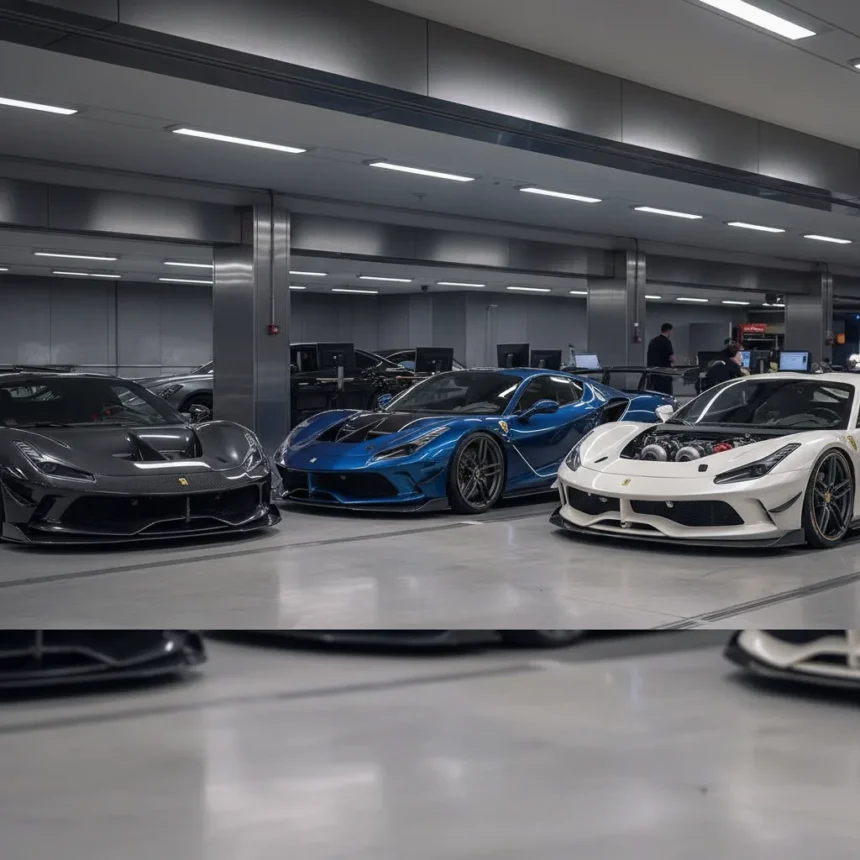
Ferrari’s divisive Luce design has barely hit the road before aftermarket tuners are already swinging at it with widebody kits and carbon fiber panels. The question is not whether they will try to fix what many see as a design misstep—the question is whether they can succeed at all.
Key Takeaways
- Aftermarket tuners are responding immediately to Ferrari’s polarizing Luce design
- Proposed modifications include widebody kits and extensive carbon fiber treatments
- Critics argue that cosmetic changes cannot address fundamental styling concerns
- The Luce’s divisive reception highlights ongoing debate about modern Ferrari aesthetics
- Tuning attempts suggest the car’s design is controversial enough to warrant major alterations
Why Tuners Are Already Modifying the Ferrari Luce Design
The speed at which aftermarket shops are tackling the Ferrari Luce design speaks volumes about how polarizing the car’s styling has become. Rather than wait for customer demand, tuners are proactively developing modifications—widebody kits and carbon fiber components—to address what they perceive as design shortcomings. This aggressive response suggests the Luce has generated enough debate that tuners see a market opportunity in offering alternatives to Ferrari’s original vision.
Widebody kits fundamentally change a car’s proportions by extending the fenders and adding aggressive aerodynamic elements. For the Luce, these modifications aim to add visual aggression and presence that critics argue the original design lacks. Carbon fiber treatments—whether replacing body panels, adding splitters, or creating new visual accents—promise weight savings and a more aggressive aesthetic. The combination targets both function and form, suggesting tuners believe the Luce needs both structural and visual overhauls.
Can Carbon Fiber and Widebody Kits Save the Ferrari Luce Design
The honest answer is probably not. No amount of carbon fiber or aggressive body work can fix a design that fundamentally divides opinion at its core. When a car’s proportions, silhouette, or overall direction feel wrong to a significant portion of its audience, bolt-on modifications address symptoms, not the disease. The Luce’s divisive reception is not about missing aero elements or dull panel work—it is about whether the design direction itself resonates with Ferrari’s core identity and expectations.

Widebody kits can make a car look meaner and more planted. Carbon fiber can reduce weight and add visual aggression. But neither addresses the core criticism: that the Luce’s styling departs so dramatically from Ferrari tradition that no amount of tuning can restore what many feel was lost. A widebody Luce might look more aggressive, but it will still be a Luce. For those who dislike the design fundamentally, that is the problem.
The Larger Question: Modern Ferrari Design Direction
The immediate flood of aftermarket modifications to the Ferrari Luce design raises a bigger question about where Ferrari is heading aesthetically. The company has long balanced innovation with heritage, but recent designs have pushed that balance harder toward experimentation. The Luce is not the first Ferrari to spark debate, but the speed and intensity of the tuning response suggests this particular car has struck a nerve.



Tuners jumping on the design immediately reveals that Ferrari’s in-house vision for the Luce is not universally accepted—even among the brand’s most enthusiastic supporters and modification specialists. When tuners feel compelled to offer radical alternatives within weeks of a car’s arrival, it signals that the original design has failed to convince a meaningful segment of the market. Whether that is Ferrari’s problem or simply the reality of modern design—where polarization is sometimes the price of innovation—remains an open debate.
How Does the Luce Compare to Previous Ferrari Models
The Ferrari Luce design stands apart from its predecessors in its willingness to challenge traditional proportions and visual language. Where earlier Ferraris emphasized flowing lines and instantly recognizable silhouettes, the Luce takes a more angular, experimental approach. This departure is precisely what makes it so divisive. Tuners are not rushing to modify classic Ferraris with widebody kits and carbon fiber—those cars already achieved a design consensus. The Luce’s need for immediate aftermarket intervention suggests it has not achieved that same acceptance, and may never.
Is the Ferrari Luce worth buying despite the divisive design
That depends entirely on whether you find the design appealing in the first place. If you love the Luce’s bold, modern direction, the car is worth owning as Ferrari intended it. If you dislike the styling, no amount of tuning will change your mind—and attempting to fix it with a widebody kit will likely make it worse, not better. The real question is whether you are buying a Ferrari for its heritage and traditional aesthetics, or for its innovation and willingness to push boundaries.
Will Ferrari respond to criticism of the Luce design
Ferrari has not publicly commented on the divisive reception or the immediate tuning response, and the company is unlikely to redesign the Luce based on aftermarket modifications. Ferrari’s design direction is set by internal vision, not by what tuners think the car needs. However, the intensity of the modification efforts may inform future models—Ferrari will undoubtedly pay attention to how enthusiasts are responding and what changes they are attempting. Whether that influences the next generation of Ferrari design remains to be seen.



The Ferrari Luce design saga reveals a fundamental truth about modern automotive culture: when a car divides opinion sharply enough, tuners will immediately offer alternatives. But cosmetic fixes and aggressive body work cannot resolve a design disagreement that runs deeper than aerodynamics or weight distribution. The Luce will remain divisive, and aftermarket shops will keep selling widebody kits to those who want to improve it. Whether that improves the car or simply masks its problems is a question each owner will have to answer for themselves.
Edited by the All Things Geek team.
Source: TechRadar