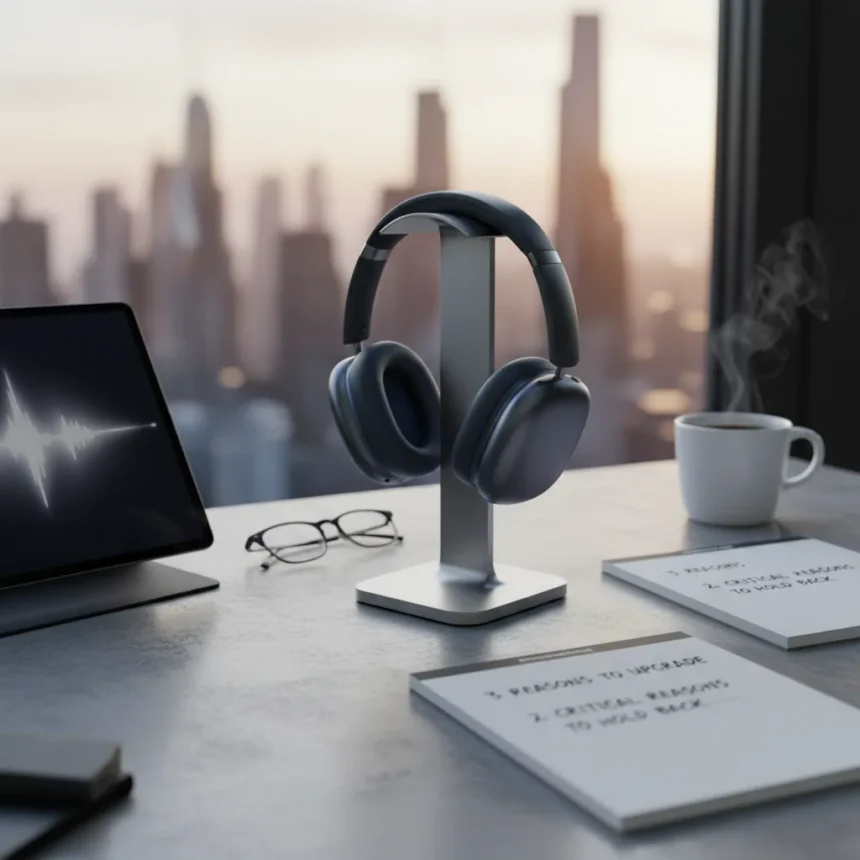
AirPods Max 2 are shipping now, and Apple’s premium headphones have landed with a refined feature set that appeals to some users while leaving others cold. The question isn’t whether they’re good—they clearly are. The question is whether they’re right for you.
Key Takeaways
- AirPods Max 2 feature Apple’s H2 chip for improved performance and connectivity.
- Three compelling reasons exist to buy: superior spatial audio, seamless Apple ecosystem integration, and refined build quality.
- Two solid reasons to skip: premium pricing and limited cross-platform compatibility with Android devices.
- Shipping availability is now live globally across multiple retailers.
- The upgrade path depends entirely on your existing audio setup and ecosystem commitment.
Why AirPods Max 2 Matter Right Now
Apple’s AirPods Max 2 represent a meaningful refinement rather than a revolutionary leap. The H2 chip powers improved performance across the board, and early reviews suggest these headphones finally nail the balance between premium sound and intuitive Apple ecosystem integration that the original Max struggled to achieve. For anyone already deep in the Apple ecosystem, this is the moment to seriously evaluate whether the investment makes sense.
The timing matters because AirPods Max 2 are shipping immediately, not coming in months. That urgency—combined with the refined feature set—is why tech buyers are actively comparing them to alternatives right now.
Three Reasons to Buy AirPods Max 2
The strongest case for AirPods Max 2 centers on spatial audio, ecosystem lock-in, and build refinement. If these three factors align with your needs, the headphones deliver genuine value.



First, spatial audio implementation has matured. Early adopters complained that spatial audio felt gimmicky on the original Max. AirPods Max 2 have converted skeptics—reviewers who dismissed the feature now use it daily because the execution finally feels natural rather than forced. For anyone serious about Atmos music, this matters enormously.
Second, if you own an iPhone, iPad, Mac, and Apple Watch, AirPods Max 2 integrate smoothly across all devices. Switching between them is instantaneous. No Android phone, no Pixel Watch, no Windows machine to complicate the handoff. That frictionless ecosystem experience is worth real money to people who’ve chosen Apple across the board. Competitors like Sony and Bose offer great headphones, but they cannot match this depth of integration.



Third, the build quality feels genuinely premium. The materials, the fit, the weight distribution—these are refined from the original. If you’ve worn cheap headphones for years, stepping into AirPods Max 2 feels like a tangible upgrade in daily comfort and durability.
Two Reasons to Skip AirPods Max 2
Price and platform compatibility are the two legitimate deal-breakers for most people. Neither is a minor concern.
The price is genuinely steep. AirPods Max 2 sit at the premium end of the headphone market, and that cost only makes sense if you’re already committed to Apple’s ecosystem. If you’re a mixed-device household—iPhone plus Windows laptop, for example—the seamless integration advantage evaporates, and you’re paying flagship prices for headphones that don’t unlock their full potential. Competitors offer comparable sound quality at lower prices if you’re willing to sacrifice that Apple ecosystem magic.
Second, Android compatibility is limited. Yes, you can technically pair AirPods Max 2 with Android phones, but you lose the spatial audio features, the quick switching, and the tight integration that make these headphones special. If you use Android as your primary phone or tablet, AirPods Max 2 are objectively worse than pairing them with an iPhone. You’re paying Apple premium prices for a degraded experience. That’s a hard sell.



AirPods Max 2 vs. the Competition
Sony’s WH-1000XM5 and Bose’s QuietComfort Ultra remain serious alternatives. Both offer excellent noise cancellation and sound quality at comparable or lower price points. The key difference isn’t audio fidelity—all three are excellent. The difference is ecosystem. Sony and Bose headphones work equally well across Apple, Android, Windows, and Mac. AirPods Max 2 thrive in Apple environments and tolerate everything else. If you’re platform-agnostic, Sony or Bose make more logical sense. If you’re all-in on Apple, AirPods Max 2 pull ahead through integration alone.
Should You Buy AirPods Max 2?
Buy AirPods Max 2 if you own an iPhone, iPad, Mac, and Apple Watch. The seamless ecosystem integration and spatial audio implementation justify the premium price for people who’ve already chosen Apple across the board. Skip them if you use Android as your primary device, own a Windows laptop, or want headphones that perform equally well across all platforms. The premium pricing only makes sense when you unlock the full feature set, and Android users simply cannot do that.
Can you use AirPods Max 2 with Android phones?
Yes, AirPods Max 2 pair with Android devices via Bluetooth, but you lose spatial audio, automatic switching, and other Apple-specific features. The headphones function, but at a reduced capability level compared to iPhone pairing.
How do AirPods Max 2 compare to the original AirPods Max?
AirPods Max 2 feature Apple’s H2 chip for improved performance and refined build quality compared to the original generation. The spatial audio implementation is more mature and natural, converting early skeptics into regular users. If you own the original Max, the upgrade is worthwhile only if ecosystem integration or spatial audio are high priorities for you.
What’s the shipping timeline for AirPods Max 2?
AirPods Max 2 are shipping now globally. Availability is immediate at Apple’s retail locations and authorized retailers worldwide, with no waitlist or delay expected.
The verdict is straightforward: AirPods Max 2 are genuinely excellent headphones, but they’re only the right choice if you’ve already committed to Apple’s ecosystem. For everyone else, the premium price tag demands a platform-agnostic experience that these headphones simply cannot deliver. Know your ecosystem before you buy.
Edited by the All Things Geek team.
Source: Tom's Guide