






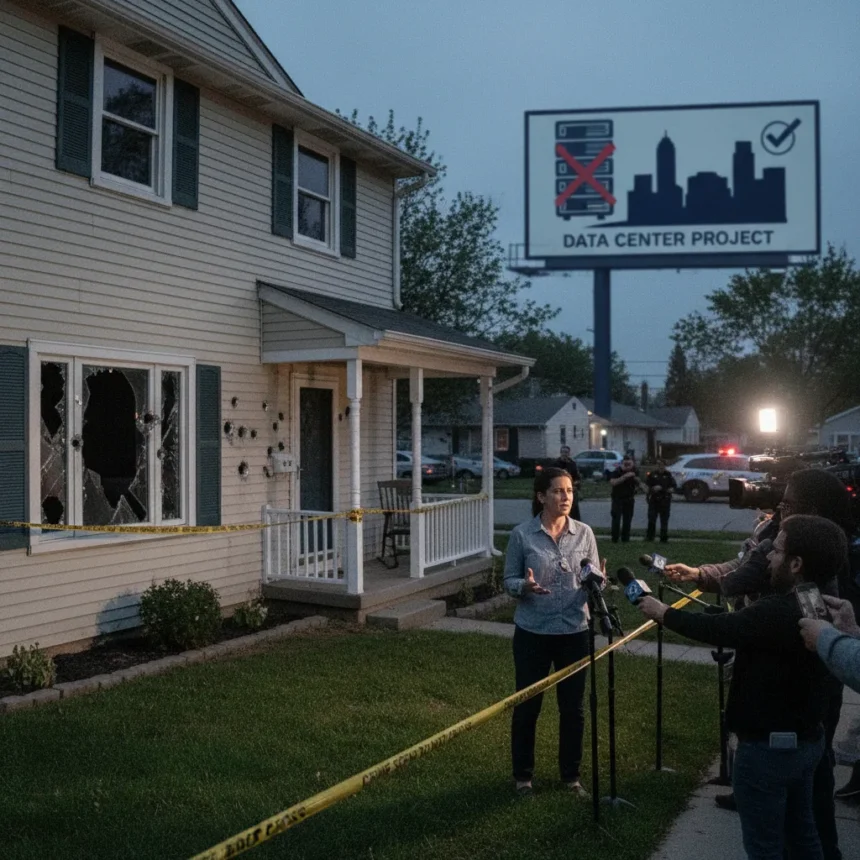
A data center dispute in Indianapolis escalated to violence early Monday when 13 rounds were fired at the home of City-County Councilor Ron Gibson, who backed a controversial Metrobloks LLC project. The shooting, which occurred between 12:45 a.m. and 12:50 a.m. on April 6, 2026, left a chilling message: a note reading “NO DATA CENTERS” tucked under a doormat on Gibson’s doorstep.
Key Takeaways
- Thirteen rounds fired at Indianapolis councilor’s home over data center project support on April 6, 2026.
- Note reading “NO DATA CENTERS” left at scene; councilor and 8-year-old son unharmed but awakened by gunfire.
- Indianapolis Metropolitan Police and FBI investigating as “isolated, targeted incident” linked to Metrobloks rezoning approval.
- Metrobloks data center at 2505 North Sherman Drive in Martindale-Brightwood still requires City-County Council approval.
- Neighborhood opposition group condemned shooting but denies involvement in attack.
What Happened That Night
Gibson and his 8-year-old son were asleep when bullets shattered the screen door window at their northeast Indianapolis home. The front door bore 13 apparent bullet holes. Gibson woke to the gunfire and immediately ran to his son’s room to reassure him of his safety. “My 8-year-old son and I were not physically harmed, but we were awakened by the sound of gunfire,” Gibson said. “Like any parent, I immediately ran to him and reassured him that he was safe.”
The family did not call police until around 9 a.m. that morning, hours after the attack. By that time, the note had been discovered on the doorstep, making the motive unmistakably clear: opposition to the data center project Gibson had backed.
The Data Center Dispute Behind the Attack
The shooting stems directly from Gibson’s support for the Metrobloks LLC data center project proposed for 2505 North Sherman Drive in the Martindale-Brightwood neighborhood. The Indianapolis Metropolitan Development Commission approved the construction and rezoning on April 1, 2026, just five days before the shooting. However, the project still requires approval from the Indianapolis City-County Council, where Gibson serves his third term.


Gibson faced vocal opposition at a Metropolitan Development Commission meeting prior to the approval vote, where he was booed by residents. The neighborhood group Protect Martindale-Brightwood has actively opposed the project, though the organization condemned the shooting and denied any involvement. “This was not just an attack on my home, but endangered my child and disrupted the safety of our entire neighborhood,” Gibson said.
Data center disputes have become increasingly contentious in American cities as communities grapple with the infrastructure demands of artificial intelligence and cloud computing. The Martindale-Brightwood case illustrates how local development decisions—once settled through city council votes and zoning hearings—can now trigger extreme reactions when residents fear neighborhood transformation.



Law Enforcement Response and Investigation
The Indianapolis Metropolitan Police Department is leading the investigation and has classified the attack as an “isolated, targeted incident,” with the FBI assisting authorities. The framing as “isolated” suggests investigators do not believe it signals a broader campaign of violence, though the deliberate nature of the attack—13 rounds, a written message, targeting a specific councilor’s home—indicates careful planning.
Gibson reflected on the broader implications of the attack. “I understand that public service can bring strong opinions and disagreement, but violence is never the answer, especially when it puts families at risk,” he said. The councilor called the attack “deeply unsettling,” a measured response to what many would describe as domestic terrorism.
What Happens Next for the Metrobloks Project
Despite the violence, the data center project remains on track for City-County Council approval. Gibson has not indicated whether the shooting will change his vote or position on the Metrobloks development. The project’s fate now rests with the full council, where residents and advocacy groups will likely intensify opposition in light of the attack.
The incident raises uncomfortable questions about how far opposition to local development can escalate. While Protect Martindale-Brightwood and other neighborhood groups have legitimate concerns about data center impacts—noise, energy consumption, traffic—the shooting represents a violent rejection of democratic process. The attack cannot be justified as protest or advocacy; it is a criminal act designed to intimidate an elected official.



Why This Matters for Local Development Across America
Data centers are becoming flashpoints in American cities as demand for computing power surges. Communities want the economic benefits—tax revenue, jobs—but fear the environmental and quality-of-life costs. Indianapolis is not alone in facing this tension, but the shooting there suggests the conflict is reaching dangerous levels.
The violence also underscores a troubling trend: elected officials increasingly face threats and attacks over policy decisions. Gibson’s experience is a stark reminder that local governance, once seen as the safest level of politics, now carries real physical risk.
Is the Metrobloks data center still moving forward?
Yes. The Indianapolis Metropolitan Development Commission approved the rezoning and construction on April 1, 2026, and the project still requires City-County Council approval. The shooting has not halted the process, though it may influence council members’ votes or public debate.
What did the note at the shooting scene say?
The note read “NO DATA CENTERS” and was left in a zip-closed bag on Gibson’s doorstep, tucked under a doormat. The message made clear that the attack was motivated by opposition to the Metrobloks project.
Was anyone injured in the shooting?
No. Gibson and his 8-year-old son were inside the home and awakened by gunfire but were not physically harmed. Thirteen rounds were fired at the front door, shattering a screen door window.
The Indianapolis shooting represents a critical moment for American cities grappling with infrastructure demands and community opposition. Violence cannot be the answer to zoning disputes, no matter how strongly residents feel about development. What remains to be seen is whether the attack will change the trajectory of the Metrobloks project—or whether democratic processes will prevail despite the intimidation.
Edited by the All Things Geek team.
Source: Tom's Hardware