





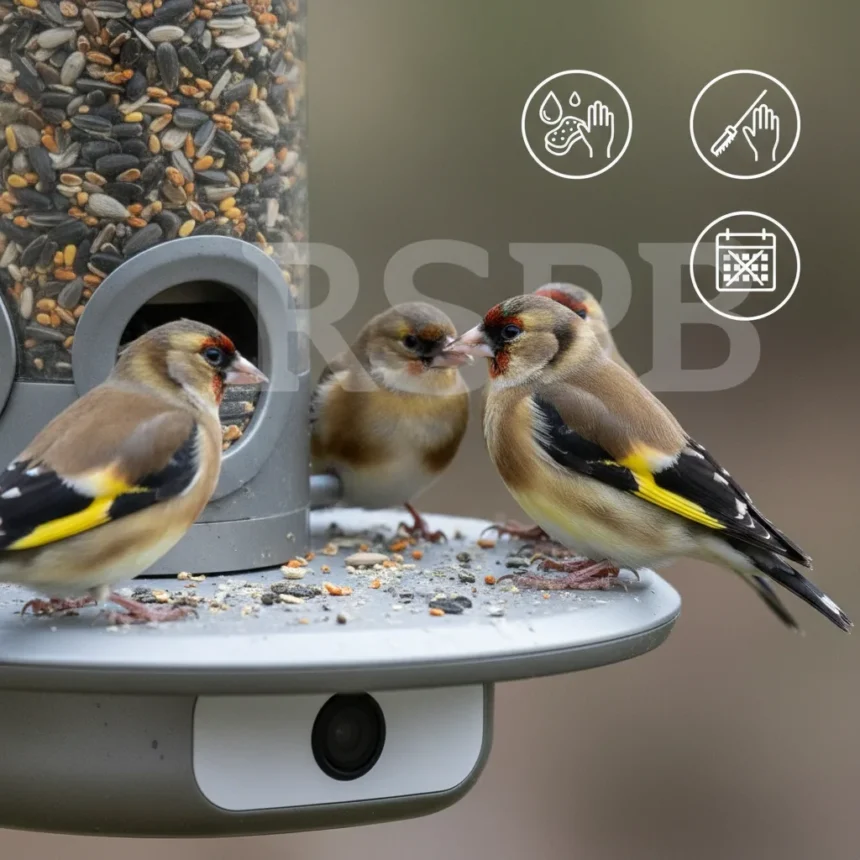
Bird feeder cameras disease risks are mounting as the Royal Society for the Protection of Birds (RSPB) issues an urgent warning about flat-surface feeders that expose finches to illness. If you own one of these popular wildlife gadgets, you may be inadvertently harming the birds you’re trying to watch. The RSPB has suspended sales of bird tables, window feeders, and related products with trays as a precautionary measure while reviewing whether their design spreads pathogens among vulnerable bird populations.
Key Takeaways
- RSPB suspended flat-tray bird feeders due to disease exposure risks for finches and other species.
- Many bird feeder cameras use tray-based designs that concentrate birds and increase infection spread.
- Pack away feeders during warmer months when disease transmission peaks among bird populations.
- Standalone cameras mounted on trayless feeders reduce disease risk while maintaining viewing pleasure.
- Responsible use requires regular cleaning, proper food selection, and positioning for bird safety.
Why Bird Feeder Cameras Pose a Disease Risk
The RSPB’s decision to halt sales of flat-surface feeders stems from evidence showing that birds, particularly finches, face heightened disease exposure when feeding on trays. These shallow, open surfaces concentrate multiple birds in tight proximity, creating ideal conditions for pathogen transmission. Many popular bird feeder cameras are designed with integrated trays or flat bases—a structural choice that prioritizes camera angles and stability over bird health. When birds crowd together on these surfaces, diseases spread rapidly through direct contact and contaminated food residue.
The problem intensifies during warmer months when bacterial and fungal infections thrive. Birds naturally congregate more densely during these periods, and the combination of elevated temperatures and crowded feeding stations accelerates disease transmission. If your bird feeder camera includes a tray component, you’re essentially creating a petri dish for illness. The RSPB’s precautionary suspension acknowledges this risk even before definitive research is complete, signaling that the threat is serious enough to warrant immediate action.
3 Tips for Using Bird Feeder Cameras Safely
If you’re unwilling to abandon bird feeder cameras entirely—and many enthusiasts find them too rewarding to give up—follow these three evidence-based strategies to minimize harm. These steps align with ethical bird photography guidelines and RSPB recommendations for responsible wildlife observation.

1. Swap tray feeders for trayless alternatives. The most direct way to reduce disease risk is to eliminate the flat-surface component altogether. Standalone bird feeder cameras can be mounted on tube feeders, nyjer feeders, or suet feeders that lack trays. Green Feathers offers a WiFi Bird Feeder HD Camera Pack that includes a small tray, but crucially, that tray can be swapped for a trayless feeder design. This flexibility lets you capture compelling footage without concentrating birds on contaminated surfaces. If your current camera is built into a tray, consider upgrading to a model with mounting flexibility.
2. Pack away feeders during warmer months. Disease transmission accelerates when temperatures rise, making spring and summer the highest-risk seasons for bird populations. The responsible approach is to store your bird feeder camera and feeders indoors during these months, resuming use only in autumn and winter when infection rates drop naturally. This seasonal pause feels counterintuitive—summer is peak bird activity season—but it directly protects the species you’re trying to observe. Think of it as a mandatory rest period that benefits wildlife more than your viewing schedule.



3. Prioritize cleanliness, correct food, and safe positioning. Whether using a trayless setup or temporarily suspending use, maintain rigorous hygiene standards when feeders are deployed. The National Audubon Society’s ethical guidelines emphasize keeping bird feeding stations clean, stocked with appropriate food, and positioned with birds’ safety in mind. This means regular disinfection of camera equipment, avoiding moldy or contaminated seed, and ensuring the feeder placement doesn’t expose birds to predators or environmental hazards. A clean feeder reduces disease risk even on tray-based designs, though it does not eliminate it entirely.
Bird Feeder Cameras vs. Trayless Alternatives
The market offers competing approaches to bird observation. Integrated tray-based cameras like many mainstream models prioritize convenience and all-in-one design but carry higher disease risk. Standalone cameras paired with trayless feeders require more setup effort but align with RSPB safety recommendations. The Green Feathers WiFi Bird Feeder HD Camera Pack bridges this gap by offering a modular system where the feeder component can be customized. Meanwhile, cameras like the Dzees Bird Feeder Cam function as dual-purpose security and wildlife tools, though they suffer from oversensitivity—triggering on passing cars, pedestrians, and wind rather than birds. Bird Buddy uses AI to identify species and share observations online, raising separate ethical concerns about whether intensive observation disturbs natural behavior. No option is perfect, but trayless setups clearly outperform tray-based designs from a disease-prevention standpoint.
Beyond Disease: Other Risks of Bird Feeder Cameras
Disease transmission is the headline concern, but bird feeder cameras introduce secondary harms worth considering. Security-focused models often trigger false alerts on irrelevant motion, wasting storage space and battery life while providing poor bird footage. Privacy risks emerge when cameras connect to home networks—hacking and data breaches expose your video feed to unauthorized access. Some observers worry that intensive monitoring and artificial luring via feeders disrupts birds’ natural foraging behavior and migration patterns, though this concern applies more broadly to all feeding stations, not cameras specifically. Responsible use means weighing these trade-offs honestly rather than assuming that technology is automatically benign because it serves your interests.
Is a bird feeder camera safe to use year-round?
No. The RSPB recommends packing away bird feeder cameras during warmer months when disease risk peaks. Year-round use with a tray-based feeder significantly increases disease exposure for finches and other species. If you use a trayless setup with rigorous cleaning protocols, risk is lower, but seasonal dormancy remains the safest approach.



What should I do if I already own a tray-based bird feeder camera?
Immediately stop using it and store it indoors. If the feeder component is removable, replace it with a trayless alternative before resuming use. If the camera and tray are integrated, consider upgrading to a modular system like the Green Feathers pack that allows tray swapping. Do not continue operating a tray-based camera—the disease risk to finches and other birds outweighs your viewing pleasure.
Can I clean a tray feeder to make it safer?
Regular cleaning reduces disease risk but does not eliminate it. The fundamental problem is that trays concentrate birds in close proximity, which inherently accelerates pathogen transmission regardless of hygiene. Cleaning helps, but a trayless feeder is always safer than a cleaned tray feeder.
The RSPB’s urgent warning reflects a growing recognition that wildlife gadgets carry real consequences. Bird feeder cameras are not inherently harmful—they can deepen your connection to nature and provide genuine joy. But that benefit only holds if the birds you’re watching survive and thrive. By choosing trayless designs, packing away feeders seasonally, and maintaining scrupulous cleanliness, you can enjoy bird observation without becoming an unwitting vector for disease. The choice to use bird feeder cameras responsibly is ultimately a choice to prioritize the welfare of the creatures you’re trying to appreciate.
Edited by the All Things Geek team.
Source: TechRadar




