Project Helix next-generation Xbox is Microsoft’s audacious bet that the future of gaming belongs to neither consoles nor PCs—but to a unified machine that plays both. Revealed at the Game Developers Conference on March 11-12, 2026, this codename represents the company’s most ambitious hardware pivot since the original Xbox, powered by custom AMD silicon designed to erase the line between living room and desktop gaming.
Key Takeaways
- Project Helix is a PC-console hybrid powered by custom AMD SoC, unifying Xbox and Windows gaming ecosystems.
- Features next-gen DirectX with work graphs, FSR Diamond upscaling, and order-of-magnitude ray tracing performance leap.
- Alpha developer kits ship in 2027; consumer launch likely late 2027 or later, following the 7-year cycle from Xbox Series X/S.
- Xbox Mode rolling out to Windows in select markets starting April 2026, bringing console experience to PC.
- Eliminates traditional console exclusives, signaling a fundamental shift in how Microsoft approaches gaming hardware.
The Architecture: AMD, DirectX, and a GPU Revolution
At its core, Project Helix is powered by a custom AMD System on Chip featuring next-generation RDNA architecture, likely RDNA 5. This is not a refreshed console spec—it is a generational leap designed specifically for a unified gaming ecosystem. The hardware integrates with next-generation DirectX, including a feature called work graphs that enables GPU-driven code execution, a capability not fully supported on current Xbox Series consoles. This architectural shift matters because it allows developers to offload more compute work directly to the GPU, reducing CPU bottlenecks that have constrained current-generation console gaming.
The real story, however, lives in the graphics pipeline. Project Helix delivers an order-of-magnitude leap in ray tracing performance, integrating machine learning into the rendering process itself. This is not simply better ray tracing—it is ray tracing augmented by neural networks. The console will feature FSR Diamond (or FSR Next), Microsoft and AMD’s machine learning-based upscaling technology, alongside ray regeneration for both ray tracing and path tracing, neural rendering, multi-frame generation, and neural texture compression. Each of these technologies represents a different way AI accelerates graphics without sacrificing visual quality. DirectStorage technology combines with Zstd compression to accelerate SSD-to-GPU communication, ensuring that the machine’s storage speed translates into faster load times and larger in-memory asset pools.
The Timing: 2027 for Developers, Late 2027 for Everyone Else
Alpha developer kits are shipping to creators starting in 2027, giving studios roughly a year to begin porting and optimizing before consumer launch. Microsoft expects consumer availability in late 2027 or later, aligning with the traditional 7-year console cycle that began with Xbox Series X and Series S in November 2020. This timeline is ambitious but realistic—it gives AMD time to finalize manufacturing and Microsoft time to address any component shortages that could delay production.

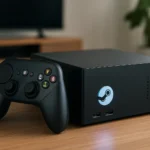
Before the hardware arrives, Xbox Mode is rolling out to Windows PCs in select markets beginning April 2026. This software feature brings the console experience to PC, a capability previously tested on the Asus ROG Ally. The distinction matters: Xbox Mode is not about making Windows gaming look like a console dashboard. It is about creating a unified experience where the same games, saves, and ecosystem work smoothly across both devices. This is the philosophical core of Project Helix—not two separate platforms, but one ecosystem wearing different hardware forms.
The Ecosystem Gamble: Console Exclusives Are Dead
By design, Project Helix eliminates the traditional console exclusive. If a game runs on Project Helix, it runs on PC. If it runs on PC, it runs on Project Helix. This is both the console’s greatest strength and its deepest vulnerability. Strength because developers gain a massive addressable market—every PC gamer becomes a potential console customer. Vulnerability because the distinction between buying a console and upgrading a gaming PC collapses.


Sony’s anticipated response—the PlayStation 6—will face a strategic choice: maintain exclusives and accept a smaller ecosystem, or follow Microsoft’s lead toward convergence. Sony has already begun shifting away from PC releases for exclusive titles, a signal that the company recognizes the threat. The traditional console war assumed that hardware exclusivity drove adoption. Project Helix bets that ecosystem integration and performance will matter more than artificial scarcity. History will judge whether this gamble pays off.
What Project Helix Means for Developers
From a developer perspective, Project Helix is a gift and a challenge. The gift is unified hardware—studios can optimize once for a single architecture and reach both console and PC audiences. The challenge is that the hardware is genuinely new. Work graphs, FSR Diamond, neural rendering, and multi-frame generation are not standard tools in most game engines yet. Unreal Engine and Unity will need to expose these capabilities, and developers will need to learn them. The alpha kits arriving in 2027 are partly about giving studios a head start on this learning curve.
The partnership between Microsoft and AMD signals a multi-year commitment to pushing rendering and simulation boundaries. This is not a one-off hardware refresh. It is a statement that AI-accelerated graphics and compute are the future of game development, and Microsoft is betting its next console on that conviction. Whether developers embrace this vision or resist it as unnecessary complexity will shape Project Helix’s success.
Why the Name Is Just a Codename
Project Helix is not the final product name—it is a codename that has stuck in the press. The final branding remains unannounced. This matters because a console’s name shapes perception. Xbox Series X felt like a graphics card designation. PlayStation 5 felt like a generation number. Project Helix’s final name will carry symbolic weight, signaling whether Microsoft sees this as an evolution of Xbox or a complete reimagining of what an Xbox is.


Is Project Helix the end of traditional consoles?
Not entirely, but it is a fundamental shift. Project Helix proves that Microsoft no longer believes in the console as a distinct product category. Instead, it is a high-performance PC in a living room form factor. This does not kill consoles—it redefines them as one option within a broader ecosystem. Developers and players will decide whether this hybrid approach is liberating or confusing.
When will Project Helix launch, and how much will it cost?
Consumer launch is expected in late 2027 or later, with alpha kits shipping to developers in 2027. Pricing has not been announced. Microsoft’s decision to return manufacturing in-house could affect the final price, but no details have been shared.
How does Project Helix compare to the current Xbox Series X?
Project Helix is a generational leap in architecture and capability. The Series X lacks full DirectX 12 features like work graphs and cannot match Project Helix’s ray tracing performance or neural rendering capabilities. The Series X is a traditional console; Project Helix is a PC-console hybrid designed for a unified gaming ecosystem.
Project Helix represents a bet that the future of gaming is not about exclusive hardware or exclusive games, but about unified ecosystems where the same code runs everywhere. Whether that vision excites or unsettles you depends on what you value most: hardware innovation, ecosystem convenience, or the tradition of console identity itself. Microsoft has chosen to bet on the latter two. The market will decide if that was the right call.
Edited by the All Things Geek team.
Source: Windows Central