







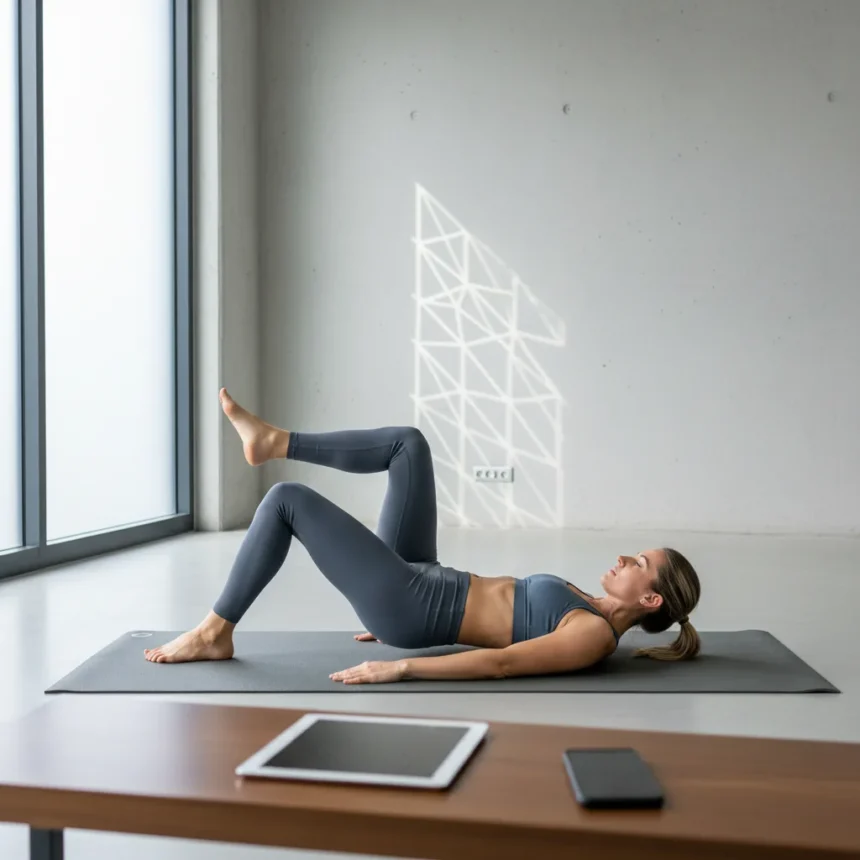
Alternating heel taps are a deceptively simple bodyweight move that targets the muscles sit-ups and crunches completely miss. While everyone obsesses over visible abs, your deep core—the transverse abdominis—does the real work of stabilizing your spine and supporting your pelvic floor. This exercise delivers that functional strength without the neck strain or lower back compression that plague traditional crunches.
Key Takeaways
- Alternating heel taps engage the transverse abdominis, unlike sit-ups which target only superficial rectus abdominis muscles.
- The exercise requires keeping your lower back pressed into the mat to activate deep core stabilizers and prevent injury.
- Modifications and progressions make alternating heel taps accessible for beginners and scalable for advanced trainees.
- No equipment needed—just a mat and your bodyweight, though dumbbells can add resistance for progression.
- Particularly valuable for postpartum recovery and anyone dealing with spinal instability or pelvic floor weakness.
Why Alternating Heel Taps Work Better Than Sit-Ups
Sit-ups and crunches work the rectus abdominis, the superficial muscle you see in the mirror. But they do almost nothing for spinal stability or pelvic support. Alternating heel taps, by contrast, force your transverse abdominis to fire hard, stabilizing your spine and protecting your lower back during everyday movement. This is the difference between looking strong and actually being strong.
The key distinction: when you perform alternating heel taps, you’re resisting rotation and maintaining neutral spine position under load. Your deep core muscles have to work continuously to keep your lower back pressed into the mat and prevent your hips from shifting. This mimics real-world demands far better than lying flat and crunching upward. Sit-ups are static flexion; alternating heel taps demand dynamic stabilization.
How to Perform Alternating Heel Taps Correctly
Lie on your back on an exercise mat with your knees bent and feet flat on the floor, positioned hip-width apart. Engage your core by drawing your belly button toward your spine. Place your hands by your sides or lightly behind your head—hands behind your head should feel relaxed, not pulling on your neck.
Lift your shoulders and head slightly off the mat. This is a minimal curl, not a full crunch. Reach your right hand toward your left heel, tapping it lightly while keeping your lower back pressed into the mat and your opposite hip grounded. The twist should come from your core engaging, not from rotating your hips. Return to center, then alternate to your left hand reaching your right heel.
Perform 10 to 15 taps per side for 2 to 3 sets. Breathe steadily throughout—exhale as you reach toward each heel. The motion should feel controlled and deliberate, never rushed. If your lower back lifts off the mat, you’ve lost the deep core engagement and need to reduce your range of motion.



Modifications and Progressions for All Fitness Levels
Beginners or anyone returning from lower back injury should start with a modification: keep your head and shoulders on the mat and simply slide your hands toward your heels without lifting. This reduces spinal flexion while still engaging the transverse abdominis. You’ll feel the difference immediately.
Once you build confidence, progress by adding a 2 to 3 second hold at each tap. Pause with your hand touching your heel, keeping your core tight, then return to center. Next, increase your reps or speed while maintaining control. The final progression involves holding a light dumbbell in your reaching hand, adding resistance without changing the movement pattern. Never sacrifice form for speed or weight—losing lower back contact with the mat means you’ve gone too far.
Why Alternating Heel Taps Beat Other Core Alternatives
The deadbug exercise also targets the transverse abdominis and pelvic floor, making it excellent for postpartum recovery. However, deadbugs involve limb movement in opposite patterns, which some find more complex to coordinate. Alternating heel taps are more intuitive—reach, tap, alternate—yet equally effective for spinal stabilization.
Pilates movements like the tabletop, butterfly, and pike all build deep core strength without planks or crunches. These exercises are valuable and worth exploring, but alternating heel taps require zero equipment and zero prior Pilates experience. They’re the fastest entry point to functional core training for most people.



Who Should Use This Exercise and Who Should Modify
Alternating heel taps suit most fitness levels and ages. They’re particularly valuable for postpartum individuals rebuilding core and pelvic floor function, people with spinal instability, and anyone tired of traditional abs work that leaves their back sore.
If you’re a beginner, pregnant, postpartum, or recovering from lower back injury, consult a qualified professional before starting any new exercise routine. They can assess your individual needs and ensure you’re performing the movement safely. A physical therapist can also guide you through modifications specific to your situation. This is not optional—it’s a liability safeguard and genuinely helpful.
Can alternating heel taps replace sit-ups entirely?
Yes. Alternating heel taps deliver superior functional core strength, spinal stability, and pelvic floor engagement compared to sit-ups. Unless you’re training for a specific sport that demands pure rectus abdominis endurance, alternating heel taps are the better choice for everyday fitness and injury prevention.
How often should I do alternating heel taps?
Perform alternating heel taps 3 to 4 times per week as part of your core routine. They pair well with other deep core exercises like deadbugs or Pilates movements. Rest days between sessions allow your muscles to recover and adapt.
Do I need a mat to perform alternating heel taps?
A mat provides cushioning for your spine and comfort for your lower back. If you don’t have a yoga mat, a folded towel or carpet works. The key is protecting your spine from hard flooring, not the specific surface.
Alternating heel taps represent a shift in how we think about core training. They’re not flashy, they won’t give you Instagram-worthy abs overnight, but they will build genuine functional strength that protects your spine, stabilizes your pelvis, and translates to real-world movement. That’s worth far more than a six-pack.
Edited by the All Things Geek team.
Source: Tom's Guide




