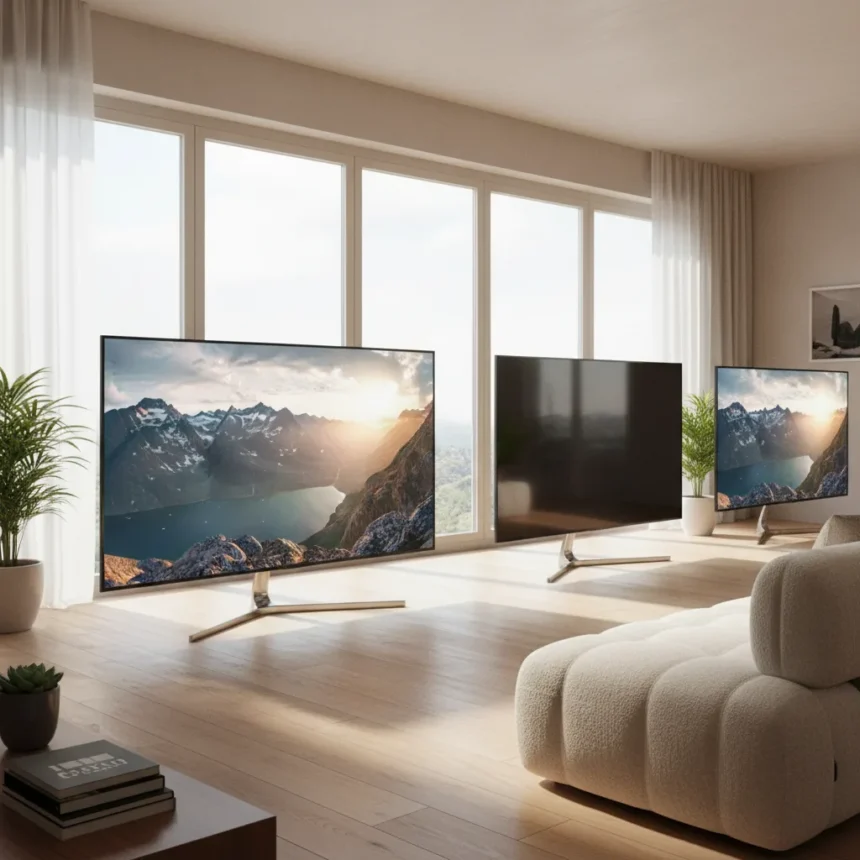
The LG G6 OLED TV is a 2026 flagship television built with a new-gen Primary Tandem RGB OLED 2.0 panel, delivering significant brightness gains and superior bright-room performance compared to its predecessor and competitors. After three weeks of testing, it emerges as the clearest winner for anyone with a naturally bright living space—a rare distinction in the OLED market, where glare and reflections have historically been dealbreakers for daylit rooms.
Key Takeaways
- LG G6 achieves 2,471 nits peak HDR brightness, up 203 nits from G5’s 2,268 nits
- Fullscreen HDR brightness reaches 455 nits versus G5’s 331 nits, a 124-nit jump
- New anti-reflective layer makes it superior to Samsung S95F for bright-room viewing
- Colors are intentionally less punchy than G5 for more natural, balanced appearance
- Post-firmware update improved perceived brightness balance without sacrificing measured performance
Why the LG G6 OLED TV Dominates Bright Rooms
The LG G6 OLED TV’s real advantage lies not in headline peak brightness but in how it handles fullscreen content in daylit environments. Its 455-nit fullscreen HDR brightness in Filmmaker Mode represents a 37 percent jump over the G5’s 331 nits. That gap matters enormously when you’re watching a snow scene or a white-walled interior in midday sunlight—the G6 maintains detail and contrast where previous OLED models would crush highlights into blown-out white. The new anti-reflective coating reduces mirror-like reflections significantly, making this the first OLED that doesn’t feel like a liability in a bright room.
Samsung’s S95F excels at eliminating reflections entirely, but the LG G6 OLED TV strikes a better balance overall. It delivers deeper blacks and more accurate contrast than Samsung’s flagship, and its reflection handling is sufficient for practical bright-room use without sacrificing the inky blacks that define OLED superiority. This is a calculated trade-off—perfection in one dimension versus excellence across the board.
The Color Philosophy Behind the LG G6 OLED TV
One of the most misunderstood aspects of the LG G6 OLED TV is its color palette in Filmmaker Mode. The colors are less vibrant and punchy than the G5 by design. LG deliberately tuned this television for natural, balanced, and authentic color reproduction rather than the eye-catching saturation that casual viewers often prefer. The result is deeper, richer contrast against paler colors and a more sophisticated image that rewards sustained viewing rather than immediate wow factor.



A firmware update deployed after launch refined this further, reducing the perceived brightness to achieve more balanced colors across scenes. The measured brightness remained nearly unchanged—less than 50 nits difference in most test windows, 10 nits in fullscreen—but the real-world improvement is tangible. Uniform white tones in snow scenes now look natural rather than blown out, and the television handles highlight detail with restraint.
LG G6 OLED TV Performance Against the G5
The LG G6 OLED TV’s 203-nit peak brightness advantage over the G5 is incremental, not revolutionary. What matters more is the 124-nit fullscreen gain and the new panel architecture that enables it. The G6 handles highlights with control that the G5 simply cannot match—in scenes like the shark attack in The Meg, the G6 preserves sun detail where the G5 produces overblown, detail-free white. The anti-reflective layer is a generational leap, transforming the OLED viewing experience in naturally bright spaces where the G5 would be problematic.



Comparison to Samsung S95F
The Samsung S95F remains exceptional at eliminating reflections—it’s the most anti-reflective OLED currently available. But the LG G6 OLED TV achieves sufficient reflection reduction for practical bright-room use while delivering superior black depth and contrast accuracy. For buyers in well-lit homes, the G6’s overall balance and highlight handling make it the stronger choice. The S95F is still the answer if you demand absolute zero reflection, but most users will find the G6’s reflection performance more than adequate and its picture quality more refined.
Is the LG G6 OLED TV Worth Upgrading From the G5?
If you own a G5 and watch primarily in controlled lighting, the upgrade is marginal. The brightness gains are real but incremental, and the color shift toward natural tones is subjective. If your G5 lives in a bright room, however, the LG G6 OLED TV becomes a compelling upgrade. The fullscreen brightness and reflection handling solve the daylit viewing problem that has plagued OLED owners for years. For new buyers, the G6 sets a high bar for 2026 flagship OLED models and establishes itself as the definitive choice for bright-room television viewing.
What Should You Expect From the LG G6 OLED TV’s Picture?
Expect a television that prioritizes accuracy and balance over visual drama. The LG G6 OLED TV won’t assault you with oversaturated colors or crushing contrast. Instead, it delivers a mature, nuanced image that improves with familiarity—the kind of picture that looks better the longer you watch it. In dark rooms, it rivals any OLED for black depth. In bright rooms, it’s in a class of its own. The firmware update ensures that brightness feels proportional to actual content rather than aggressive or unnatural.
Does the LG G6 OLED TV have better brightness than the G5?
Yes. The LG G6 OLED TV achieves 2,471 nits peak HDR brightness compared to the G5’s 2,268 nits, and 455 nits fullscreen HDR versus the G5’s 331 nits. The fullscreen gain is particularly meaningful for bright-room performance.



Is the LG G6 OLED TV better than Samsung S95F for bright rooms?
The LG G6 OLED TV is the better overall choice for bright rooms despite the S95F’s superior reflection elimination. The G6 delivers deeper blacks, more accurate contrast, and sufficient anti-reflection performance for practical daylit viewing.
Should I buy the LG G6 OLED TV if I have a dark room?
The LG G6 OLED TV excels in dark rooms too, but the brightness and reflection advantages are wasted in controlled lighting. If you primarily watch in darkness, the G5 or other flagship OLEDs offer comparable picture quality at potentially lower cost.
The LG G6 OLED TV represents a genuine breakthrough for OLED in bright rooms—not through revolutionary technology, but through thoughtful engineering that prioritizes real-world viewing conditions over spec-sheet numbers. It’s the television that finally makes OLED practical for homes flooded with daylight, a distinction that elevates it above the competition.
Where to Buy
Edited by the All Things Geek team.
Source: TechRadar