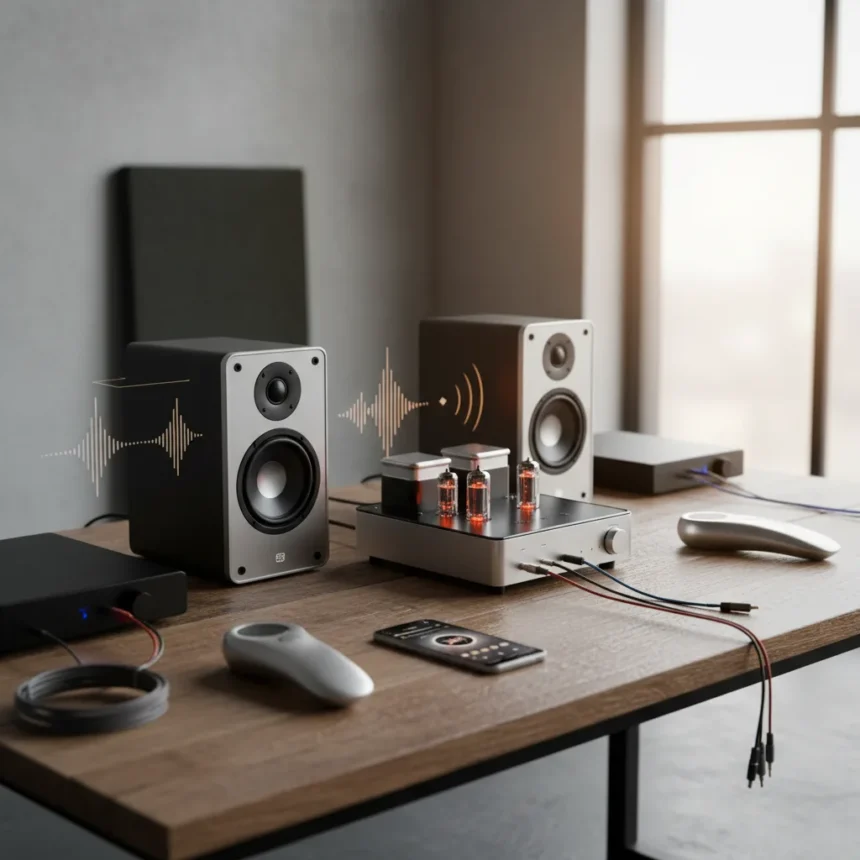
Sound quality hi-fi has long dominated the conversation among audio enthusiasts, but recent testing suggests the industry has been chasing the wrong metric. What Hi-Fi’s evaluation of hi-fi systems reveals that pure audio performance—resolution, transparency, frequency response—accounts for only part of what makes a system genuinely enjoyable. The real winners balance sound quality with design, build, usability, and crucially, how well the entire setup integrates with the listening room.
Key Takeaways
- Sound quality alone does not determine hi-fi success—design, usability, and build quality matter equally.
- The listening room is the most important component in any hi-fi system, affecting all equipment performance.
- Vintage hi-fi prioritized musicality and forgiving sound signatures over raw measurement accuracy.
- Test tracks targeting treble, dynamics, and timing reveal specific system strengths and weaknesses.
- Balanced systems outperform high-spec gear that ignores room acoustics and component synergy.
Why Room Acoustics Trump Expensive Gear
The listening room deserves more credit than it receives in hi-fi discourse. According to What Hi-Fi’s testing methodology, the room functions as the most important component—more critical than any amplifier, speaker, or source device. A balanced room with proper speaker positioning, wall treatment, and acoustic characteristics allows even modest equipment to perform at its best. Conversely, a poorly treated room undermines even flagship high-end products, no matter how precise their measurements or transparent their sound quality hi-fi specifications claim to be.
This insight challenges decades of marketing that equates spending more money with better results. A consumer who invests in room optimization—speaker placement, basic absorption, distance from walls—will hear a more dramatic improvement than upgrading from one amplifier to another. The interaction between speakers, walls, and listening position creates a system response that no amount of component-level engineering can overcome. Get room placement right, and the system has a genuine chance of performing at its potential. Get it wrong, and even the finest equipment fails to deliver.
Sound Quality Hi-Fi vs. Musicality and Charm
Modern hi-fi design prioritizes measurement accuracy and resolution—the ability to extract every detail from a recording. But testing reveals that listeners often prefer systems with forgiving sound signatures over brutally accurate ones. The NAD 3020, a classic amplifier from decades past, exemplifies this tension. Historical versions prioritized sound quality hi-fi in terms of musicality and warmth, creating an engaging listening experience. Modern iterations offer superior technical resolution and transparency, yet many listeners find the older models more enjoyable for extended listening sessions.



This preference is not nostalgia or poor hearing. It reflects a fundamental truth: a system optimized purely for accuracy can sound clinical and fatiguing, while one tuned for balance and musicality invites repeated listening. Sound quality hi-fi measurements alone cannot capture this distinction. Stereo imaging, timing, and rhythm—qualities that depend on component interaction and room synergy—matter more to long-term satisfaction than frequency response flatness or distortion figures. The best hi-fi systems achieve balance between technical performance and musical engagement.
Testing Methodology: Beyond Raw Specs
What Hi-Fi’s testing approach uses specific tracks to expose system characteristics rather than relying solely on measurements. Certain tracks reveal treble performance—exposing whether highs sound coarse, rolled-off, or refined. Other selections test dynamics, rhythm, and timing across 22 different recordings, revealing how well a system conveys musicality and coherence. This methodology acknowledges that sound quality hi-fi cannot be reduced to a single number or frequency response curve.



Component selection matters, but so does how those components work together. A high-resolution source paired with speakers that lack dynamics creates a system that measures well but sounds lifeless. Conversely, well-matched components with moderate specs can deliver exceptional musicality. Testing real-world performance across varied material exposes these synergies in ways that bench measurements cannot. The listener’s experience depends on how all elements—source, amplification, speakers, cables, and room—interact as a unified system.
Hi-Res Streaming: Quality Without Context
Hi-res audio formats promise superior sound quality hi-fi through higher bitrates and sample rates—24-bit/96-192kHz files versus CD’s 1411 kbps or MP3’s 320 kbps. Streaming services like Tidal and Qobuz now offer hi-res options, suggesting that listeners should prioritize resolution above all else. But testing shows a crucial caveat: hi-res advantages only manifest on systems transparent enough to reveal the differences, and listeners require training to consistently identify them. For most users on typical equipment, the gap between high-quality lossy streaming and hi-res files proves negligible.
The real issue is system balance. A listener with a mediocre amplifier and budget speakers gains nothing from hi-res masters—the bottleneck lies elsewhere. Conversely, a well-optimized system reveals genuine texture and detail in hi-res material that CD-quality cannot match. But that same system, poorly positioned in an acoustic nightmare, loses those advantages. Sound quality hi-fi improvements matter only when the entire chain—source, amplification, speakers, and room—supports them.
Building a Balanced System
The path to satisfying hi-fi no longer means pursuing the most expensive components or chasing the highest measurements. Instead, it requires understanding how product design, usability, build quality, and room integration work together. A system that sounds good, looks attractive, and integrates smoothly into a living space will be used and enjoyed far more than a technically superior setup that creates friction in daily life.



This shift reflects how consumers now approach hi-fi after the pandemic, with greater emphasis on enjoyment and lifestyle fit rather than pure specification chasing. Sound quality hi-fi remains important, but it exists within a broader context of overall system performance and user satisfaction. The most successful systems balance technical excellence with practical design, room awareness, and component synergy—recognizing that the listener’s experience depends on all these factors working in concert.
Does hi-res audio make a real difference?
Hi-res audio offers genuine texture and detail advantages on transparent systems in treated rooms, but most listeners cannot consistently identify the difference from high-quality lossy streaming without training. System balance and room acoustics matter more than format choice for typical users.
What’s more important than sound quality in hi-fi?
Room acoustics, component synergy, speaker positioning, and usability rival pure sound quality in determining overall system satisfaction. A well-placed modest system outperforms expensive equipment in a poor acoustic environment.
How do I test my hi-fi system properly?
Use varied test tracks targeting specific traits—treble clarity, dynamics, rhythm, and timing—rather than relying on measurements alone. This reveals how components interact and how well the system conveys musicality across different material.
The hi-fi industry’s obsession with sound quality metrics has obscured a simpler truth: the best systems are those that balance technical performance with practical design, thoughtful room integration, and genuine musicality. Chasing specifications alone leads to expensive disappointment. Instead, prioritize component synergy, room optimization, and honest listening evaluation. A system that sounds good, fits your space, and invites repeated listening beats a technically perfect setup every time.
Edited by the All Things Geek team.
Source: What Hi-Fi?