Amazon’s rebranded Ember QLED vs LED lineup represents the company’s latest push into budget streaming television. The two models pit quantum dot technology against standard LED panels in a direct value showdown, asking whether QLED’s enhanced color performance justifies its premium over basic LED in Amazon’s ecosystem.
Key Takeaways
- Amazon rebranded Fire TV lineup to Ember TVs with new QLED and LED models for budget buyers.
- QLED uses quantum dot technology for superior color volume and accuracy compared to standard LED.
- Side-by-side testing determines which model delivers better value for streaming-focused viewers.
- Both TVs integrate Fire TV/Ember OS for native streaming without external devices.
- Budget TV segment increasingly competitive as QLED technology trickles down from premium models.
Amazon Ember QLED vs LED: The Direct Comparison
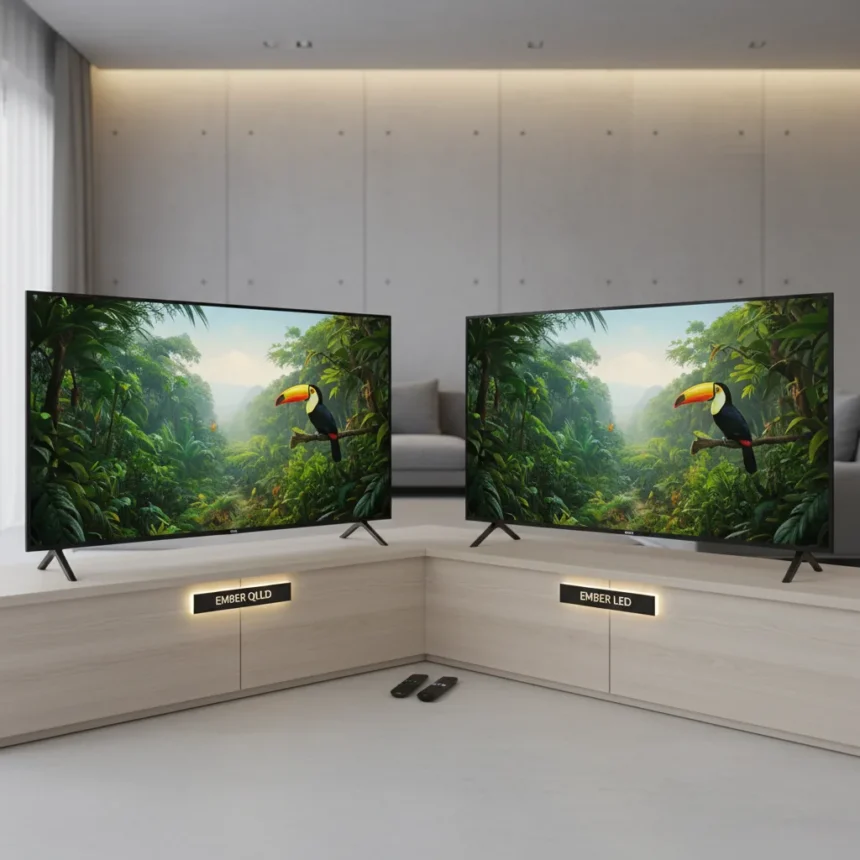
Amazon Ember QLED vs LED represents a straightforward value proposition for budget TV shoppers. The QLED model leverages quantum dot technology to enhance color volume and accuracy, delivering richer, more saturated colors than standard LED panels. This architectural difference matters most in brightly lit rooms where color vibrancy becomes a primary viewing advantage. The LED variant strips away quantum dots but maintains the same Ember OS integration and streaming capabilities, positioning it as the entry-level choice for price-conscious buyers.
Side-by-side testing reveals how these technologies perform in real viewing conditions. QLED’s quantum dot layer produces noticeably better color separation and prevents color wash-out during bright scenes—a meaningful advantage for streaming content like sports and nature documentaries. Standard LED, by contrast, handles peak brightness adequately but lacks the color precision that makes QLED panels feel more premium. For buyers choosing between the two Ember models, the question becomes whether that color improvement justifies stepping up in price.
Picture Quality and Performance Differences
The core performance gap between Amazon Ember QLED vs LED centers on color accuracy and volume. QLED’s quantum dot layer doesn’t just make colors brighter—it makes them more accurate and distinct from one another. This becomes particularly apparent in mid-tone scenes where standard LED can appear slightly washed out. QLED maintains color saturation across the brightness spectrum, a trait that streaming-focused viewers appreciate when watching content optimized for color-graded displays.



Both models integrate the same Ember OS platform, so performance in menu navigation, app loading, and streaming responsiveness should remain identical. The visual difference lies purely in the display technology. QLED’s advantage grows in well-lit rooms and with content that prioritizes color—streaming shows, documentaries, and sports broadcasts. In darker viewing environments or with content that relies more on contrast than color, the gap narrows considerably. Neither model positions itself as a contrast powerhouse; both are streaming-first TVs designed for convenience and color, not for home theater reference viewing.
Value for Money: Which Ember TV Makes Sense
Amazon Ember QLED vs LED ultimately hinges on viewing habits and budget constraints. The QLED model justifies its premium for buyers who watch in bright rooms, prioritize color-rich content, and want their TV to feel more premium without jumping to OLED or mini-LED competitors. The LED variant serves buyers who primarily stream in evening viewing or who value price above all else. Neither model attempts to compete with higher-tier budget alternatives like entry-level OLEDs or mini-LED TVs; Ember TVs target Amazon’s ecosystem loyalists seeking integrated streaming without external hardware.



The rebranding from Fire TV to Ember signals Amazon’s intention to position these sets as a distinct product line rather than a secondary tier. Both models deliver solid value within their respective price brackets. QLED edges ahead for overall picture quality, but LED remains a competent streaming display if budget is the primary constraint. For most viewers, the choice depends less on absolute performance and more on whether the color improvement justifies the extra cost—a calculation only individual buyers can make based on their room lighting and content preferences.
How Ember TVs Compare to Other Budget Brands
Ember’s entry into the rebranded budget segment comes as QLED technology increasingly trickles down from premium models. Competitors like LG’s B5 OLED and Hisense’s mini-LED offerings occupy similar price ranges, though with different architectural strengths. Entry-level OLEDs excel at contrast and motion handling but carry burn-in risk; mini-LED models deliver superior contrast and brightness at slightly higher prices. Ember TVs differentiate through seamless Amazon integration—Fire TV/Ember OS eliminates the need for external streaming devices, appealing to viewers already invested in Amazon’s ecosystem.
The QLED versus LED choice within Ember mirrors broader industry trends where quantum dot technology has become the baseline for mid-budget displays rather than a premium feature. This democratization benefits buyers who previously had to jump to significantly higher price points to access color-enhanced panels. Ember’s positioning as Amazon’s own-brand solution means pricing pressure from Amazon’s retail dominance—a factor that may give these models an edge over third-party budget brands in pure value calculations.
Should You Buy the Amazon Ember QLED or LED?
Buy the Ember QLED if you watch in bright rooms, prioritize color-rich streaming content, and want noticeable picture quality above the entry-level baseline. The quantum dot advantage becomes tangible in well-lit environments and with shows optimized for color grading. Choose the Ember LED if you view primarily in evenings, budget is your hard ceiling, and you value the convenience of integrated Ember OS without spending extra on color enhancements. Both models eliminate the need for external streaming devices—a genuine convenience advantage for buyers tired of managing multiple remotes and HDMI connections.



Does Ember QLED justify its price premium over LED?
Yes, if you watch in bright rooms or consume color-heavy content like sports and nature documentaries. The quantum dot technology delivers noticeably better color accuracy and saturation. No, if you primarily stream in evenings or if budget constraints make the price difference meaningful—standard LED remains a capable streaming display for these use cases.
How do Ember TVs compare to OLED and mini-LED alternatives?
Ember QLED and LED prioritize streaming convenience and color over the contrast advantages of OLED or the brightness of mini-LED. Entry-level OLEDs offer superior contrast but carry burn-in risk; mini-LED models deliver better peak brightness. Ember’s advantage lies in integrated Fire TV/Ember OS and Amazon ecosystem pricing, not raw display performance versus higher-tier technologies.
Amazon’s Ember QLED vs LED comparison ultimately reveals that QLED’s quantum dot advantage matters most for bright-room viewing and color-rich content. For streaming-focused buyers already committed to Amazon’s ecosystem, the QLED model represents the better value upgrade—but only if your viewing environment and content choices actually benefit from enhanced color. The LED variant remains a sensible choice for budget-conscious viewers willing to trade color vibrancy for lower cost. Neither model reinvents budget television, but both deliver solid streaming performance without the complexity of external devices.
Where to Buy
Amazon Fire TV Omni QLED Series (2025) | Amazon Ember 4-series 4K LED TV (2025) | TCL QM6K 55-inch QLED TV (2025) | TCL C6K 65-inch 4K LED TV (2025)
Edited by the All Things Geek team.
Source: TechRadar