





NYT Connections April 20 puzzle #679 challenges players with tie-dye crafting supplies, wordplay around “crack,” and prefix patterns that caught many solvers off guard. The New York Times’ daily 4×4 grid word puzzle continues to grow in popularity following Wordle’s success, with players worldwide tackling themed word groups sorted by difficulty.
Key Takeaways
- Game #679 on April 20, 2025 features four distinct themed categories of increasing difficulty.
- Yellow category focuses on words meaning a momentary glimpse or partial view.
- Green category requires identifying supplies needed for tie-dyeing a shirt.
- Blue and purple categories involve wordplay with “crack” verbs and “hop” prefix patterns.
- Players lost an average of three lives solving this puzzle.
Yellow Category: Glimpse — A Momentary View
The yellow category, the easiest tier, centers on words describing a quick or partial look at something. The four answers are Gander, Glance, Look, and Peep. These words all relate to the act of seeing something briefly or incompletely. Gander and glance are less commonly used in everyday speech but fit the theme perfectly. Look is the most obvious answer, while Peep adds a playful dimension with its connotation of sneaking a quick look. This category typically serves as the entry point for solvers, building confidence before tackling harder groups.
Green Category: Tie-Dye Shirt Essentials
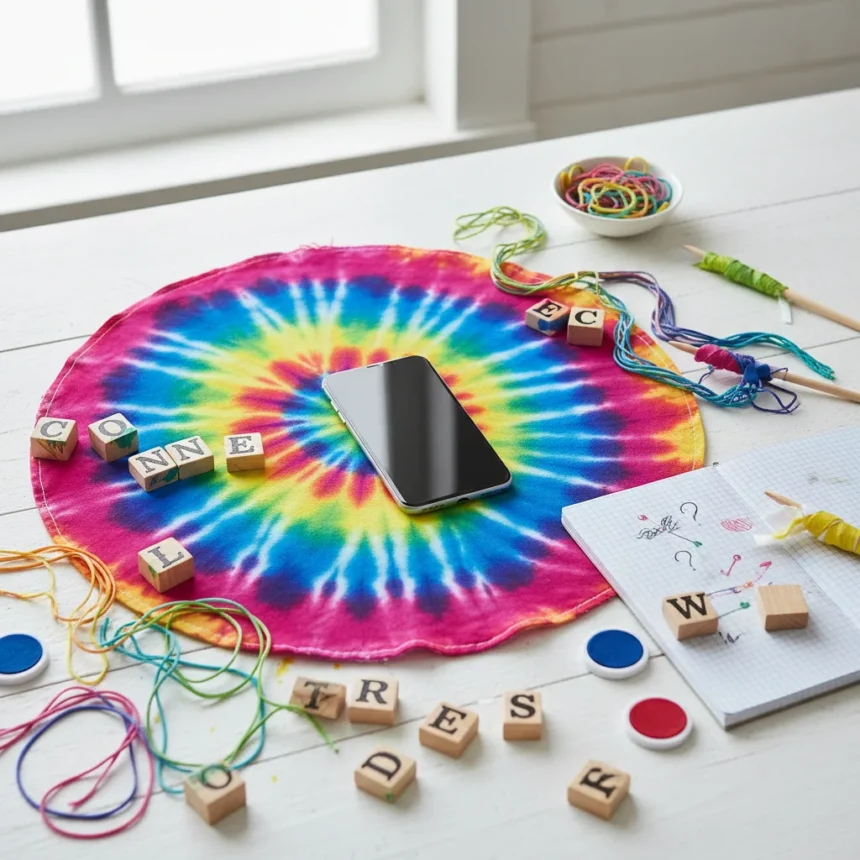
The green category shifts toward practical thinking by asking players to identify supplies needed for tie-dyeing a shirt. The answers are Basin, Dye, Rubber Bands, and Shirt. This DIY-themed group requires recognizing that each word represents something you would physically use or need when creating a tie-dye design. Basin holds the dye solution, rubber bands create the patterns by restricting dye flow, dye is the coloring agent itself, and shirt is the canvas. The challenge here lies in distinguishing between what you need versus what you might use for other crafts, making it trickier than the yellow category but still manageable.
Blue Category: Things You Can Crack
The blue category introduces wordplay by focusing on things you can “crack.” The answers are Code, Egg, Joke, and Whip. Each word pairs with the verb “crack” in a common phrase: crack a code, crack an egg, crack a joke, and crack a whip. The puzzle hints at the verb’s multiple meanings, including slang usage, which adds complexity to the category’s design. Solvers often struggle here because the connection feels less intuitive than straightforward synonyms, requiring players to think about verb-noun pairings rather than definitions alone.
Purple Category: Words Before “Hop”
The purple category, the hardest tier, asks players to identify words that precede the three-letter verb “hop.” The answers are Bar, Bunny, Hip, and Sock. These form common phrases: bar hop (to move between bars), bunny hop (a jumping dance or movement), hip hop (the music genre and culture), and sock hop (a 1950s-style dance event). The puzzle’s difficulty stems from the abstract nature of recognizing that these seemingly unrelated words share a single grammatical pattern. Players often confuse potential answers like “Scotch” (which could relate to tape or whisky) before realizing the category demands the “hop” connection specifically.
Solving Strategy and Difficulty
NYT Connections differs fundamentally from Wordle by rewarding thematic thinking over letter patterns. Rather than deducing words from limited information, Connections players must recognize conceptual links across four categories of increasing abstraction. The yellow and green categories typically reward literal thinking—synonyms and physical objects. Blue and purple categories demand lateral thinking, wordplay recognition, and cultural knowledge. Most solvers lose between one and three lives on medium-difficulty puzzles like this one.



Why This Puzzle Tripped Up Players
The April 20 puzzle’s difficulty spike came from the overlap between categories. Words like “Peep” could theoretically fit other meanings. “Dye” and “Tie” sound similar, creating potential confusion. The purple category’s “hop” prefix pattern is particularly abstract—players might guess “Bunny” belongs to a different grouping before recognizing the shared grammatical structure. The puzzle rewarded those who worked through yellow and green first, building momentum before tackling the wordplay-heavy blue and purple tiers.
How does NYT Connections differ from Wordle?
While Wordle challenges players to guess a single five-letter word using letter clues, NYT Connections requires sorting 16 words into four thematic groups. Connections rewards cultural knowledge, wordplay recognition, and lateral thinking rather than deductive letter logic. Both games are free-to-play daily puzzles from the New York Times, but they test entirely different cognitive skills.
What should I do if I’m stuck on a Connections category?
Start with the yellow category—it typically features straightforward synonyms or obvious groupings. Eliminate words you are confident about before tackling harder tiers. If you spot a potential pattern, test it by removing those four words and seeing if the remaining 12 make sense. Avoid guessing randomly; each wrong guess costs a life.
Can I play NYT Connections on mobile devices?
NYT Connections is available through the New York Times Games app and website on both desktop and mobile browsers. The puzzle resets daily, giving players one new puzzle per day. The interface adapts to mobile screens, making it accessible whether you are playing on a phone, tablet, or computer.


NYT Connections April 20 puzzle #679 demonstrates how the game balances accessibility with challenge. The yellow and green categories welcome new players with concrete themes, while blue and purple reward those who think beyond surface meanings. If you solved this puzzle in one or two lives, you have mastered the game’s logic. If it took all four lives, you have learned something about the kinds of patterns the Times favors—and next Monday’s puzzle will feel easier because of it.
Where to Buy
21 Amazon customer reviews | $4.99 | $9.99 | $12.99
This article was written with AI assistance and editorially reviewed.
Source: TechRadar




