





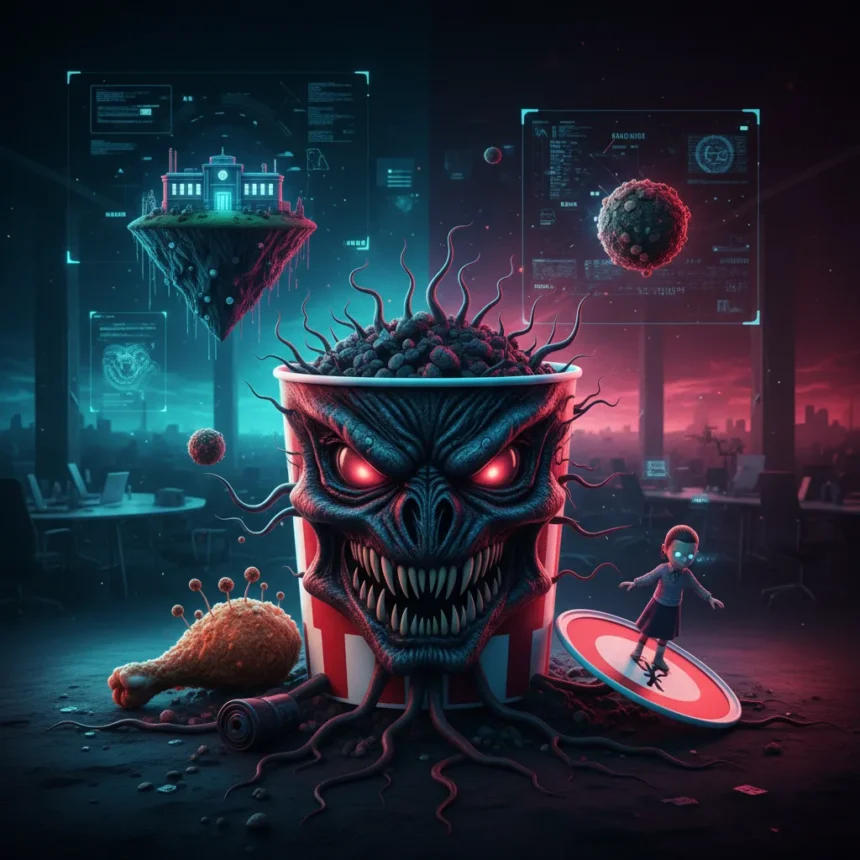
Brand partnerships world-building is the difference between a campaign that feels like an ad and one that feels like culture. When Stranger Things final season drew 59.6 million views in five days, over 75 brands rushed to capitalize on the hype. But the ones that stuck were the ones that didn’t just slap a logo on the show—they became part of Hawkins itself.
Key Takeaways
- KFC transformed into Hawkins Fried Chicken, embedding itself authentically in the show’s 1980s universe rather than overlaying branding.
- Target recreated an entire 1987 Hawkins-era store with exclusive drops timed to Netflix releases, treating IP as a real world.
- Successful partnerships identify genuine thematic overlap—KFC’s BELIEVE message mirrored the show’s themes of unwavering belief.
- McDonald’s, Gatorade, Doritos, and Dr. Squatch also capitalized, but world-building campaigns outperformed generic tie-ins.
- Quirky collaborations like KFC x Crocs prove humor and surprise drive viral buzz when brands abandon predictable partnerships.
Why Stranger Things Partnerships Exploded in 2024
The final season of Stranger Things wasn’t just a TV event—it was a cultural permission structure for brands. When 59.6 million viewers tuned in within five days, retailers and fast-food chains saw an opening. McDonald’s, KFC, Gatorade, Doritos, and over 75 other brands launched tie-ins. But volume alone doesn’t equal impact. The partnerships that generated buzz were the ones that treated Hawkins like a real place, not a backdrop for logos.
KFC UK’s transformation into Hawkins Fried Chicken (HFC) via agency Mother London became the template for what worked. Rather than a limited-edition burger with a Netflix logo, KFC created a fictional restaurant chain that existed within the show’s universe. The campaign included a retro TV spot showing delivery crews biking through a rift-torn town, proprietary menu items like the rift-red bun burger and Hot Wings with signature sauce, and complete redesigns of packaging, props, and in-store visuals. This wasn’t sponsorship—it was world extension.
Brand Partnerships World-Building: The Playbook That Actually Works
The most successful brand partnerships world-building strategy rests on one principle: authenticity within the IP universe. According to Tomas Coleman and Derek Man Lui at Mother, the agency behind KFC’s campaign, the best collaborations identify genuine thematic overlap, not just audience demographics. The Stranger Things kids’ unwavering belief in protecting Hawkins mirrored KFC’s BELIEVE brand truth. That’s not forced—it’s structural.

Target took a different approach but applied the same logic. Instead of selling Stranger Things merchandise, Target recreated an entire 1987 Hawkins-era store with exclusive product drops timed to Netflix season releases. The retailer didn’t ask customers to buy branded stuff; it invited them into a time capsule. Dr. Squatch featured actor Brett Gelman as his character Murray Bauman in a soap line that emphasized ingredient transparency with humor—another example of a brand finding its natural place in the show’s world rather than forcing a crossover.
Jordan Peters, Senior Director of Marketing Partnerships at Netflix EMEA, explained the difference: building worlds means placing brands authentically within the IP using period-appropriate details—80s technology, social media activations, and real-world experiences that invite fans to participate. It’s the opposite of interruption marketing. It’s cultural participation.



When Humor and Surprise Beat Traditional Collabs
Not every successful partnership ties to a blockbuster IP. KFC’s collaboration with Crocs produced quirky shoes that sold out immediately, driven by surprise and humor rather than thematic overlap. KFC’s partnership with Hype targeting younger festival-goers embedded the brand in youth culture through a completely different channel. These work because they abandon the predictable partnership template and embrace weirdness.
This contrasts sharply with partnerships that miss the mark. Greggs x Primark, Ben & Jerry’s x Tony’s Chocolonely, and Beyond Meat x McDonald’s all succeeded because they aligned on shared values or ecosystem logic. Greggs and Primark both serve value-conscious customers; Ben & Jerry’s and Tony’s Chocolonely both champion ethical sourcing; Beyond Meat x McDonald’s lent credibility to plant-based fast food in a new market. These aren’t random—they’re architected around why the partnership makes sense to customers, not just to marketing departments.
The Risk of Treating IP Like a Backdrop
The flip side is instructive. Partnerships that treat intellectual property as a backdrop rather than a world fail to generate the cultural stickiness that drives long-term brand value. A burger with a show’s logo is forgettable. A burger that tastes like it came from a fictional town in 1987 is something fans will talk about. The difference is immersion versus interruption.
Kate Tipper, marketing director at KFC UKI, framed it simply: KFC and Stranger Things fans both understand obsession. When you care about something, you’ll stop at nothing for it. That obsessive nature—the willingness to seek out a branded experience because it deepens fandom rather than exploits it—is what separates a campaign from a cultural moment.



How Brands Can Apply This Beyond Stranger Things
The playbook isn’t limited to Netflix’s biggest hit. Any brand partnership works best when it answers three questions: Does our brand have genuine thematic overlap with this IP or partner? Can we build something that feels native to that world, not bolted on? Will our audience see this as deepening their experience of what they love, or as an ad interrupting it?
The Stranger Things wave shows that scale matters less than authenticity. McDonald’s, Gatorade, and Doritos all had massive reach, but KFC’s smaller, more immersive campaign generated more cultural conversation. Target’s nostalgia store worked because it didn’t sell Stranger Things merch—it transported customers. Dr. Squatch’s soap worked because it cast an actual actor from the show and made a genuine product, not a novelty.
Will This Playbook Survive the Hype Cycle?
The Stranger Things final season created a rare moment where 75 brands could all launch tie-ins and some would still stand out. As IP partnerships become more common, the bar for authenticity will only rise. Brands that treat collabs as world-building exercises—investing in design, casting, product quality, and cultural fit—will age better than those that chase trending hashtags. The question for marketers isn’t whether to partner with IP anymore. It’s whether they’re willing to build worlds instead of campaigns.
What made KFC’s Hawkins Fried Chicken campaign different from other Stranger Things partnerships?
KFC transformed into a fictional restaurant chain within the show’s universe rather than launching a limited-edition menu item. The campaign included retro TV spots, proprietary products like the rift-red bun burger, and complete redesigns of packaging and store visuals to authentically embed KFC in Hawkins’ 1980s world.
Can brand partnerships work without a major IP like Stranger Things?
Yes. KFC x Crocs succeeded through humor and surprise, selling out immediately without relying on entertainment IP. Greggs x Primark, Ben & Jerry’s x Tony’s Chocolonely, and Beyond Meat x McDonald’s all worked by aligning on shared values or customer ecosystems rather than blockbuster franchises.
How do brands identify whether a partnership is authentic or forced?
Authentic partnerships identify genuine thematic overlap—like KFC’s BELIEVE message mirroring Stranger Things’ themes of unwavering belief. Forced partnerships treat IP as a backdrop. The test is whether the brand could exist naturally within that world, not whether it can slap a logo on trending content.
Brand partnerships world-building isn’t a trend—it’s the baseline for collaborations that matter. As audiences grow savvier about advertising, the brands that survive are the ones that ask not how to reach fans of something, but how to become part of what fans love.
Edited by the All Things Geek team.
Source: Creativebloq




