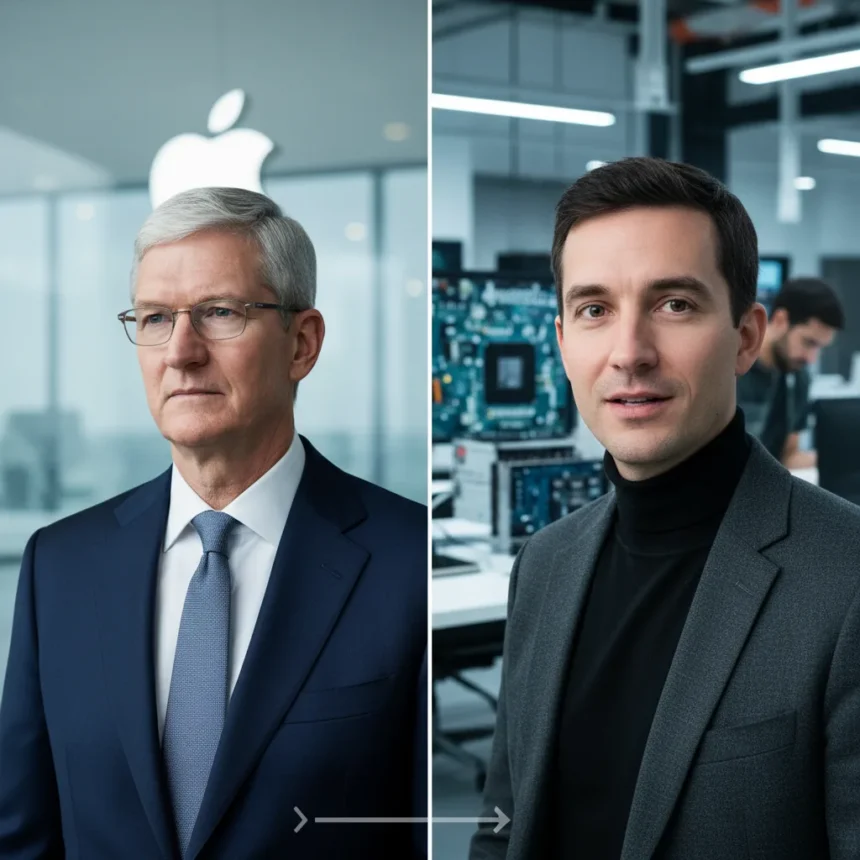
Apple’s board and senior executives are accelerating succession plans for Tim Cook, positioning the company for a leadership transition that could reshape the tech giant’s strategic direction. The Apple CEO succession timeline points toward John Ternus, the company’s 50-year-old senior vice president of hardware engineering, as the most likely candidate to take the helm.
Key Takeaways
- Tim Cook has led Apple as CEO for 14 years and is expected to step down within the next half decade.
- John Ternus, 50, is widely seen as the leading successor but no final decisions have been made yet.
- Cook is expected to remain involved as executive chairman after stepping down as CEO.
- Apple’s board is accelerating succession planning, with Cook potentially departing as early as 2026.
- Ternus has taken on growing responsibility overseeing Apple’s products and marketing operations.
Why Apple’s Leadership Transition Matters Now
The acceleration of Apple CEO succession planning signals that the board recognizes the need for fresh strategic leadership during a critical moment in the company’s evolution. Apple faces intensifying competition in artificial intelligence, a shift in consumer device preferences, and the challenge of maintaining premium pricing in a market increasingly focused on AI capabilities. A leadership change could reshape how the company approaches these challenges and allocates resources.
Bloomberg’s Mark Gurman reported that the wheels are in motion for Tim Cook to step down within the next half decade at the latest, with Ternus positioned as his replacement. The Financial Times, via Fortune, confirmed that Apple’s board and executives are accelerating these plans, with Cook potentially departing as early as next year, though no final decisions have been made.
Who Is John Ternus and Why He’s the Frontrunner
John Ternus brings deep product expertise to the potential Apple CEO succession conversation. As senior vice president of hardware engineering, Ternus has overseen the development of some of Apple’s most critical product lines and has recently taken on expanded responsibilities for marketing and product strategy. His engineering background positions him differently than Cook, whose tenure emphasized operational excellence and financial performance.

Ternus is 50 years old and has spent years building credibility within Apple’s executive ranks. Unlike external candidates, he understands Apple’s culture, supply chain complexity, and product philosophy from the inside. His growing role in product and marketing decisions suggests the board is already testing his readiness for the top job. The move toward the Apple CEO succession with Ternus reflects confidence in an internal candidate rather than a search for an outside executive.
What Happens to Tim Cook After Stepping Down
When Tim Cook steps down as CEO, he is expected to remain involved with Apple in some capacity, most likely as executive chairman. This arrangement would keep his institutional knowledge and relationships intact while signaling a clean leadership transition to investors and employees. Cook’s 14-year tenure as CEO has made him synonymous with Apple’s modern era, so a complete departure would represent a sharper break than the company appears to be planning.



The executive chairman role would give Cook continued influence over strategic direction and board-level decisions while freeing him from day-to-day operational responsibilities. This structure is common in major tech transitions, allowing founders or long-serving leaders to remain engaged without blocking succession.
Timeline and Uncertainty in Apple CEO Succession
The exact timing of the Apple CEO succession remains unclear. Reports suggest Cook could step down as early as 2026, but the board has not announced a final decision. Bloomberg’s reporting indicates the transition could happen within the next half decade at the latest, leaving a window of flexibility rather than a locked timeline.
This uncertainty reflects how succession planning actually works at major corporations—boards accelerate planning without committing to specific dates until the moment is right. Market conditions, product cycles, and Cook’s own preferences all factor into when the transition ultimately occurs. For now, the company is preparing Ternus for the role while keeping options open.
How This Compares to Other Tech Leadership Transitions
The Apple CEO succession differs from other recent tech leadership changes in its deliberate pace and internal focus. Unlike some tech companies that have cycled through external CEOs or experienced sudden departures, Apple’s board is methodically preparing an insider successor while allowing the current leader to remain involved post-transition. This approach prioritizes continuity and institutional knowledge over the dramatic leadership overhauls that have sometimes disrupted other major tech firms.



What Does This Mean for Apple’s Direction
A leadership change at Apple could signal shifts in how the company prioritizes artificial intelligence, hardware innovation, and ecosystem strategy. Ternus’s engineering background may emphasize product-first thinking differently than Cook’s operations-focused approach. However, both executives operate within Apple’s culture and constraints, so radical strategic shifts are unlikely.
Is John Ternus definitely becoming Apple’s next CEO?
No final decision has been made, though Ternus is widely seen as the most likely successor. The Financial Times reported that Ternus is the leading candidate, but Apple’s board has not formally announced the succession or locked in a timeline. Other internal candidates could theoretically emerge, though Ternus’s growing responsibilities suggest the board is preparing him for the role.
When will Tim Cook step down as Apple CEO?
Cook could potentially step down as early as 2026, but the board has not announced a specific date. Bloomberg reported the transition could happen within the next half decade at the latest. The acceleration of planning suggests the company is moving faster than previously expected, but executives are not bound by a public timeline.
Will Tim Cook leave Apple entirely?
Cook is expected to remain involved with Apple as executive chairman after stepping down as CEO, according to Bloomberg’s reporting. This means he would stay on the board and maintain strategic influence rather than departing the company completely. The arrangement allows for a clean leadership transition while preserving institutional continuity.
The acceleration of Apple CEO succession planning reflects a company thinking strategically about its future leadership during a pivotal moment in technology. Whether Ternus officially takes over in 2026 or later, the board’s focus on internal succession and Cook’s planned transition to executive chairman suggest Apple is preparing for a measured handoff rather than a disruptive change. For investors and employees, the real test will come when the new leadership faces the challenges of maintaining Apple’s premium position in an increasingly AI-focused tech landscape.
Edited by the All Things Geek team.
Source: Tom's Guide