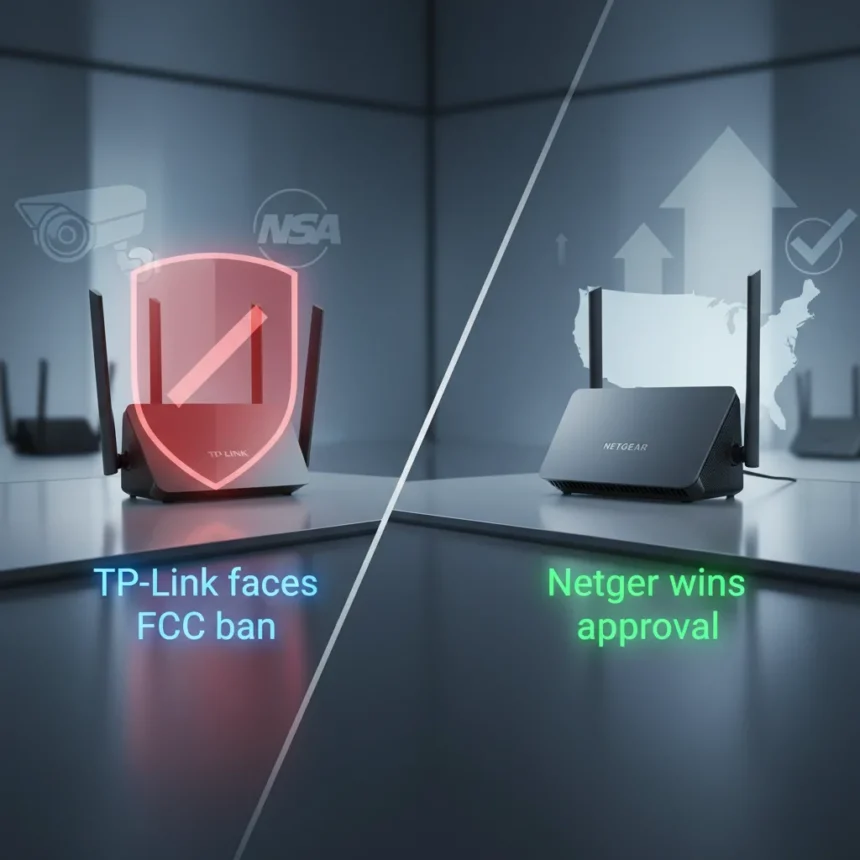
The FCC router import ban is reshaping the U.S. networking market, and TP-Link is scrambling to stay competitive. Last month, the Federal Communications Commission added foreign-made consumer router manufacturers to its “Covered List” of banned equipment, effectively halting new model imports unless companies secure conditional approval. TP-Link, one of America’s most popular router brands, has met with FCC officials to discuss conditional approval—but so far, no green light.
Key Takeaways
- FCC banned all new foreign-made consumer routers; existing inventory and previously purchased units remain unaffected
- Netgear received conditional approval for approximately 20 products; Adtran won exemption for Service Delivery Gateway routers
- TP-Link has no conditional approval yet and faces heightened scrutiny due to NSA-identified router vulnerabilities
- Conditional approval requires detailed corporate structure, supply chain documentation, and a time-bound U.S. manufacturing expansion plan
- TP-Link emphasizes it is no longer Chinese-owned, though ownership details remain undisclosed
Why the FCC Router Import Ban Matters Now
The FCC router import ban targets a critical national security gap. Foreign-made routers represent a potential vulnerability point for network intrusions and data interception. By restricting new models without prior FCC equipment authorization, regulators are forcing manufacturers to either establish U.S. production capacity or abandon the American market. The ban does not affect existing router sales or models that already received FCC authorization before the restriction took effect.
This distinction is crucial for consumers. If you own a TP-Link router purchased before the ban, you can continue using it. The restriction only blocks new models from entering the U.S. market without conditional approval. The FCC’s approach signals that national security concerns around networking equipment have moved from abstract policy debate to concrete enforcement—and the router market is the proving ground.
TP-Link’s Conditional Approval Struggle vs. Netgear’s Success
TP-Link’s path to conditional approval faces steeper obstacles than competitors who already won exemptions. Netgear secured conditional approval for around 20 products, while Adtran received clearance for its Service Delivery Gateway class routers. Both companies manufacture abroad, yet both cleared the regulatory hurdle. TP-Link has not achieved the same milestone, and recent NSA attention to vulnerabilities in its routers compounds the challenge.


What separates approved vendors from TP-Link? The FCC’s conditional approval process demands exhaustive documentation: corporate structure, complete supply chain transparency, and a detailed, time-bound plan to establish or expand U.S. manufacturing. Netgear and Adtran apparently satisfied these requirements. TP-Link’s ongoing negotiations suggest the company is either still assembling the necessary documentation or facing deeper scrutiny due to its historical ties to China—a factor the company now explicitly addresses by claiming it is no longer Chinese-owned.
The gap between approval and denial reveals a hard truth: manufacturing location and corporate ownership matter. U.S. regulators are willing to grant exemptions to foreign manufacturers who commit to reshoring production. TP-Link’s conditional approval bid likely hinges on whether it can credibly demonstrate such a commitment.



What Conditional Approval Actually Requires
Conditional approval is not a rubber stamp. According to FCC guidance, the process demands that companies provide detailed corporate structure information, map their entire supply chain, and present a time-bound plan to establish or expand U.S. manufacturing operations. This is not a box-ticking exercise—regulators want proof that a company can and will shift production to American soil within a defined timeframe.
The existence of exemptions from the Department of War and Department of Homeland Security shows that some flexibility exists. If a company can demonstrate compelling reasons—such as specialized components unavailable domestically—it may negotiate a narrower exemption. However, these are exceptions, not the default path. TP-Link’s silence on conditional approval status suggests the company has not yet cleared this bar, or negotiations are ongoing behind closed doors.
NSA Vulnerabilities Add Pressure
TP-Link’s regulatory challenges extend beyond manufacturing location. The NSA recently highlighted vulnerabilities in TP-Link routers, flagging the devices as security risks. This timing is damaging. An FCC conditional approval request becomes harder to justify when a major national security agency is simultaneously warning about the same company’s products. Regulators face political and operational pressure to deny approval to a vendor already under NSA scrutiny.
For consumers, this creates a bind. TP-Link routers remain widely available and affordable, but the combination of the import ban and NSA warnings raises questions about long-term viability. If TP-Link fails to secure conditional approval, the company will struggle to introduce new models. If it does secure approval, it will likely do so with heavy conditions—possibly including mandatory security audits or feature restrictions.



What Happens to Consumers Until March 2026?
Consumers should monitor developments through March 1, 2026, according to industry guidance. Until then, keep your routers updated with the latest security patches. If you use a TP-Link router, the import ban does not affect your current device—you can continue using it indefinitely. However, if you plan to upgrade, the regulatory landscape is in flux. New TP-Link models may not be available for purchase in the U.S. if the company fails to secure conditional approval.
The safest approach is to check for security updates regularly and avoid purchasing new routers until the FCC situation clarifies. Netgear and Adtran-approved products are safer bets for new purchases, since those vendors have already navigated the conditional approval process.
Will TP-Link Get Conditional Approval?
TP-Link’s chances are uncertain. The company faces a combination of regulatory skepticism, NSA security concerns, and the need to prove it can establish U.S. manufacturing quickly. Netgear and Adtran succeeded, but both companies had existing relationships with U.S. regulators and less baggage from national security agencies. TP-Link will need to present a compelling manufacturing plan and address the NSA vulnerabilities head-on to move forward.
Can TP-Link routers be used after the import ban?
Yes. The FCC router import ban only restricts new models from entering the market. Routers you already own or purchased before the ban remain fully functional and legal to use. Existing inventory can still be sold by retailers. The restriction applies only to new models lacking prior FCC equipment authorization.
What is the difference between conditional approval and a full ban?
Conditional approval allows a company to sell new router models in the U.S. under specific requirements, such as establishing U.S. manufacturing or meeting security benchmarks. A full ban would prohibit all sales. TP-Link is in limbo—not banned outright, but not yet approved to introduce new products.
Why did Netgear get conditional approval but TP-Link hasn’t?
Netgear likely satisfied the FCC’s stringent requirements for corporate documentation, supply chain transparency, and U.S. manufacturing plans. TP-Link faces additional headwinds from NSA security concerns and its historical Chinese ownership, making regulators more cautious about granting approval.
The FCC router import ban is a watershed moment for the networking industry. Netgear and Adtran have cleared the regulatory hurdle and can continue selling new models. TP-Link remains in regulatory limbo, caught between its past and the FCC’s security-first future. For consumers, the message is clear: buy from approved vendors, keep your current routers updated, and expect the market to consolidate around companies that can satisfy America’s heightened national security standards.
Edited by the All Things Geek team.
Source: Tom's Hardware