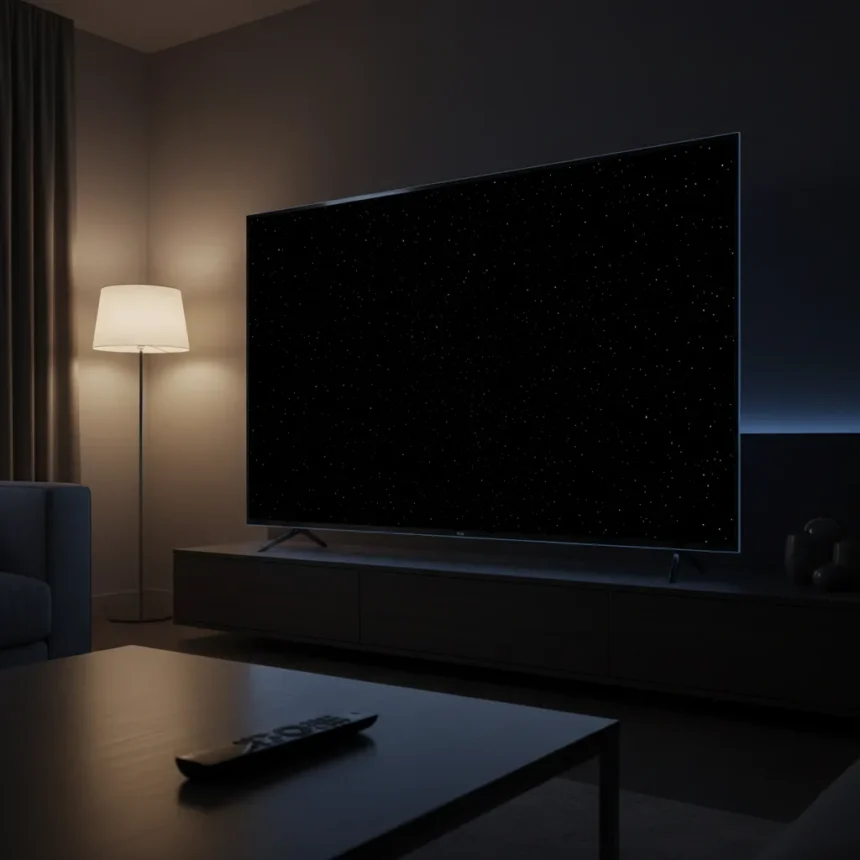
OLED perfect blacks represent the one display advantage no rival technology can replicate. While QD-OLED and Mini-LED have spent the last three years chasing peak brightness, the real story in premium TV design is contrast—and OLED’s self-emissive pixels that turn completely off still own that space entirely.
Key Takeaways
- OLED perfect blacks achieve infinite contrast through pixels that emit zero light when displaying black, eliminating blooming and light bleed
- QD-OLED (e.g., Sony A95K) improves brightness and color vibrancy but cannot match OLED’s black depth
- Mini-LED excels at peak brightness for HDR highlights but suffers blooming around bright objects in dark scenes, unlike OLED
- LG’s OLED Evo panels use deuterium-based materials for higher brightness without sacrificing the contrast advantage
- Recent processing improvements in LG C5 and C6 models enhance brightness management while maintaining perfect blacks
Why OLED perfect blacks matter more than brightness specs
The obsession with peak brightness misses what actually happens when you watch TV in a dark room. OLED perfect blacks deliver what no Mini-LED or standard QD-OLED can: a pixel that produces zero light for true black, preventing the halo effect or blooming that plagues brighter technologies when a bright object appears against a dark background. This is not a minor refinement—it is the architectural difference between a display that controls light and one that tries to hide it.
When you watch a space scene or a night sequence in a cinematic dark room, OLED’s infinite contrast ratio creates a sense of depth and separation that brightness specs cannot measure. The black is genuinely black, not dark gray. The bright stars do not glow at their edges. That experience is irreplaceable, and no amount of nits—the unit measuring peak brightness—changes the fact that OLED owns this territory.
OLED perfect blacks vs. the brightness arms race
QD-OLED technology, exemplified by Sony’s A95K, represents the industry’s answer to OLED’s brightness gap. By adding quantum dots to the OLED layer, Sony improved peak brightness and color vibrancy significantly. Yet the fundamental trade-off remains: QD-OLED cannot match OLED’s black depth because its architecture differs. The brightness gain comes at a cost to the purity of black levels that make OLED unique.



Mini-LED, meanwhile, chases brightness through thousands of dimming zones behind an LCD panel. This approach delivers impressive peak brightness for HDR highlights. But it introduces blooming—that visible halo around bright objects in dark scenes—because the dimming zones are too large to isolate light precisely. OLED’s self-emissive pixel design eliminates this problem entirely. The question is not whether OLED can match Mini-LED’s brightness. The question is whether viewers actually prefer brightness to the cinematic black levels that only OLED delivers.
OLED perfect blacks in current flagship models
LG’s OLED Evo technology, used in models like the G2, addresses the brightness gap without abandoning the contrast advantage. By incorporating deuterium-based organic materials, Evo panels tolerate higher voltage, producing brighter output than standard WOLED while maintaining the perfect blacks that define the technology. This is the right direction: incremental brightness gains that respect OLED’s core strength rather than chasing QD-OLED or Mini-LED on their terms.



Processing improvements in newer models like the LG C5 and C6 further refine brightness management and color volume without requiring new panel hardware. The C5, tested at £1099 in 42-inch form, won What Hi-Fi? Awards 2025 recognition for delivering dynamic contrast without bloom—a direct validation that perfect blacks remain the premium differentiator. Even compact OLEDs in smaller sizes maintain that contrast advantage, though color volume can drop in certain bright or low-light scenes.
The case for leaning into contrast, not fighting brightness
The TV industry has a habit of solving the wrong problem. Engineers see OLED’s lower peak brightness compared to Mini-LED and conclude brightness is the weakness to fix. But that reasoning ignores the actual viewing experience. In dark rooms—where premium TVs are watched—perfect blacks and infinite contrast create a visual impact that brighter panels cannot touch. The weakness is not OLED’s brightness. The weakness is the marketing narrative that brightness matters most.
What if OLED manufacturers stopped trying to match Mini-LED’s nits and instead invested in processing, panel refinement, and color volume within the contrast-first framework? That is exactly what recent models suggest is happening. The result is OLED perfect blacks that stay perfect while surrounding technologies improve everywhere else. For cinematic viewing, dark-room entertainment, and any scenario where black levels define the experience, OLED’s irreplaceable advantage should be the story, not an embarrassment to hide behind brightness specifications.
Is OLED perfect blacks worth the price premium?
Yes, if you watch in a dark room and value cinematic contrast. OLED perfect blacks create a visual separation and depth that brighter technologies cannot replicate, making them ideal for films, shows, and games designed with dark scenes. If you prioritize peak brightness for bright rooms or sports viewing, Mini-LED or QD-OLED may suit you better.



How does OLED perfect blacks compare to Mini-LED?
OLED achieves perfect blacks through pixels that turn completely off, eliminating blooming and light bleed. Mini-LED uses dimming zones behind an LCD panel, which creates impressive brightness but introduces visible halos around bright objects in dark scenes. OLED’s contrast is superior; Mini-LED’s brightness is superior. The choice depends on your viewing environment and priorities.
Can QD-OLED match OLED perfect blacks?
No. QD-OLED improves brightness and color vibrancy over standard OLED, but its architecture prevents it from matching OLED’s black depth. The quantum dots add brightness at the cost of pure black levels. OLED’s self-emissive design remains the only way to achieve true, perfectly dark blacks with infinite contrast.
The future of OLED is not about winning a brightness war it was never designed to fight. It is about owning the space where perfect blacks and infinite contrast matter most—the dark room, the cinematic experience, the moment when a black that is genuinely black changes everything. That is where OLED’s real strength lies, and that is where the industry should lean.
Where to Buy
£2,999.99 | £3,137.99 | £3,149.97
Edited by the All Things Geek team.
Source: What Hi-Fi?