






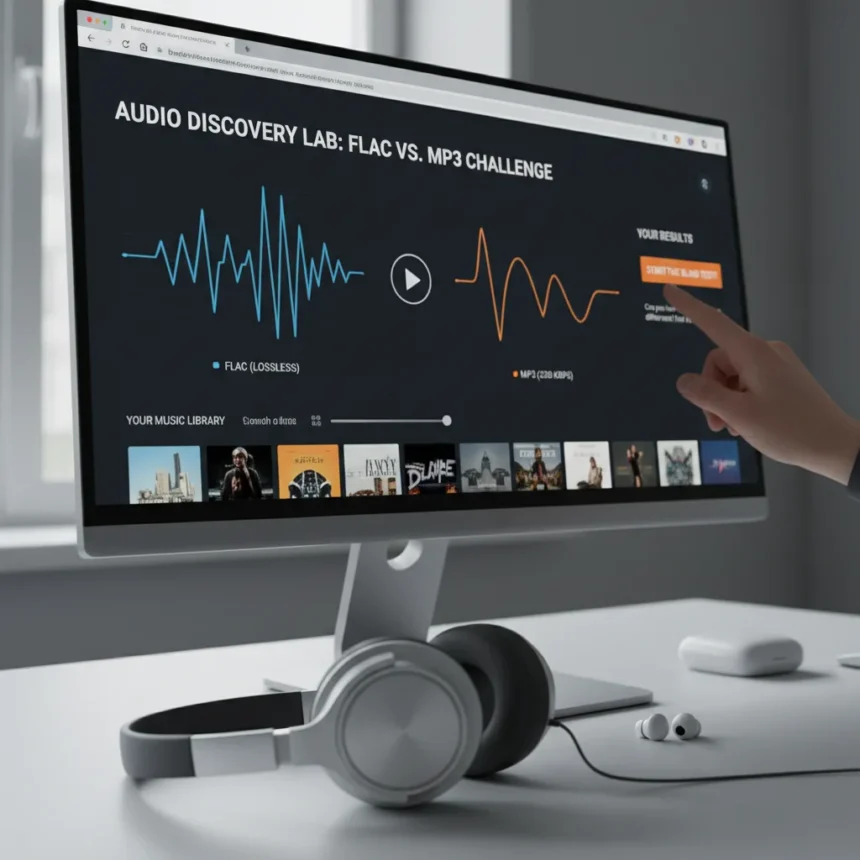
FLAC vs MP3 has been the central debate in audio fidelity for two decades, but a new browser-based tool cuts through the hype by letting you test the difference yourself using tracks you know intimately. No equipment purchases. No audiophile gatekeeping. Just you, your headphones, and the truth about your own hearing.
Key Takeaways
- FLAC is lossless, preserving all original audio data; MP3 discards details to reduce file size.
- A free browser tool enables blind A/B testing of FLAC vs MP3 using your personal music library.
- Hi-Res Audio contains more information than compressed formats, delivering greater dynamic range and detail.
- Tidal streams FLAC; Spotify and most services use lossy formats that compress audio data.
- The tool eliminates excuses by using familiar music for honest listening comparisons.
What FLAC vs MP3 Actually Means
FLAC (Free Lossless Audio Codec) is a compression format that shrinks audio files without removing any original data—think of it like a ZIP file for music. MP3, by contrast, is a lossy format that discards audio details deemed inaudible to human ears, trading fidelity for drastically smaller file sizes and streaming convenience. FLAC retains everything; MP3 makes a gamble that you won’t notice what’s missing.
Hi-Res Audio refers to digitally stored music with significantly more information than compressed MP3s or standard streaming audio, offering greater detail, dynamic range, and sound closer to the original recording. The practical difference: FLAC files are substantially larger but preserve the complete mix exactly as recorded. MP3s sound acceptable to most ears but lack the texture and subtlety of the original.
Services like Tidal have staked their premium positioning on FLAC streaming, arguing that listeners who upgrade will hear audible improvement. Spotify, Apple Music (which uses ALAC, another lossless codec), and most other platforms use lossy compression as a convenience trade-off. The question has always been: can ordinary listeners actually perceive the difference, or is FLAC a luxury for placebo-susceptible audiophiles?


How the FLAC vs MP3 Testing Tool Works
Someone created a browser tool that answers this question empirically by letting you upload your own music files and run blind A/B tests. You provide both a FLAC version and an MP3 version of the same track—songs you know well enough to notice if something sounds off. The tool then plays them in randomized order without telling you which is which. Your job: listen and guess which is lossless and which is compressed.
This approach is brutally honest. You cannot rely on file metadata, bitrate specs, or theoretical arguments. You cannot blame your equipment or claim the test used unfamiliar music. The tool forces a direct confrontation with your own ears using material you know intimately. If you cannot distinguish FLAC from MP3 on your favorite songs, the evidence is right there.



The setup eliminates the most common excuse: that you simply never listened carefully enough. By using tracks you have heard hundreds of times, you have maximum familiarity with how they should sound. A degradation in clarity, dynamic range, or instrument separation should theoretically be obvious. Yet many listeners discover they cannot reliably tell the difference—hence the article’s self-deprecating title about the author’s apparent deafness.
FLAC vs MP3 in the Streaming Era
The rise of lossless streaming services has forced the FLAC vs MP3 debate into practical territory. Tidal launched with FLAC as a core differentiator, offering lossless audio to subscribers willing to pay for superior quality. Apple Music later added lossless support through ALAC, another lossless codec that functions similarly to FLAC. Spotify remains committed to lossy compression, arguing that most listeners on mobile devices with standard earbuds cannot justify the bandwidth and storage costs of lossless files.
This is where the tool becomes genuinely useful. Rather than accepting marketing claims from either side, you can test whether FLAC vs MP3 matters to your ears specifically. Some listeners will hear a clear difference and find FLAC worth the storage cost. Others will discover they have no audible preference and can save space and bandwidth with MP3 or Spotify’s lossy streams without sacrificing their listening experience.
The tool also exposes a hard truth: audio quality depends on the entire chain, not just the file format. Even if you can hear a difference between FLAC and MP3 on studio monitors or high-end headphones, that advantage vanishes on cheap earbuds or compressed mobile speakers. FLAC vs MP3 becomes an academic distinction if your playback hardware cannot resolve the extra detail anyway.



Why This Tool Matters Now
Audio fandom has long been plagued by assertion without evidence. Audiophiles claimed FLAC sounded dramatically better; skeptics claimed the difference was inaudible and that FLAC was a waste of storage. Neither side had a low-friction way to settle the argument empirically. This tool changes that dynamic. It is free, browser-based, and requires no special equipment beyond headphones you already own.
The democratization of testing is significant. Previously, you had to trust audio reviewers, forum discussions, or your own expensive trial-and-error. Now anyone can run a controlled blind test in minutes. This shifts the conversation from ideology to data—your personal data, gathered under conditions you control.
For streaming services, the tool is a reality check. Tidal can market FLAC as a premium feature, but if listeners cannot hear the difference on their own music, the marketing argument collapses. Conversely, if you do hear a clear improvement, the tool validates your willingness to pay for or switch to a lossless service. Either way, you are making an informed decision rather than guessing.
Should You Care About FLAC vs MP3?
The honest answer depends on three factors: your hearing sensitivity, your equipment quality, and your personal tolerance for file size. If you have golden ears and audiophile-grade headphones or speakers, FLAC vs MP3 might be audibly significant. If you listen on phone speakers or cheap earbuds, the difference is likely imperceptible. If you are somewhere in the middle—decent headphones, normal hearing, moderate interest in sound quality—the tool will tell you definitively whether FLAC is worth it for you.
The tool also serves a psychological function. Discovering that you cannot distinguish FLAC from MP3 on blind testing is humbling but liberating. You stop worrying about file format and focus on what actually matters: enjoying music. Conversely, if you do hear a clear difference, you have concrete evidence justifying your preference and your storage investment.
Can you really hear the difference between FLAC and MP3?
That depends on your ears, your equipment, and the music. The browser tool is designed to answer this question for you personally by running blind tests on your own tracks. Many listeners are surprised to discover they cannot reliably distinguish the two formats, especially on compressed playback devices. Others hear a clear difference and find FLAC worth the investment.
What is Hi-Res Audio and why does it matter?
Hi-Res Audio is digitally stored music with more information than MP3s or standard streaming audio, offering greater detail, dynamic range, and sound closer to original recordings. It matters if you have equipment capable of reproducing that detail and ears sensitive enough to perceive it. For most casual listeners, standard lossy formats are sufficient.
Is FLAC better than MP3 for streaming?
FLAC is technically superior because it preserves all original audio data without loss. However, the practical advantage depends on your hearing, equipment, and whether you can tolerate larger file sizes and higher bandwidth requirements. Tidal offers FLAC streaming, while Spotify uses lossy compression. Test both with your own music to decide which trade-off makes sense for you.
The FLAC vs MP3 debate ends not with expert opinion but with your own ears. This tool removes every excuse for guessing. Whether you discover you are a lossless purist or happily deaf to compression artifacts, at least you will know the truth about your own listening experience. That honest self-assessment is worth far more than any marketing claim.
This article was written with AI assistance and editorially reviewed.
Source: TechRadar