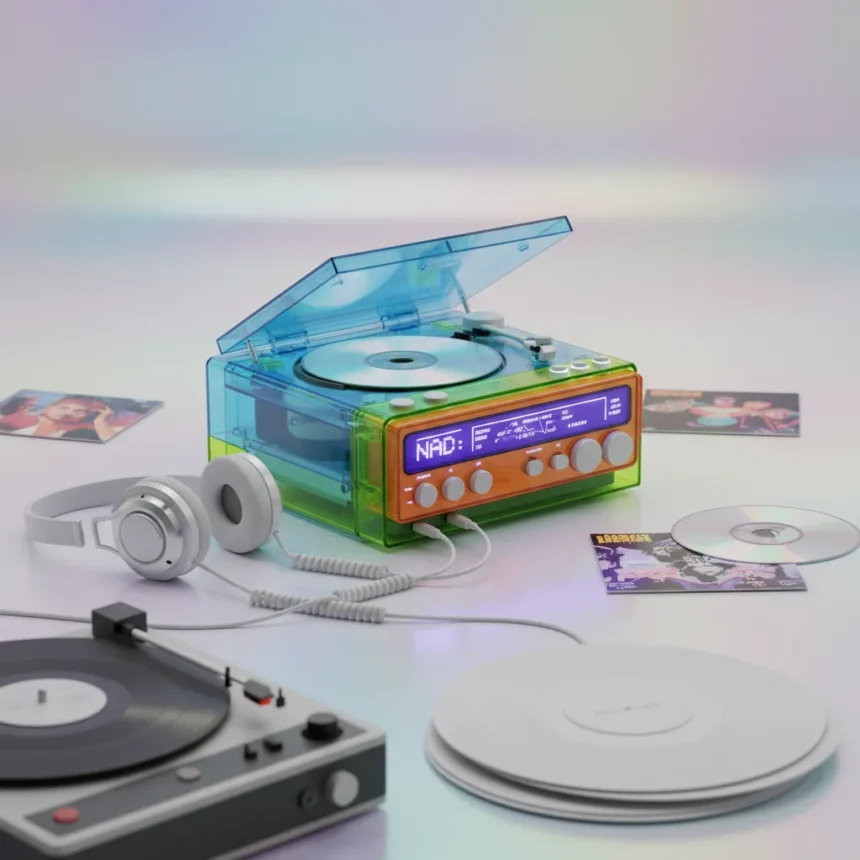
The Y2K revival is in full swing, and it is reshaping how people consume music. NAD, a high-end audio brand, has launched a new CD player that signals a seismic shift in retro audio preferences. For years, vinyl dominated the analog resurgence. Now, compact discs are staging a comeback that challenges vinyl’s reign as the format of choice for nostalgic listeners.
Key Takeaways
- NAD has launched a new CD player as part of the broader Y2K revival trend.
- The Y2K revival encompasses early 2000s aesthetics influencing fashion, technology, and music formats.
- CDs are experiencing a cultural moment, competing directly with vinyl’s dominance in analog revival.
- The resurgence reflects a generational shift toward early 2000s nostalgia over 1970s-80s vinyl aesthetics.
What Is the Y2K Revival and Why Does It Matter Now?
The Y2K revival refers to a cultural resurgence of early 2000s aesthetics and products. This trend has already infiltrated fashion, with low-rise jeans, butterfly clips, and cargo pants returning to mainstream wardrobes. Now it is extending into consumer electronics and audio formats. The timing is significant because the Y2K revival represents a generational shift—younger consumers who grew up with CDs and early digital media are now old enough to drive purchasing decisions and set cultural trends. This is not just nostalgia; it is a full-scale aesthetic movement reshaping multiple industries simultaneously.
What makes the Y2K revival distinct from previous retro cycles is its scope. Unlike nostalgia waves that typically affect one category, this movement spans music formats, fashion, design, and technology. NAD’s CD player launch is emblematic of this broader shift. The brand is not releasing a vintage reissue—it is manufacturing a new device for a market that has largely moved past physical media. That decision signals genuine commercial confidence in CD demand, not mere sentimentality.
How CDs Are Displacing Vinyl in the Analog Resurgence
For the past decade, vinyl records have dominated conversations about analog audio and retro media. Vinyl sales have grown year-over-year, and turntables have become cultural status symbols. The narrative was settled: if you wanted analog warmth and nostalgia, vinyl was the answer. NAD’s new CD player disrupts that narrative entirely. CDs offer advantages vinyl cannot match for this demographic. They are more durable, require less maintenance, skip less frequently, and deliver consistent playback without the ritual of careful handling. For listeners who remember burning CDs and ripping MP3s in the early 2000s, the format carries authentic personal resonance.



The shift also reflects practical economics. Vinyl production is expensive and capacity-constrained, with pressing plants operating at near-maximum capacity. CD manufacturing, by contrast, remains relatively straightforward and affordable. New CD players can be produced without the supply chain bottlenecks that plague vinyl. This means NAD and other manufacturers can meet demand at scale, making CDs a more viable format for a mass-market Y2K revival. Vinyl will not disappear, but CDs are no longer the forgotten stepchild of physical media—they are becoming the format of choice for a generation reclaiming early 2000s culture.
Why NAD’s Entry Signals a Turning Point
NAD is not a casual consumer electronics brand. The company targets audiophiles and serious listeners who care deeply about sound quality. A new CD player from NAD is not a throwaway novelty product; it is a calculated bet that CD playback is worth engineering for discerning ears. This legitimizes CDs as a serious audio format in the eyes of enthusiasts and casual listeners alike. When a respected audio manufacturer invests in new CD player development, it sends a message: CDs are not retro kitsch, they are a viable listening platform for the present and future.



The timing also matters. NAD’s launch arrives as the Y2K revival reaches mainstream saturation. Early adopters have already embraced the aesthetic; now, broader audiences are following. A new CD player from a credible audio brand arrives at exactly the moment when demand is likely to peak. This is not luck—it is the audio industry recognizing and capitalizing on a cultural moment that younger consumers are actively driving.
What This Means for the Future of Physical Media
The Y2K revival’s impact on CD players raises questions about the future of physical media more broadly. Streaming dominates music consumption, yet vinyl has thrived despite predictions of its obsolescence. Now CDs are joining the resurgence. This suggests that physical media is not dying—it is fragmenting into niche, lifestyle-driven categories. Vinyl appeals to audiophiles and 1970s-80s nostalgia seekers. CDs now appeal to Y2K revivalists and early 2000s enthusiasts. Each format serves a specific cultural identity and listening experience.
For manufacturers, this fragmentation creates opportunity. NAD’s CD player is not competing against streaming; it is competing against the cultural dominance of vinyl. If the Y2K revival continues accelerating, CD player sales could grow meaningfully. Whether this becomes a sustained market or a temporary trend depends on how deeply the early 2000s aesthetic embeds itself in mainstream culture. Current momentum suggests the former, but trends shift quickly.
Does the Y2K revival apply globally or just in Western markets?
The Y2K revival as described in current coverage focuses primarily on Western fashion, music, and consumer culture. NAD is an international brand with global distribution, but specific regional adoption rates for the new CD player are not yet documented. The trend appears strongest in markets with large populations of millennials who directly experienced the early 2000s.



Will CDs actually outsell vinyl now that NAD has entered the market?
NAD’s new CD player is a significant endorsement of CD demand, but it does not guarantee CDs will outsell vinyl. Both formats are now thriving in separate niches. Vinyl appeals to one demographic, CDs to another. Market dominance is less relevant than cultural momentum—CDs now have momentum they lacked five years ago, and that is the real story.
What other audio brands might launch CD players as the Y2K revival continues?
If NAD’s gamble proves profitable, other premium audio manufacturers will likely follow. However, the brief does not identify other brands planning CD player launches. The market will signal whether NAD’s move was prescient or premature.
The Y2K revival has moved beyond fashion and into the hardware we use to consume culture. NAD’s new CD player is not a nostalgic gimmick—it is a manufacturer betting that early 2000s aesthetics will drive purchasing decisions for years to come. Whether that bet pays off depends on how long this cultural moment sustains itself. For now, CDs are no longer the forgotten format. They are the sound of a generation reclaiming its past.
Where to Buy
NAD C 538 | 12 Amazon customer reviews
Edited by the All Things Geek team.
Source: T3