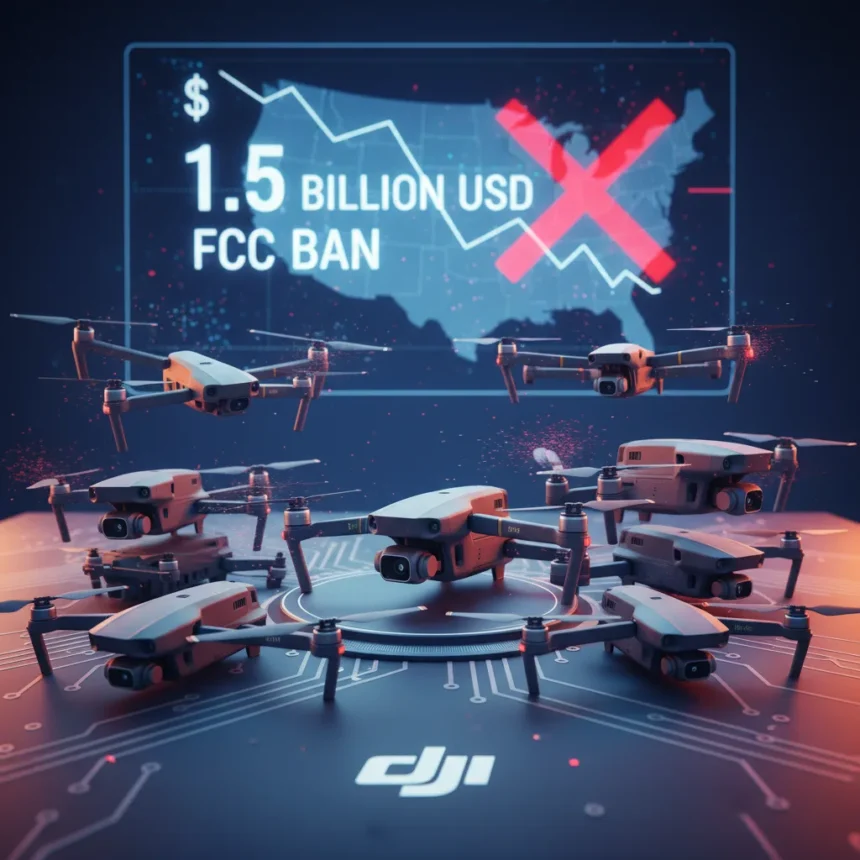
The DJI US drone ban is costing the Chinese manufacturer an estimated $1.5 billion in immediate financial harm, according to a federal appeals court filing that challenges the FCC’s December 2025 decision to prohibit the company from marketing, selling, and importing new products into the United States.
Key Takeaways
- FCC added all DJI communications and surveillance equipment to its Covered List on December 22, 2025, blocking new product imports and sales.
- DJI filed a Ninth Circuit appeal in February 2026 claiming the FCC exceeded its authority and violated the Fifth Amendment.
- The company estimates $1.5 billion in financial damage and says 25 drone and camera launches will be delayed or cancelled.
- Four foreign drone models received FCC exemptions after proving no security risk, raising questions about the ban’s consistency.
- Existing DJI products authorized before the ban remain legal, but the company claims imports are being restricted beyond the order’s scope.
What the DJI US drone ban actually means
On December 22, 2025, the FCC designated all DJI communications and video surveillance equipment as covered products, triggering an automatic import and sales prohibition. This was not a surprise ban—it was the result of a legislative deadline in the National Defense Authorization Act (NDAA) for fiscal 2025, which set December 23 as the cutoff for a national security audit of DJI. When no audit occurred, the Covered List addition became automatic.
The DJI US drone ban does not affect products that received FCC equipment authorization before December 22. Existing models like the DJI Avata 360 remain legal to sell and import through normal channels. However, DJI claims the FCC is restricting imports of these pre-authorized products beyond the scope of its original order, effectively extending the ban’s reach.
Any new drone or camera model DJI wants to release in the US now requires FCC equipment authorization—a process the agency has essentially shut down for DJI products. This creates a bottleneck that forces the company to shelve its 2025 product pipeline.

DJI’s legal case against the FCC ban
In February 2026, DJI filed a petition for review (Case 26-1029) in the US Court of Appeals for the Ninth Circuit, arguing the FCC decision is both procedurally and substantively flawed. The company’s core claim: the FCC exceeded its statutory authority by adding DJI to the Covered List without identifying any actual national security threat from DJI products.
DJI’s petition alleges three violations. First, the FCC lacked the statutory power to make the decision without conducting a real security assessment. Second, the agency failed to follow required procedures, including giving DJI a meaningful opportunity to respond before the ban took effect. Third, the Fifth Amendment violation: the government is effectively destroying DJI’s business without due process. DJI has also filed a separate motion for reconsideration with the FCC itself.



The company retained high-profile legal firepower for the fight, hiring Biden’s former Solicitor General and a former FCC Enforcement Bureau chief. This signals DJI views the case as winnable on procedural grounds rather than purely on national security merits.
Why the FCC exempted rival drones but not DJI
The DJI US drone ban sits awkwardly alongside recent FCC decisions to exempt four foreign drone models—including the SiFly Q12—from the import prohibition. These exemptions came after the manufacturers filed petitions demonstrating no security risk and making onshoring commitments. The contrast raises a sharp question: if other foreign drones can prove safety and get exemptions, why was DJI denied the same process?
DJI has never manufactured military equipment and enforces strict policies against military sales and modifications. The company has also publicly denounced combat use of drones. Yet the FCC’s blanket ban treats DJI’s entire product line as a national security threat without publishing specific evidence.
DJI’s statement captures the frustration: the ban “carelessly restricts DJI’s business in the US and summarily denies US customers access to its latest technology”. From the company’s perspective, it is being punished for a legislative gap—the failed audit deadline—rather than for any proven wrongdoing.



What happens next in the appeal
The Ninth Circuit will decide whether to vacate the FCC’s Covered List ruling, uphold it, or narrow its scope. A win for DJI would reopen the US market and force the FCC to either conduct a proper security review or remove DJI from the list. A loss means the ban likely stands, with potential appeals to the Supreme Court extending the legal fight for years.
The $1.5 billion financial hit figure disclosed in DJI’s appeal is significant because it quantifies the real-world damage of the ban—not just lost revenue, but the cost of shelving product development, laying off teams, and losing market share to competitors. For a company that dominates the US consumer drone market, a multi-year ban is existential.
Meanwhile, US drone enthusiasts and commercial operators face a shrinking product lineup. DJI’s 25 planned launches for 2025 will not happen. Competitors without FCC restrictions—or with exemptions already granted—will fill that gap.
Could other countries follow the US ban?
The DJI US drone ban is specific to US law and the FCC’s authority. Other countries have not imposed similar blanket bans, though some have restricted DJI products in government use or critical infrastructure. The US action is the most aggressive market restriction DJI has faced, which is why the company is fighting it so hard in federal court.
Is DJI’s appeal likely to succeed?
DJI’s strongest argument is procedural: the FCC did not follow the Administrative Procedure Act’s requirement to give the company notice and a chance to respond before imposing the ban. Courts often rule in favor of companies on these grounds, regardless of the underlying national security claim. However, national security cases receive significant judicial deference to the executive branch, which could work against DJI.
What should US drone buyers do right now?
If you own a DJI drone purchased before December 22, 2025, it remains legal and fully supported. DJI’s customer service, software updates, and warranty coverage continue. The ban only affects new models and imports going forward. Buyers considering a DJI purchase should act quickly if they want the latest technology, as inventory of pre-ban models will eventually deplete.
The DJI US drone ban reveals a collision between national security concerns and due process. Whether the Ninth Circuit sides with the company or upholds the FCC, the outcome will reshape how the US government regulates foreign tech companies—and whether it must prove its case before banning them entirely.
Where to Buy
DJI Osmo Action 6 | GoPro HERO13 Black | Insta360 X5
Edited by the All Things Geek team.
Source: TechRadar