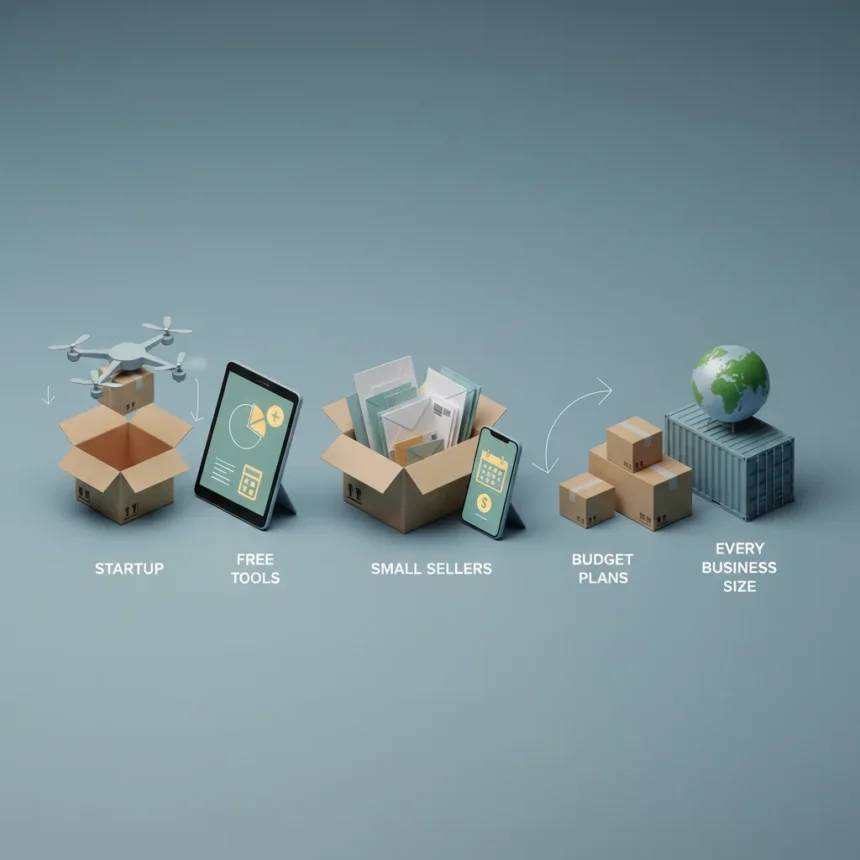
The most affordable shipping solution isn’t one-size-fits-all. Your business size, order volume, and service requirements determine which platform delivers real savings versus empty promises.
Key Takeaways
- Free shipping tools like Pirate Ship eliminate software costs for small sellers.
- Budget plans on Shippo and ShipStation serve mid-size businesses without enterprise pricing.
- Shipping solutions scale differently—what works for startups fails at scale.
- Carrier discounts and label batching reduce per-shipment costs significantly.
- Integration with ecommerce platforms matters more than price alone.
Free Tools Beat Paid Plans for Minimal Volume
Free shipping software solves a real problem: why pay $30–50 monthly when you ship five packages a week? Pirate Ship stands out as a genuinely free option that doesn’t hobble features to drive upgrades. No credit card required, no trial expiration, no hidden tiers. For solopreneurs and early-stage sellers, this eliminates the shipping software cost entirely and lets you focus capital elsewhere.
The catch is volume. Free tools work because they aggregate your shipping volume with thousands of other small users, negotiating carrier rates that beat retail prices. Once you hit consistent weekly volume, the math changes. At that point, you’re not comparing free versus paid—you’re comparing which paid platform delivers the most value per dollar spent.
Budget Plans on Shippo and ShipStation for Growing Businesses
Mid-size businesses—those shipping 50–500 packages weekly—face a different equation. Shippo and ShipStation both offer budget-tier plans that cost less than enterprise solutions but include features free tools cannot match: API access, automation rules, advanced reporting, and carrier integrations.


These platforms earn money by taking a small cut of your shipping costs, not just from software fees. That alignment matters. They benefit when you ship cheaper, which pushes them to constantly negotiate better rates with UPS, FedEx, and USPS. Your software vendor is now incentivized to reduce your costs, not maximize their subscription revenue.
The most affordable shipping solution at this scale isn’t the cheapest monthly fee—it’s the platform that gives you the best per-label rates after all discounts apply. A $20-per-month tool that charges $0.03 per label beats a $5-per-month tool that charges $0.05 per label once you hit volume.



Enterprise Solutions and Carrier Negotiations
Large businesses shipping thousands of packages daily face a third equation entirely. Enterprise shipping platforms negotiate directly with carriers, securing volume discounts that dwarf what smaller businesses access. The most affordable shipping solution at scale includes dedicated account managers, custom integrations, and negotiated rates that aren’t published.
At this level, comparing public pricing is meaningless. A $500-monthly enterprise plan might deliver lower per-shipment costs than a $50-monthly mid-market plan because the enterprise customer’s volume unlocks better carrier rates. The vendor’s margin matters less than the carrier discount you can command.
Why Integration Matters More Than Price Alone
A shipping platform’s true cost includes the time you spend moving data between systems. If your most affordable shipping solution requires manual order entry from your ecommerce platform, you’re hiding labor costs inside the software fee. The cheapest tool becomes expensive once you factor in hours spent copying tracking numbers and updating inventory.
Pirate Ship, Shippo, and ShipStation all integrate with major ecommerce platforms—Shopify, WooCommerce, BigCommerce—to varying degrees. Integration depth varies. Some platforms sync orders automatically; others require manual imports. Before choosing based on price, verify the integration actually works with your specific platform and workflow. A $10-cheaper solution that requires manual data entry isn’t cheaper at all.



Regional Availability and Carrier Coverage
The most affordable shipping solution also depends on which carriers serve your shipping lanes. Domestic-only businesses have different needs than international sellers. USPS offers rock-bottom rates for small domestic packages but limited international options. UPS and FedEx cost more domestically but offer better international coverage and reliability.
Platforms differ in which carriers they integrate with and which rates they can access. Some specialize in USPS discounts; others prioritize FedEx or UPS. Your choice of platform directly affects which carrier discounts you can claim. A platform that only integrates USPS might be perfect for domestic sellers but wrong for anyone shipping internationally.
How do I choose between free and paid shipping tools?
Choose free tools if you ship fewer than 50 packages weekly and don’t need advanced automation or reporting. Choose paid plans once manual order entry becomes a time sink or you need API access for custom integrations. The transition point differs by business, but it usually arrives around 100+ weekly shipments.
What’s the real cost difference between shipping platforms?
Monthly software fees range from free to $500+, but carrier rates matter far more. A $30-monthly platform with $0.02-per-label savings beats a free platform charging $0.05 per label at any volume above 1,500 monthly shipments. Calculate your actual per-label cost, not just the subscription fee.
Can I switch shipping platforms without losing carrier discounts?
Your carrier discounts belong to you, not the platform. When you switch platforms, you keep your negotiated rates—they’re tied to your account with the carrier, not your shipping software. The transition is usually seamless, though some platforms integrate more smoothly with your ecommerce system than others.
The most affordable shipping solution is the one that matches your current volume and growth trajectory. Start free, graduate to a budget plan, and negotiate enterprise rates only when your volume justifies the complexity. Overpaying for features you don’t use yet is as wasteful as staying on free software too long.
Edited by the All Things Geek team.
Source: TechRadar