



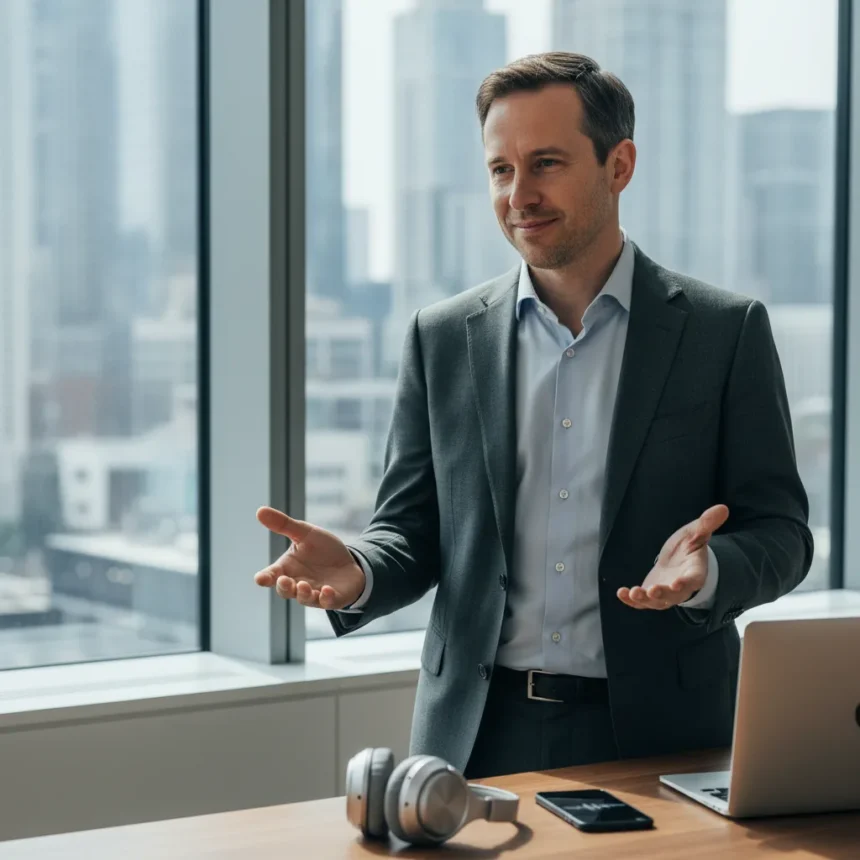
Oliver Schusser, Apple Music’s VP, has done what few audio executives dare: admit that lossless audio perception remains a non-issue for ordinary listeners. In an April 2026 Billboard interview with journalist Kristin Robinson, Schusser confirmed what audiophile skeptics have long suspected—that lossless audio perception is essentially undetectable to the vast majority of people using standard consumer equipment.
Key Takeaways
- Apple Music VP Oliver Schusser confirmed most people cannot distinguish lossless audio from compressed formats.
- Blind tests on iPhone with headphones show even industry professionals fail to detect the lossless audio perception difference.
- Apple prioritizes Spatial Audio over lossless because it delivers noticeable improvements across more devices.
- Lossless audio is available free to all Apple Music subscribers in resolutions up to 24-bit/192 kHz.
- Schusser’s candor reignites debate on whether lossless audio perception matters for typical wireless listening.
What Schusser Actually Said About Lossless Audio Perception
Schusser’s acknowledgment came when Robinson suggested that most average people cannot hear the difference with lossless. His response was blunt: “Correct”. He then elaborated with a telling admission about blind testing methodology. “Honestly, if we did an anonymous [blind] test on just an iPhone with headphones—and you and I work in the industry, and I assume you like sound as much as I do—I can tell you most fans wouldn’t be able to tell the difference,” Schusser told Robinson. This candor from an Apple executive challenges years of marketing around lossless audio perception as a premium feature worth pursuing.
The implication cuts deeper than surface-level honesty. Schusser is essentially saying that even people who work in audio—people with trained ears and financial stakes in caring about quality—cannot reliably detect lossless audio perception in real-world scenarios involving consumer headphones and iPhones. That is a damning statement about the practical relevance of the format for everyday listening.
Why Apple Chose Spatial Audio Over Lossless Audio Perception
Rather than doubling down on lossless audio perception, Apple made a strategic pivot toward Spatial Audio with Dolby Atmos. Schusser outlined two reasons for this choice: “One: we thought it’s important that people—general people, fans—can notice the difference. And number two: we wanted it to work on as many, if not all, devices”. This reveals Apple’s pragmatic hierarchy. A feature that most listeners cannot detect is less valuable than one they can immediately perceive, regardless of how technically superior lossless audio perception might be on paper.
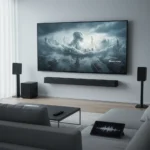

Spatial Audio delivers an obvious, directional difference that casual listeners notice immediately, even on budget wireless earbuds. Lossless audio perception, by contrast, requires high-end equipment, controlled listening environments, and trained attention to reveal itself—if it reveals itself at all. Apple’s decision to prioritize the former over the latter is a tacit acknowledgment that lossless audio perception, while technically available, does not drive subscriber satisfaction or differentiation in the market.
The Lossless Audio Perception Debate Remains Unresolved
Schusser’s comments do not settle the audiophile argument entirely. Forum discussions on Roon Labs cite claims from other Apple executives— Eddy Cue—suggesting that 98 to 99 percent of people cannot identify lossless audio perception, though these claims require high-end audiophile equipment and are not attributed directly to Schusser. Audiophile communities point out that on well-mastered jazz and classical recordings played through premium gear, lossless audio perception differences do exist, but these scenarios represent a tiny fraction of real-world listening.


The broader truth is that lossless audio perception matters almost exclusively to a niche audience: people with expensive headphones or speakers, dedicated listening rooms, and music specifically engineered to showcase the format’s strengths. For everyone else—commuters with AirPods, office workers streaming through laptop speakers, casual listeners on mobile devices—the distinction is meaningless. Schusser’s honesty simply acknowledges this reality that the industry has long tried to obscure.
How to Enable Lossless Audio on Your Device
Despite the candid skepticism about lossless audio perception from Apple’s leadership, the feature remains available to all Apple Music subscribers at no additional cost. The catalog is encoded in Apple Lossless Audio Codec (ALAC) at resolutions ranging from 16-bit/44.1 kHz (CD quality) up to 24-bit/192 kHz. To enable lossless audio perception on your device, the process varies by platform.
On macOS, open Music, navigate to Preferences, select the Playback tab, and choose “Lossless audio” from the audio quality menu. You can adjust separate settings for streaming and downloading. On Android, the process is Settings > Apps > Music > Audio Quality, then toggle on Lossless Audio and adjust the streaming and downloading preferences. On iOS, similar controls exist within the Music app settings, though iPhone speakers and most wireless earbuds cannot actually reproduce lossless audio perception due to hardware limitations—another reason Schusser’s skepticism is well-founded.
Is Lossless Audio Worth Pursuing for Most Listeners?
No. Schusser’s admission confirms what years of blind testing have suggested: lossless audio perception is inaudible to the overwhelming majority of people in typical listening scenarios. Unless you own high-end speakers or headphones, listen in a controlled environment, and deliberately focus on sonic minutiae, enabling lossless audio offers no practical benefit. Even then, the difference is subtle enough that most industry professionals fail to detect it in blind tests on consumer devices.
What is Spatial Audio and why does Apple prefer it?
Spatial Audio with Dolby Atmos creates a three-dimensional soundscape that listeners immediately perceive as different from stereo, making it a more effective differentiator than lossless audio perception. It works across most modern devices and streaming scenarios, whereas lossless audio perception requires specific hardware and listening conditions to matter at all.
Can you hear the difference between lossless and compressed audio on an iPhone?
Virtually no. Schusser’s blind testing specifically noted that even audio professionals cannot reliably distinguish lossless audio perception from compressed formats on an iPhone with standard headphones. The iPhone’s speaker and most wireless earbuds lack the fidelity to reproduce the differences that lossless audio perception theoretically offers.
Schusser’s candor marks a rare moment of executive honesty in an industry built on marketing incremental improvements as revolutionary. Lossless audio perception is real—it exists, it is measurable, and it is available to Apple Music subscribers. But it is also largely irrelevant to how people actually listen to music. That gap between technical capability and practical impact is what Schusser finally acknowledged, and it is a conversation the audio industry needed to have.
This article was written with AI assistance and editorially reviewed.
Source: What Hi-Fi?