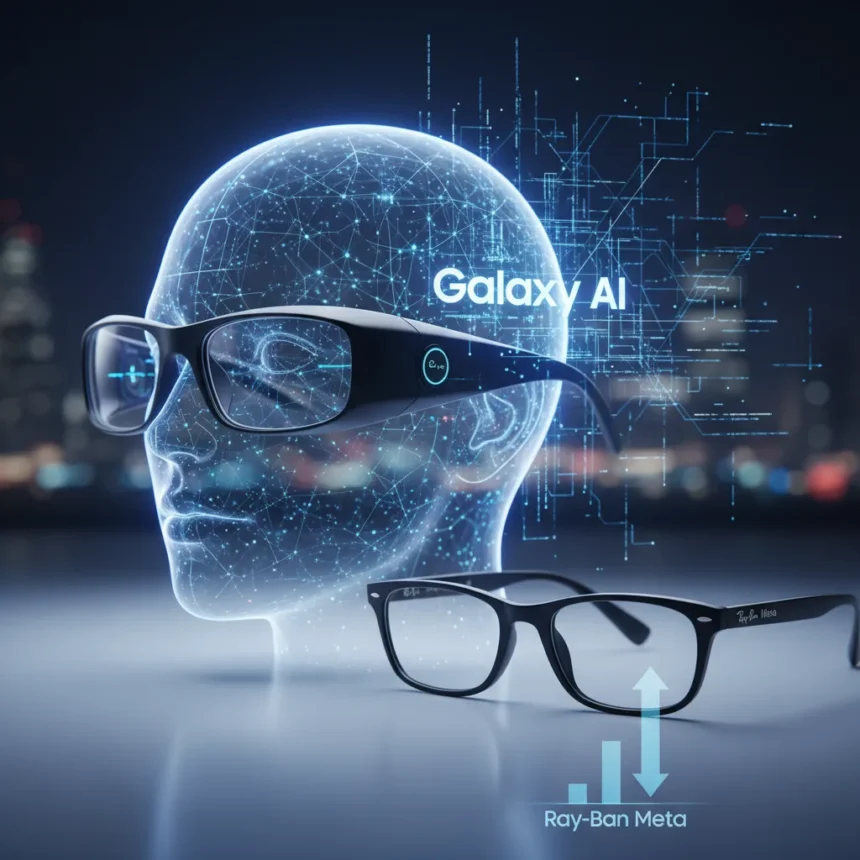
Samsung Galaxy Glasses are shaping up to be a genuine rival to Ray-Ban Meta, with leaked renders and code references suggesting a design that closely mirrors Meta’s smart glasses but pairs it with deeper AI integration. The Samsung Galaxy Glasses are a smart eyewear product in development by Samsung, with rumors pointing to a 2026 launch for the first model and a more advanced AR-equipped variant arriving in 2027 or later. No official pricing has been confirmed. Recent leaks buried inside One UI 8.5 and One UI 9 code have pulled back the curtain on what Samsung is building — and the AI angle is where things get genuinely interesting.
Key Takeaways
- Leaked renders show Samsung Galaxy Glasses closely resembling Ray-Ban Meta in design, but with Galaxy AI integration as a key differentiator.
- Samsung is developing two separate smart glasses lines: a display-free AI model targeting 2026 and an AR display-equipped variant for 2027 or beyond.
- Battery capacity in leaks ranges from 155mAh to 245mAh — the larger figure hints at a display-equipped model comparable to Ray-Ban Meta Display.
- At least one model is rumored to feature a 12MP Sony IMX681 CMOS camera sensor.
- The glasses appear in Samsung’s One UI code paired with a dedicated icon, and they connect via Wi-Fi and Bluetooth — no mobile data.
What the Samsung Galaxy Glasses Leaks Actually Reveal
The Samsung Galaxy Glasses look, based on leaked renders, almost indistinguishable from Ray-Ban Meta at a glance. That’s not a coincidence — it’s a strategic choice. Samsung appears to be targeting exactly the same casual wearable market that Meta has been cultivating, but the AI stack underneath is where Samsung intends to pull ahead. References to the glasses found inside One UI 8.5 and One UI 9 code show a dedicated pairing icon and tight integration with Samsung phones.
Model numbers referenced in leaks include SM-O200P and SM-O200J, likely tied to the 2026 release, and SM-O500 and SM-O500P, which appear to correspond to a variant called Project Haean. Project Haean is Samsung’s own XR glasses effort, weighing around 50 grams, and it was expected to launch in 2025 before being delayed. The reappearance of Project Haean references in One UI 9 code suggests Samsung hasn’t shelved it — it’s just taking longer than anticipated.
How Samsung Galaxy Glasses Compare to Ray-Ban Meta
Samsung Galaxy Glasses and Ray-Ban Meta share a form factor philosophy: lightweight frames, cameras, speakers, and no bulk. But the AI capabilities Samsung is building around Galaxy AI could meaningfully separate the two products. Ray-Ban Meta relies on Meta AI, which is capable but tethered to Meta’s ecosystem. Samsung’s Galaxy AI, already present across its phones and tablets, brings a different set of integrations — and potentially heads-up display overlays for information directly in the lens on advanced models.



On battery, leaked figures show some Galaxy Glasses models at 155mAh and at least one variant at 245mAh. That 245mAh figure is notable because it sits in the same range as the Ray-Ban Meta Display model, which also carries a larger battery to power its display hardware. That parallel strongly hints Samsung is planning a display-equipped Galaxy Glasses variant, not just a voice-first pair of frames. The rumored 12MP Sony IMX681 CMOS sensor for at least one model also suggests Samsung is taking the camera component seriously.
Ray-Ban Meta currently has a meaningful head start in market presence and brand recognition, particularly through its Meta AI assistant integration. Samsung’s challenge is not just matching the hardware — it’s convincing consumers that Galaxy AI offers enough day-to-day value to make the switch. That’s a harder sell than specs alone can make.



Samsung’s Two-Track Smart Glasses Strategy
Samsung is not building one product here — it’s building a platform. The strategy splits into two distinct tracks: a lighter, display-free AI Glasses model aimed at 2026, and a full AR display-equipped Galaxy Glasses variant targeting 2027 or later. The display-free model would be voice-first, leaning on Galaxy AI for its intelligence without the battery and engineering demands of a built-in display. The advanced model would push further into augmented reality territory.
This two-track approach is distinct from how Meta has handled Ray-Ban. Meta launched display-equipped Ray-Ban Meta glasses and iterated from there. Samsung is staging its entry — get the simpler product right first, then escalate. It’s a more conservative roadmap, but given how many smart glasses products have stumbled on battery life and heat, there’s logic in it. Project Haean’s delay is a reminder that even Samsung can’t rush this category.
It’s also worth separating the Galaxy Glasses from Samsung’s other XR product, the Galaxy XR headset known as Project Moohan. That device is a full headset in the Apple Vision Pro and Meta Quest category, running on Android XR with One UI XR, and it’s a fundamentally different product class. The glasses and the headset are complementary pieces of Samsung’s broader XR ecosystem push, not the same product under different names.
Is Samsung Galaxy Glasses worth waiting for?
If you’re in the market for smart glasses right now, Ray-Ban Meta remains the only polished option at scale. The Samsung Galaxy Glasses don’t have a confirmed launch date, price, or availability window beyond the rumored 2026 target for the first model. Waiting is only worth it if Galaxy AI integration genuinely matters to your workflow — and that’s something Samsung hasn’t demonstrated publicly yet.


Will Samsung Galaxy Glasses work without a Samsung phone?
Based on current leaks, the Samsung Galaxy Glasses appear in One UI 8.5 and One UI 9 code and pair via Wi-Fi and Bluetooth with Samsung phones. There’s no confirmed information about compatibility with non-Samsung Android devices or iPhones. Given Samsung’s ecosystem strategy, it’s reasonable to expect Samsung phones will get the best experience — but nothing official has been stated.
What is Project Haean and how does it relate to Galaxy Glasses?
Project Haean is one of Samsung’s smart glasses development tracks, referenced by model numbers SM-O500 and SM-O500P in leaked code. It targets around 50 grams in weight and includes cameras, gesture recognition, and a potential heads-up display. It was expected in 2025 but has been delayed. Project Haean appears to be the more advanced XR glasses variant rather than the simpler display-free AI Glasses Samsung is also developing.
Samsung Galaxy Glasses are coming — the leaks make that clear. What’s less certain is the timeline, the final feature set, and whether Galaxy AI will deliver enough real-world value to challenge Ray-Ban Meta’s established position. The 245mAh battery hint at a display model is the most exciting signal in these leaks. If Samsung can ship a lightweight display-equipped pair of smart glasses with tight Galaxy AI integration by 2027, it won’t just be competing with Meta — it’ll be redefining what smart glasses are expected to do.
Where to Buy
RayNeo Air 3s | Xreal One | Ray-Ban Meta Skyler (Gen 2) | Ray-Ban Meta Wayfarer (Gen 2) | Ray-Ban Meta Wayfarer (Gen 1)
Edited by the All Things Geek team.
Source: TechRadar