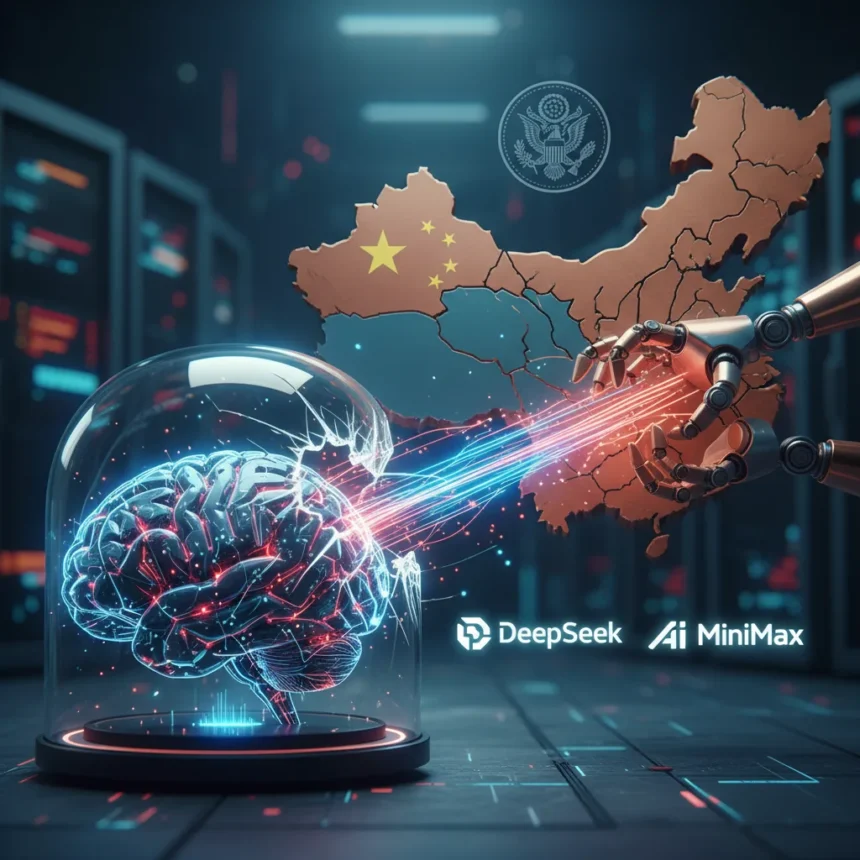
AI intellectual property theft has moved from vague warnings to specific accusations. The US State Department issued a global cable targeting Chinese companies including DeepSeek, Moonshot AI, and MiniMax for systematically stealing models from American AI labs using extraction and distillation techniques.
Key Takeaways
- US State Department issued global warning naming DeepSeek, Moonshot AI, and MiniMax for AI model theft
- Chinese firms use “distillation” methods to replicate US AI models at a fraction of the cost
- OpenAI warned US lawmakers that DeepSeek specifically targeted CAPTCHA makers and leading US AI companies
- State Department sent formal demarche request to Beijing raising concerns about widespread IP theft
- Stolen models perform comparably on benchmarks but lack full capabilities of originals
The Escalation: From Warnings to Named Accusations
For months, US AI companies warned of Chinese competitors stealing their work. Now the State Department has made it official. The cable describes a coordinated campaign of what it calls “widespread efforts by Chinese companies including AI startup DeepSeek to steal intellectual property from the US artificial intelligence labs”. This is not speculation—it is a formal diplomatic statement backed by evidence from OpenAI and other targeted firms.
What makes this escalation significant is the specificity. Rather than vague accusations of “unfair competition,” the State Department now details the exact method: extraction and distillation. Chinese firms allegedly create accounts with US services like OpenAI, pull data from these interactions, and use that data to train cheaper models that mimic the originals’ performance on standard benchmarks.
How Distillation Works and Why It Matters
Distillation is a legitimate machine learning technique—but when applied surreptitiously, it becomes theft. The State Department cable states that “AI models developed from surreptitious unauthorized distillation campaigns enable foreign actors to release products that appear to perform comparably on select benchmarks at a fraction of the cost but do not replicate the full performance of the [original models]”. In plain terms: Chinese companies are copying US models well enough to fool benchmark tests, but the copies lack depth and reliability.



This matters because it undercuts the investment American companies made in research and development. OpenAI spent billions training models like GPT-4. DeepSeek and its peers are allegedly using a shortcut—they extract outputs from those models, train new models on the extracted data, and launch competitors at lower prices. The result looks competitive on paper but is fundamentally derivative.
DeepSeek, Moonshot AI, and MiniMax: The Named Targets
DeepSeek has been the most visible target of these accusations. OpenAI warned US lawmakers that DeepSeek specifically targeted CAPTCHA makers and leading US AI companies to replicate their models. DeepSeek has gained significant attention for releasing models that perform well on public benchmarks while pricing them far below US competitors. The State Department cable now suggests that performance comes from unauthorized distillation rather than independent innovation.



Moonshot AI and MiniMax face the same allegations but have received less public scrutiny. All three companies operate in China’s AI market, where they compete with each other and with OpenAI’s API access. The accusation is that they are using that API access not to build applications, but to extract training data.
What Comes Next: Diplomacy and Enforcement
The State Department did not stop at issuing a cable. It sent a separate demarche request—a formal diplomatic note—to Beijing raising the issue directly with the Chinese government. This signals that the US views AI IP theft as a state-level concern, not merely a corporate dispute.
The practical impact remains unclear. The US has limited leverage over Chinese companies operating in China. Sanctions are possible but would likely trigger retaliation. What the cable does accomplish is documentation. If US-China relations deteriorate further or if trade negotiations resume, this formal record of IP theft will be part of the conversation.
Is DeepSeek’s success entirely based on stolen models?
The State Department cable alleges distillation campaigns, but it does not claim DeepSeek has zero independent research. The accusation is that distillation was a primary method, not the only method. DeepSeek may have conducted some original work alongside the alleged extraction.


What is the difference between distillation and other forms of AI development?
Legitimate distillation involves training a smaller model to mimic a larger one using publicly available outputs—essentially learning from published results. Unauthorized distillation, as the State Department describes it, involves systematically extracting data from proprietary services without permission to train competing models.
Could the US retaliate against these companies?
The US could restrict these companies’ access to American cloud infrastructure, ban their services in the US, or impose sanctions. However, these firms primarily serve the Chinese market, so US restrictions would have limited direct impact. The real pressure would come through trade negotiations or diplomatic escalation with Beijing.
The State Department’s escalation signals a hardening stance on AI IP theft. Whether it leads to enforcement action or merely documents the problem for future negotiations remains to be seen. What is clear is that the US no longer views this as a private sector issue—it is now official US policy that Chinese companies are stealing American AI models, and Beijing has been formally notified.
Edited by the All Things Geek team.
Source: TechRadar