


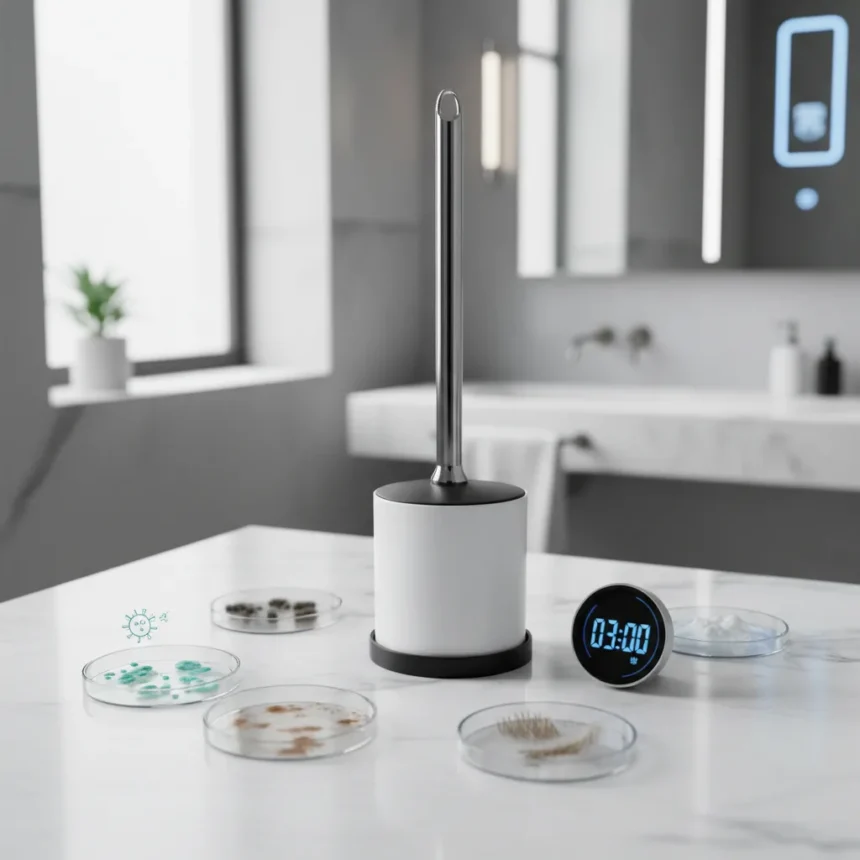
How often should you change your toilet brush to stay hygienic? Most people never think about it—until they realize their brush is a breeding ground for E. coli, fecal coliforms, and Staphylococcus aureus. The answer: replace your toilet brush every 3 months for optimal hygiene, or sooner if warning signs appear.
A toilet brush is one of the dirtiest tools in your home. Even after cleaning, it can still harbor harmful bacteria due to its moist environment and bristle design that traps waste. The bristles stay damp long after use, creating ideal conditions for microbial growth. Most households ignore this risk entirely, storing brushes in enclosed holders that prevent air circulation and accelerate bacterial colonization.
Key Takeaways
- Replace toilet brushes every 3 months to prevent harmful bacterial buildup.
- Five warning signs demand immediate replacement: frayed bristles, visible mold, persistent odor, discoloration, and slimy texture.
- Clean your brush after every use with hot water and disinfectant spray.
- Store brushes in dry, ventilated holders and allow 24+ hours for complete drying between uses.
- Silicone brushes are more hygienic than nylon types and resist mold better.
The 5 Warning Signs Your Toilet Brush Needs Immediate Replacement
Don’t wait three months if your brush shows these red flags. Frayed, splayed, or bent bristles reduce cleaning effectiveness and trap more bacteria in their damaged fibers. Visible mold, mildew, or black spots on bristles or the handle are unmistakable signals that bacteria have colonized the brush beyond recovery. A persistent odor despite thorough cleaning and drying indicates active bacterial growth inside the bristles. Discoloration or staining that doesn’t rinse off suggests permanent contamination. Finally, if your brush feels slimy or has an unusual texture after use, bacteria have established a biofilm that cleaning alone cannot remove.
Each of these signs represents a failure point in your hygiene routine. A frayed brush won’t scrub effectively, meaning you’re not cleaning your toilet properly while simultaneously harboring more bacteria. Mold and mildew growth accelerates bacterial reproduction. Odor and sliminess are visible proof that your brush is no longer sanitary—it’s actively contaminating your toilet with each use.



How to Clean Your Toilet Brush After Every Use
Proper daily cleaning extends your brush’s lifespan and reduces bacterial load between replacements. Start by flushing the toilet first to rinse the brush. Then rinse it thoroughly under hot running water while scrubbing the bristles against the inner rim to dislodge waste. Spray the brush liberally with disinfectant—a bleach solution (1 part bleach to 10 parts water) works well, or use a bathroom cleaner. Agitate the bristles vigorously for 30 seconds to ensure the disinfectant penetrates deep into the bristle structure. Rinse again under hot water until no chemical smell remains. Finally, shake off excess water and place the brush in a dry, ventilated holder with bristles pointing up to air dry completely.
This routine takes under two minutes but dramatically reduces bacterial survival rates. The key is ventilation—enclosed holders trap moisture and defeat the purpose of drying. Your brush needs airflow to dry fully between uses. Allow at least 24 hours for complete drying between uses.



Monthly Deep Cleaning and Storage Best Practices
Beyond daily cleaning, give your brush a deep clean monthly or as needed. Mix bleach and water in a 1:10 ratio and soak the brush for at least 1 hour. Rinse thoroughly in hot water afterward. While the brush soaks, clean the holder itself with disinfectant, rinse it, and let it air dry. Never store your brush in a fully enclosed container—this traps moisture and accelerates bacterial growth. Instead, use a holder with ventilation slots or an open cup that allows air circulation.
One critical rule: avoid using the same brush for multiple toilets or non-toilet tasks. Cross-contamination spreads bacteria between fixtures and surfaces. If you have multiple bathrooms, each toilet needs its own brush. Some households make the mistake of using an old toilet brush for cleaning tile grout or other surfaces—this is a direct path to spreading fecal bacteria throughout your home.
Silicone and Replaceable-Head Alternatives
Traditional nylon toilet brushes aren’t your only option. Silicone brushes are more hygienic than nylon types because they don’t trap debris as effectively, are self-cleaning, and resist mold better. Many silicone brushes are dishwasher-safe, making sanitization easier. Disposable toilet brushes with single-use heads reduce long-term bacteria buildup since you replace the head rather than the entire brush. Electric toilet brushes rotate for better cleaning but still require 3-month replacement if not dried properly—they don’t solve the fundamental moisture problem.
Replaceable-head systems offer a cost-effective middle ground. Instead of discarding the entire brush every three months, you swap out just the bristle head, keeping the handle and holder. This reduces waste and expense over time while maintaining the same hygiene standard.



Why Your Toilet Brush Is Dirtier Than You Think
The bathroom environment itself works against brush hygiene. Toilet spray—microscopic particles released when you flush—contaminates everything nearby, including your brush holder and the surrounding area. The brush’s bristle design naturally traps waste particles that rinsing alone cannot fully remove. Even if you can’t see debris, bacteria are multiplying inside the bristles. The warm, moist bathroom environment accelerates this growth.
Post-pandemic awareness of household bacteria has highlighted this overlooked risk. Many people now recognize that their bathroom cleaning tools require the same attention as their kitchen sponges—which most households replace monthly or more frequently. Your toilet brush deserves equal scrutiny.
Is a 3-month replacement schedule really necessary?
Yes, for most households. Three months is the standard replacement interval recommended by cleaning experts because that’s when bacterial load typically exceeds safe levels, even with proper daily cleaning. However, if you notice any of the five warning signs before three months pass, replace immediately rather than waiting.
Can you sanitize a toilet brush in the dishwasher?
Dishwashers work well for silicone brushes, which are heat-resistant and dishwasher-safe. Traditional nylon brushes can warp under high heat. For nylon brushes, stick to the bleach-soak method (1:10 ratio, 1+ hour) described above.
What’s the best type of toilet brush for hygiene?
Silicone brushes resist mold and bacteria better than nylon, don’t trap debris as effectively, and are often dishwasher-safe for easier sanitization. Replaceable-head systems reduce long-term contamination by letting you swap bristles without storing a bacteria-laden handle. Both options outperform traditional nylon brushes in terms of hygiene maintenance.
Your toilet brush is one of the most-neglected hygiene tools in your home. Replacing it every three months, cleaning it daily with disinfectant, and storing it in a ventilated holder transforms it from a bacteria reservoir into an actually hygienic cleaning tool. Don’t wait until you see mold or smell odor—commit to the 3-month cycle and watch for those five warning signs. Your bathroom’s cleanliness depends on it.
Where to Buy
$20 at Amazon. | $22 at Amazon | 8% OFFAmazonJoseph Joseph Flex Lite Silicone Toilet Brush $22.99$25shop now | AmazonOxo Good Grips Compact Toilet Brush & Canister$20.40shop now | AmazonMr.Siga Toilet Bowl Brush and Holder$15.99shop now
This article was written with AI assistance and editorially reviewed.
Source: Tom's Guide