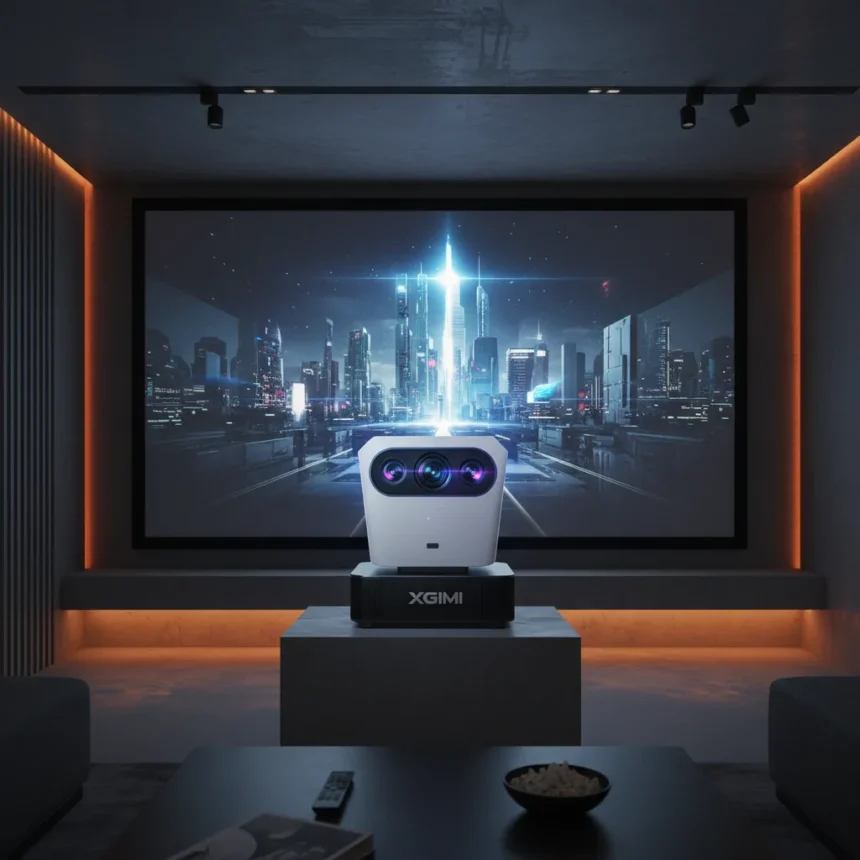
The 4K smart projector market just got more crowded. A new flagship model featuring the world’s first 3-in-1 optical system is directly challenging XGIMI’s grip on the premium home cinema space, and it brings some genuinely compelling hardware to the fight.
Key Takeaways
- A new flagship 4K smart projector introduces a 3-in-1 optical system as its core differentiator against XGIMI models.
- The competitor features an advanced dynamic IRIS system with 10,000:1 native contrast for superior highlight and shadow control.
- XGIMI’s HORIZON 20 Max remains the brightness leader at 5700 ISO lumens with RGB laser technology and variable refresh rate gaming support.
- The new competitor is priced significantly higher, starting at around $3,999, versus XGIMI’s $1,700 entry point for 4K models.
- XGIMI’s Intelligent Screen Adaptation technology handles auto-focus and obstacle avoidance automatically, a convenience feature absent from many rivals.
What Makes This Competitor a Real Threat
The 3-in-1 optical system is the headline feature here. Instead of relying on traditional approaches, this flagship combines three optical technologies into one unified engine, designed to handle color accuracy, contrast, and brightness simultaneously. It is a departure from XGIMI’s Dual Light 2.0 hybrid LED-laser architecture, which prioritizes brightness and color saturation. Both philosophies work, but they prioritize different things.
The advanced dynamic IRIS system backing this up is equally important. With a native contrast ratio of 10,000:1, the competitor claims superior control over dark areas and bright highlights in the same frame. For cinema enthusiasts, contrast is everything—it is the difference between a muddy black level and a true shadow with dimension. XGIMI’s Dolby Vision support and IMAX Enhanced certification handle this through software and calibration, but a hardware-level IRIS gives the competitor a mechanical advantage in real-time contrast management.
Pricing, however, tells the real story. The competitor’s flagship sits at approximately $3,999 in the US market, or around £2,999 in the UK. That is more than double XGIMI’s HORIZON 20 Max, which starts at $1,700. For that premium, buyers are betting on optical superiority over raw brightness and gaming features. It is a legitimate positioning for a different type of buyer—one who values cinema-grade contrast and color over daylight performance and 240Hz variable refresh rate gaming.



XGIMI’s 4K Smart Projector Lineup Remains Formidable
XGIMI is not standing still. The HORIZON 20 Max is the brightest 4K projector in its class at 5700 ISO lumens, powered by RGB triple laser technology. That brightness matters in rooms with ambient light or for large-screen applications where you cannot control the environment perfectly. It also supports variable refresh rate gaming up to 240Hz with a black equalizer and virtual crosshair, making it the only 4K projector in this price range that treats gaming seriously.
The HORIZON Ultra takes a different approach, focusing on throw distance. As the world’s first 4K long-throw home projector with Dolby Vision, it allows installation in rooms where ceiling-mounted or close-range projectors would not work. At $1,699, it positions itself as the long-throw alternative for buyers who need flexibility in placement.



XGIMI’s Intelligent Screen Adaptation technology—which handles auto-focus, keystone correction, and obstacle avoidance automatically—remains a genuine convenience advantage. Most competitors still require manual calibration or at least app-based adjustments. For buyers who want plug-and-play simplicity, that automation matters.
The Real Question: Brightness or Contrast?
This competition exposes a fundamental design choice in the 4K smart projector market. XGIMI optimizes for brightness, gaming performance, and ease of use. The new competitor optimizes for cinema-grade contrast and optical purity. Neither is objectively superior—they serve different rooms and different budgets.
The competitor’s 3-in-1 optical system and advanced IRIS may deliver measurably better contrast in dark rooms with calibrated content. But XGIMI’s 5700 ISO lumens will still dominate in any room with windows, and its gaming features add value that cinema-focused projectors ignore. The real winner here is the buyer, who now has genuine alternatives instead of a market dominated by a single philosophy.
Is the new 4K smart projector worth the premium over XGIMI?
Only if you prioritize cinema-grade contrast and color accuracy in a light-controlled room. If you want brightness, gaming support, and automation, XGIMI’s $1,700 entry point delivers better value. The competitor’s $3,999 price tag assumes you have already committed to a dedicated home theater and are willing to pay for optical excellence.



What is the difference between XGIMI’s Dual Light 2.0 and the competitor’s 3-in-1 optical system?
XGIMI’s Dual Light 2.0 combines LED and laser light sources to maximize brightness and color saturation. The competitor’s 3-in-1 system integrates three separate optical technologies to balance color, contrast, and brightness in a single engine. Neither approach is inherently superior—they reflect different design priorities for different buyers.
Can XGIMI’s HORIZON 20 Max match the competitor’s contrast performance?
The HORIZON 20 Max relies on Dolby Vision and HDR10+ processing rather than a hardware IRIS system to manage contrast. It will not match the competitor’s 10,000:1 native contrast in absolute technical terms, but Dolby Vision calibration can deliver visually similar results in properly tuned rooms. The trade-off is that XGIMI prioritizes brightness and gaming responsiveness instead.
The 4K smart projector market is finally developing real competition. XGIMI’s dominance was never based on complacency—the HORIZON 20 Max and HORIZON Ultra are genuinely excellent projectors. But the emergence of a competitor with a fundamentally different optical approach proves there is room for multiple visions of what a premium home projector should be. For buyers, that means shopping based on your actual room, your content priorities, and your budget rather than defaulting to the market leader.
Edited by the All Things Geek team.
Source: What Hi-Fi?