



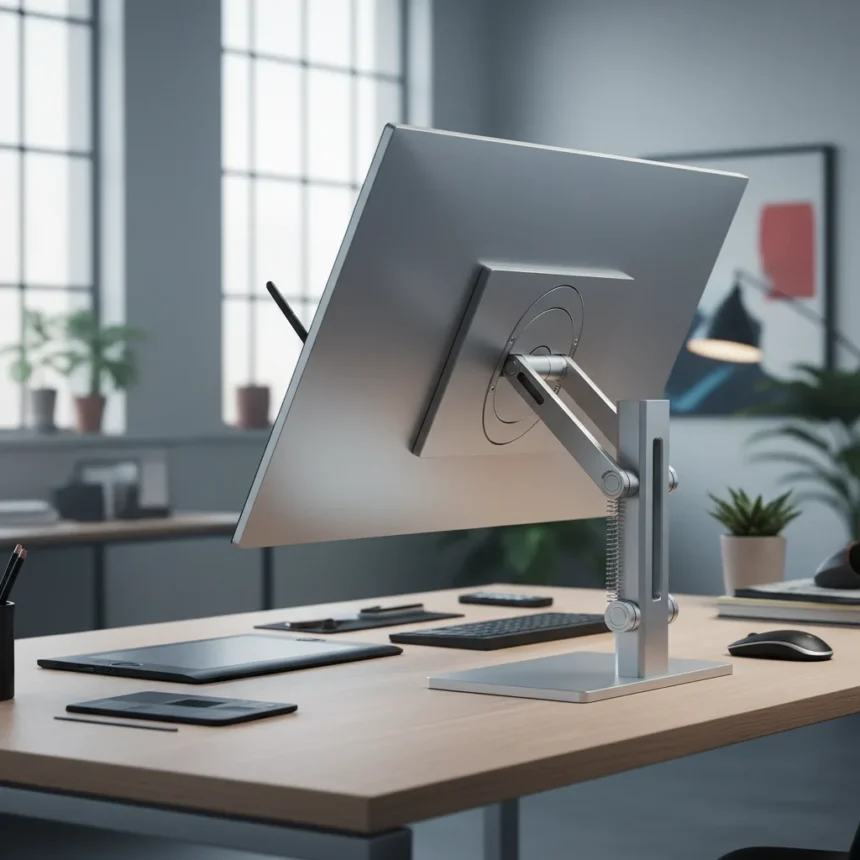
Surface Studio licensing represents a pragmatic solution to Microsoft’s creative hardware problem. The company discontinued its flagship all-in-one PC despite designing one of the most innovative display systems ever built—a 28-inch PixelSense touchscreen with a zero-gravity hinge that tilts from 1.3 to 20 degrees. Rather than let that engineering languish, Microsoft should license the display and hinge design to other manufacturers, creating premium standalone monitors for designers and artists worldwide.
Key Takeaways
- Surface Studio launched October 26, 2016, starting at $2,999 as Microsoft’s first fully manufactured desktop.
- The 28-inch PixelSense display features 13.5 million pixels and ultra-HD 4.5K resolution with 63% more pixels than 4K.
- Microsoft discontinued the all-in-one due to outdated internals, but the display and hinge design retain significant value.
- Surface Laptop Studio 2 offers an alternative with a 14.4-inch PixelSense Flow touchscreen and NVIDIA RTX graphics.
- Licensing to OEMs could unlock new revenue without requiring Microsoft to manufacture hardware.
Why the Surface Studio Display Matters
The original Surface Studio represented something rare: a hardware product designed specifically for how creative professionals actually work. Announced at the Windows 10 Devices Event in October 2016, it shipped with a 28-inch PixelSense Display engineered for true-to-life color and zero-gravity adjustment. The hinge mechanism allowed the screen to tilt nearly flat, transforming the device from a traditional upright monitor into a drawing surface—a physical interaction model that tablets and laptops still struggle to replicate convincingly.
The display specifications alone justify licensing. With 13.5 million pixels packed into a 28-inch panel, the Surface Studio delivered ultra-HD 4.5K resolution—63% more pixels than a 4K television. That density matters for designers working with intricate details, photographers evaluating color accuracy, and illustrators requiring precision. The Dolby Vision support on later models (Surface Studio 2+) added another layer of professional credibility. These are not commodity monitor specs; they are purpose-built for high-end creative work.
The Problem With Microsoft’s Current Strategy
Microsoft’s decision to discontinue the Surface Studio was understandable but incomplete. The all-in-one PC format fell victim to rapid processor obsolescence and the rising appeal of hybrid devices. The original shipped with Windows 10 Anniversary Update preinstalled, optimized for the Creators Update released in April 2017. By 2024, that hardware was hopelessly outdated—not just in CPU and GPU performance, but in thermal design, power efficiency, and software compatibility.


Rather than abandon the design entirely, Microsoft pivoted to the Surface Laptop Studio 2, a convertible laptop with a 14.4-inch PixelSense Flow touchscreen running at 120Hz and powered by NVIDIA GeForce RTX graphics. This device serves creatives effectively, but it sacrifices the large, adjustable display that made the original Studio unique. A 14.4-inch screen is portable; a 28-inch tilting monitor is a statement about workspace design. The two products serve different needs—and both have merit.
How Surface Studio Licensing Could Work
The licensing proposal is straightforward: Microsoft should allow OEMs like Dell, ASUS, or Lenovo to manufacture displays using the Surface Studio’s hinge mechanism and PixelSense technology. These partners would handle production, distribution, and technical support. Microsoft would collect licensing fees without bearing manufacturing costs or inventory risk. The result would be a premium monitor category—something between a standard 4K display and a full creative workstation.

This approach sidesteps the internals problem entirely. The original Surface Studio’s CPU and GPU are now antiquated, making the all-in-one format impractical for current creative software. But the display itself transcends those constraints. A 28-inch PixelSense monitor with adjustable hinge, powered by any modern graphics card or laptop, would appeal to professionals working with Adobe Creative Cloud, Autodesk Maya, or Blender. The hardware would no longer be a self-contained PC; it would be a peripheral, solving the obsolescence problem while preserving the innovative design.
Competitors already recognize the value. The Surface Laptop Studio 2 demonstrates that Microsoft understands the creative market, yet its 14.4-inch screen cannot replicate the immersive drawing experience of a 28-inch tilting display. By licensing the design to OEMs, Microsoft could own a category it created without the capital burden of manufacturing.
Why This Matters Now
Creative professionals face a choice between expensive all-in-one systems (like the iMac Pro or Mac Studio) and building custom setups with separate monitors and graphics cards. A licensed Surface Studio monitor would fill a gap: a premium display designed for creative work, compatible with any modern computer, and priced below a full workstation. The timing aligns with growing demand for hybrid work setups where professionals need both portability and a high-end home studio.
Microsoft’s own product lineup suggests internal interest remains. The Surface Studio 2+ with RTX 3060 GPU and Dolby Vision support never achieved mainstream adoption, but its existence proves the company still believes in the concept. Licensing would validate that belief while removing the financial risk.



Could Microsoft Actually Do This?
Licensing hardware designs is uncommon but not unprecedented. The barrier is not technical—it is organizational. Microsoft would need to document the hinge mechanism, PixelSense display specifications, and manufacturing tolerances, then negotiate terms with OEM partners. Support and warranty structures would require clarity. But none of these obstacles are insurmountable. Companies license complex designs constantly; Microsoft simply has not embraced this model for consumer hardware.
The alternative is the status quo: the Surface Studio remains a historical footnote, its innovative design gathering digital dust while creatives buy generic monitors from competitors. That outcome serves no one.
FAQ
What happened to the original Surface Studio?
Microsoft discontinued the all-in-one PC due to outdated internals, though later released the Surface Studio 2 and 2+ with improved processors and graphics. The company shifted focus to the Surface Laptop Studio, a convertible laptop designed for creatives.
Could a licensed Surface Studio monitor work with any computer?
Yes. A standalone monitor based on the Surface Studio design would function as a display peripheral, compatible with any device that supports USB-C, DisplayPort, or HDMI—just like modern creative monitors from other manufacturers.
Why doesn’t Microsoft just make a Surface Studio 3?
Manufacturing all-in-one PCs ties up capital, inventory, and support resources. Licensing the design to OEMs shifts these burdens to partners while allowing Microsoft to profit from the innovation without direct production costs.
Microsoft created something genuinely innovative with the Surface Studio, then walked away from it. Licensing the design to OEMs would be the pragmatic choice—preserving the hardware’s legacy while generating revenue from an investment that currently returns nothing. For creative professionals worldwide, it would mean access to a display category that still does not exist anywhere else.
This article was written with AI assistance and editorially reviewed.
Source: Windows Central